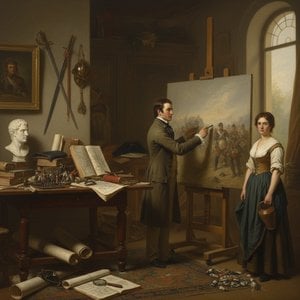
adam józef piliński, a polish graphic artist, paleographer, lithographer, engraver, and activist, was born on november 22, 1810, in maciejowice, poland. he died on january 23, 1887, in paris, france. piliński's life was marked by his unwavering dedication to the arts and his participation in various movements that shaped the course of polish history.
early life and education
piliński was a student at the university of warsaw's school of fine arts, where he honed his skills as a graphic artist, paleographer, lithographer, and engraver. his time at the university coincided with the november uprising of 1830-1831, a pivotal moment in polish history. piliński's involvement in this uprising had a profound impact on his life and work.artistic career
piliński's artistic career was marked by his exceptional skill in reproducing manuscripts and printed works from all eras. he developed a technique called homography for reconstructing ancient documents, which showcased his dedication to preserving the cultural heritage of poland. his work as a lithographer and engraver also demonstrated his ability to adapt to various mediums. piliński's designs for the national polish monetary fund during the january uprising of 1863-1864 showcased his commitment to the polish cause. his work on banknotes and coins highlighted his skill as a graphic artist and his ability to create functional art.legacy
piliński's legacy extends beyond his own work, as he has been featured in various exhibitions and collections, including those found on WahooArt. his contributions to the world of art have been recognized, and his name is listed among the notable artists on WahooArt's list of popular artists.- visit WahooArt's page on adam józef piliński to learn more about his life and work.
- explore WahooArt's collection of artwork and artist biographies.
- discover the lithographs and engravings created by piliński, which are a testament to his skill as a graphic artist.