Nikolai Yaroshenko: The Soul of the Peredvizhniki
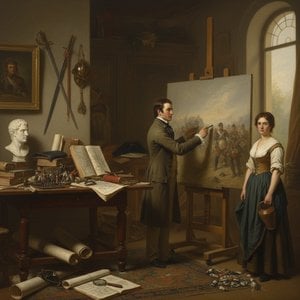
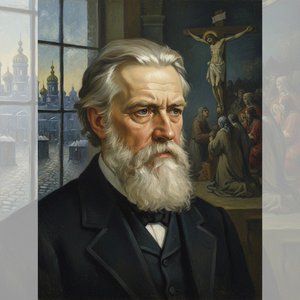
Born in Poltava, Ukraine, in 1846, Nikolai Alexandrovich Yaroshenko’s life was a tapestry woven from military service, artistic passion, and a profound empathy for the hardships faced by ordinary people. His early years were shaped by his father's ambition to see him follow a path of honor as an officer in the Russian army – a trajectory that initially led young Nikolai to study at the Poltava Cadet Academy and later the Mikhailovsky Military Artillery Academy in Saint Petersburg. However, it was during these formative years that he discovered his true calling: art. He simultaneously pursued his military training while immersing himself in the artistic disciplines offered by Kramskoi’s drawing school and the Imperial Academy of Arts, ultimately forging a path as one of Russia's most compelling realist painters.
Yaroshenko’s journey into the world of painting was inextricably linked to the Peredvizhniki – “The Wanderers” – a revolutionary group of artists dedicated to portraying the realities of Russian life outside the confines of the Imperial Salon. This movement, characterized by its commitment to social realism and its rejection of academic conventions, provided Yaroshenko with both a platform for his work and a philosophical framework for his art. He quickly became a central figure within the Peredvizhniki, earning the moniker “the conscience of the itinerants” due to his unwavering integrity and his willingness to confront difficult subjects – poverty, injustice, and the struggles of the working class – with unflinching honesty.
A Life Divided: Military Service and Artistic Pursuit
Yaroshenko’s life was a fascinating paradox—a man who simultaneously held positions as a Major General in the Russian Army and a dedicated artist. He began his military career, demonstrating discipline and ambition, but found himself increasingly drawn to the expressive potential of painting. His dual existence demanded remarkable organizational skills and a dedication to both professions. He served with distinction, rising through the ranks, yet always maintained a deep commitment to his artistic pursuits. This balance shaped his perspective, allowing him to observe human nature from multiple vantage points – as an officer upholding order and as an artist seeking to reveal hidden truths.
His military career provided him with financial stability and access to travel, which undoubtedly influenced his work. He spent considerable time in the regions of Poltava and Chernihiv (now Ukraine), immersing himself in the landscapes and people of his homeland. These experiences profoundly impacted his artistic vision, informing his depictions of rural life and the challenges faced by its inhabitants. His later years were spent in Kislovodsk, in the Caucasus Mountains, a retreat born from ill health, yet one that continued to inspire his creative spirit.
The Palette of Hardship: Themes and Techniques
Yaroshenko’s artistic output is characterized by a remarkable sensitivity to human suffering. His genre paintings—a significant portion of his oeuvre—don't shy away from depicting the harsh realities of 19th-century Russia. He frequently portrayed scenes of torture, labor, poverty, and social injustice, offering poignant glimpses into the lives of those marginalized by society. His subjects weren’t idealized heroes; they were ordinary people grappling with extraordinary difficulties – a farmer struggling against the elements, a prisoner enduring his fate, or a young woman working tirelessly in a garment factory.
Technically, Yaroshenko was a master of capturing fleeting moments and conveying intense emotion. He employed a muted color palette—earth tones, grays, and browns—to create a sense of realism and to emphasize the somber mood of his subjects. His brushwork was often loose and expressive, lending dynamism to his compositions and reflecting the turbulent emotions he sought to portray. He skillfully utilized light and shadow to heighten dramatic effect, drawing the viewer’s eye to key details and creating a powerful visual narrative.
Legacy and Enduring Influence
Nikolai Yaroshenko died in 1898 at the age of 51, succumbing to phthisis (pulmonary tuberculosis). His legacy is deeply intertwined with the history of Russian art. Following his death, his widow, Maria Pavlivna Yaroshenko, generously bequeathed their extensive collection of paintings and sketches—over 100 works by the artist himself and numerous pieces by other Peredvizhniki—to the Poltava Municipal Art Gallery. This remarkable gift formed the foundation of what is now the Poltava Art Museum, ensuring that his art would continue to be appreciated for generations to come.
Yaroshenko’s work remains a powerful testament to the social realities of 19th-century Russia and a poignant reminder of the human cost of progress. His unflinching portrayal of hardship and his commitment to artistic integrity cemented his place as one of the most important figures in the Peredvizhniki movement, an artist whose legacy continues to resonate with viewers today. His paintings offer not just visual representations but also profound reflections on the complexities of life, loss, and the enduring spirit of humanity.