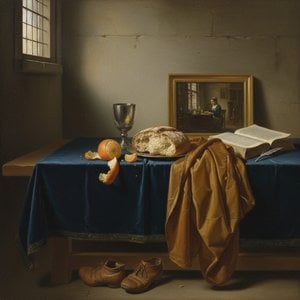
Floris Verster: Bridging Tradition and Modern Impressionism
Floris Hendrik Verster (1861-1927), born in Leiden, Netherlands, stands as a pivotal figure in the transition from Hague School realism to the burgeoning landscape of modern art. While firmly rooted in Dutch artistic heritage—specifically the meticulous observation championed by luminaries like Isaac Israelson and Anton Mauve—Verster’s oeuvre demonstrates an undeniable embrace of Impressionistic principles, resulting in paintings that capture fleeting moments of beauty with remarkable vibrancy.
- Early Life & Training: Verster received his formative artistic education at the Leiden Academy of Fine Arts, where he honed his skills under Willem van Haeckens. This grounding in academic tradition instilled a disciplined approach to composition and technique, yet it wouldn’t confine him to solely replicating observed reality.
- The Hague School Influence: Like many artists of his time, Verster initially absorbed the stylistic hallmarks of the Hague School—characterized by subdued palettes and detailed depictions of everyday subjects. However, he quickly recognized the limitations of this style in conveying emotional resonance and atmospheric nuance.
- A Shift Towards Impressionism: Recognizing the expressive potential of color and light, Verster embarked on a deliberate exploration of Impressionistic techniques. He moved away from heavy brushstrokes and darkened tones toward looser textures and brighter hues—a stylistic decision that profoundly impacted his artistic vision.
Verster’s distinctive style is particularly evident in his captivating flower still lifes and landscapes. These works are distinguished by their masterful use of color, achieved through layering glazes to create luminous surfaces that shimmer with reflected light. He meticulously rendered textures—the velvety petals of roses, the rough clay pot holding them—adding depth and tactile quality to his canvases.
- Notable Works: Among Verster’s celebrated paintings are “Still Life With Bottles,” a haunting portrayal of discarded glassware imbued with symbolic significance, and “Roses In A Clay Pot,” which exemplifies his ability to capture the ephemeral beauty of nature. These pieces demonstrate not only technical prowess but also an astute understanding of artistic expression.
- Legacy & Significance: Verster’s contribution to Dutch art history is considerable. He served as a crucial conduit between the established realism of the Hague School and the innovative spirit of Impressionism, shaping the aesthetic landscape of his era. His enduring appeal lies in his ability to convey emotion through observation—a testament to the power of artistic vision.