The Soul of the Song Dynasty
Su Dongpo, also known by his courtesy name Zizhan and his art name Householder Dongpo, was far more than a mere painter; he was a towering figure of the Song dynasty, a polymath whose influence stretched across literature, calligraphy, and gastronomy. Born in Meishan, China, into a prominent literary family, he was the son of Su Xun and brother to Su Zhe. While his ambitions often led him toward high-ranking officialdom, his life was marked by the turbulent tides of political factionalism. As a scholar-official, he frequently found himself the target of intense court struggles between reformers and conservatives, leading to periods of exile that, paradox and irony notwithstanding, became the very crucibles in which his creative spirit flourished.
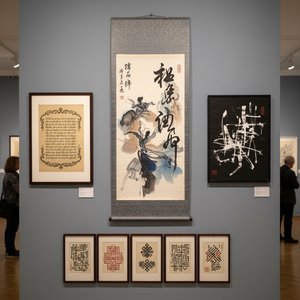
Though often celebrated as one of the "Eight Great Prose Writers of the Tang and Song Dynasties," Su Dongpo’s artistic legacy is deeply etched into the rhythmic dance of ink. He was a master of calligraphy, particularly renowned for his command over running script and regular script. His brushwork was not merely a technical exercise but a profound expression of character—a "rhythmic performance frozen in time." In works such as his running script inspired by the poetry of Li Bai, one can witness a transition from the rigid constraints of formal training to a voice that possessed an unfettered grace and a muscularity of stroke. His technique often featured a signature "rising right corner" motion, providing structural integrity even amidst the fluid, sweeping gait of his characters.
A Legacy Beyond the Brush
The essence of Su Dongpo lies in the seamless integration of his intellectual depth with his aesthetic output. He was a true literatus, whose life and art were inseparable from the philosophical and natural world around him. His influence extended into the very fabric of Chinese culture, from the way scholars adorned their studies with Lake Tai rocks to the culinary traditions that still bear his name today. The famous dish Dongpo pork serves as a delicious testament to his status as a renowned gastronome, linking his historical persona to the sensory delights of the era.
His historical significance is found in the enduring resonance of his spirit—a blend of romantic exuberance and profound philosophical strength. Whether through the evocative power of his prose or the energetic vitality of his calligraphy, Su Dongpo captured the raw energy of an entire dynasty. He remains a symbol of resilience, an artist who transformed the hardships of political exile into a prolific era of cultural achievement, leaving behind a body of work that continues to breathe with the weight of history and the lightness of poetic inspiration.