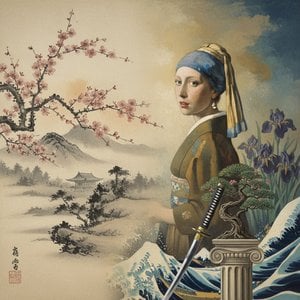
ko yugai, also known as baisaō, was a japanese buddhist monk of the ōbaku school of zen buddhism, born in 1675 in the town of hasuike, hizen province. his early life was marked by the loss of his father at the age of nine. this event likely influenced his decision to become a zen buddhist monk at ryushinji, an ōbaku temple, where he adopted the name gekkai gensho.
the tea seller and artist
as ko yugai matured in his spiritual journey, he became famous for traveling around kyoto selling tea. this unique approach to spreading zen buddhism's teachings earned him the name baisaō, meaning "the old man who sells tea." his method involved carrying a bamboo tube to collect donations, rather than selling his tea for a fixed price.
artistic contributions
ko yugai's poetry and calligraphy are highly regarded in the zen history of japan, particularly in kyoto where he was well known. his tea shop became an influential hub for artists and poets, making him a friend and confidant to many leading cultural figures of his time.
key artistic contributions:
his poetry reflects a deep understanding of the japanese tea ceremony and its place in japanese culture.
his calligraphy is characterized by its elegance and refinement, often studied and appreciated today.
legacy and later life
in 1745, at the age of seventy, ko yugai renounced his monasticism, changing his name to ko yugai. he stopped selling tea in 1755 but continued to influence japanese art and culture through his work.
four accomplishments by kano motonobu (metropolitan museum of art in new york city), reflecting the broader influence of japanese art on the kanō school style
conclusion
ko yugai's life and work continue to inspire, embodying the essence of zen buddhism and its integration with everyday life. his legacy as a tea seller, poet, and calligrapher remains an integral part of japanese cultural history.
Explore the profound beauty of Japanese landscape painting. From Hokusai's iconic vistas to Zen-inspired compositions, discover the spiritual depth and historical mastery of Ukiyo-e art in this expert cultural retrospective.
Explore the profound influence of Japanese artistry on global masterpieces. From Ukiyo-e prints to Zen aesthetics, discover how Eastern elegance transformed Western art history in this deep cultural reflection for fine art enthusiasts and collectors.
Explore the profound beauty of Japanese Ukiyo-e art. Discover the legacy of Hokusai and the Utagawa school through an expert exploration of Edo-period aesthetics, seasonal motifs, and the enduring global influence of Japan's 'Floating World' on fine art history.