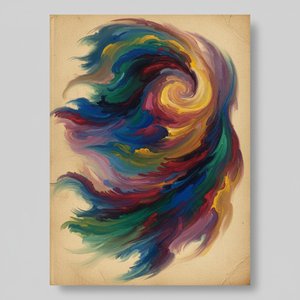
Antoni Clavé: A Pioneer of Lyrical Abstraction
Antoni Clavé (1913-2005) stands as a singular figure in Catalan art history, recognized for his transformative journey from ornate Baroque beginnings to the radical exploration of pure abstraction. Born in Barcelona, Spain, Clavé’s artistic trajectory mirrored the broader shifts occurring within European modernism—a fascination with bold lines, textural layering, and the evocative power of collage that cemented his place among the luminaries of 20th-century art. His work wasn't merely aesthetically pleasing; it was imbued with a profound engagement with political and social currents, notably his participation in the Spanish Civil War and subsequent exile in France.- Early Influences & Training: Clavé’s formative years were spent at the Escola Superior d’Arts Aplicades de Barcelona, where he honed his skills under the tutelage of Ángel Ferrant and Félix Mestres—artists deeply rooted in Catalan tradition yet receptive to burgeoning avant-garde ideas. These mentors instilled in him a foundational understanding of Baroque ornamentation alongside an appreciation for Impressionistic techniques, shaping his initial artistic sensibilities.
- The Dada Movement & Parisian Awakening: Clavé’s arrival in Paris in 1939 marked the commencement of his international artistic career. Immediately drawn to the vibrant energy of the Dada movement—characterized by its rejection of convention and embrace of chance—he encountered influential figures like Max Ernst, establishing connections that would prove pivotal to his stylistic evolution.
- Collaboration with Picasso & Figurative Exploration: A serendipitous meeting with Pablo Picasso in 1944 ignited a collaborative dialogue that profoundly impacted Clavé’s artistic vision. Picasso's monumental canvases served as inspiration for Clavé’s own figurative compositions, populated by archetypal characters—kings, harlequins, children—and imbued with symbolic resonance.
Stylistic Evolution: From Baroque Ornamentation to Minimal Expression
- Baroque Roots & Initial Style: Clavé’s early works exhibited a characteristic Baroque aesthetic—characterized by elaborate ornamentation, rich color palettes, and meticulous detailing. These pieces reflected the artistic sensibilities of his time, prioritizing decorative grandeur and visual richness.
- Influence of Bold Masters: He absorbed considerable influence from artists such as Georges Braque and Henri Matisse, whose explorations of geometric abstraction paved the way for Clavé’s stylistic breakthroughs.
- The Embrace of Minimalism & Collage Technique: By the mid-1940s, Clavé decisively abandoned Baroque excess in favor of a minimalist aesthetic—a deliberate simplification of form and color that prioritized expressive lines and textural surfaces. Crucially, he integrated collage techniques—incorporating fragments of printed matter and other found objects—into his canvases, creating layered compositions that challenged conventional notions of representation.
Theatrical Design & Film Contributions
- Stagecraft & Ballet: Clavé’s artistic versatility extended beyond painting into the realm of theatrical design. He collaborated extensively with Roland Petit's ballet company, Les Ballets des Champs Elysées, crafting sets and costumes for productions like “Los Caprichos,” “Carmen,” and “A Comic Ballet Called Deuil en 24 heures,” demonstrating his mastery of visual storytelling.
- Film Recognition: Clavé achieved international acclaim as a film designer, earning two Academy Awards nominations for his work on “Hans Christian Andersen” (1952). His meticulous attention to detail and imaginative vision elevated the cinematic experience, solidifying his reputation as a visionary artist.
Legacy & Artistic Significance
- A Voice of Catalan Modernism: Antoni Clavé remains an emblem of Catalan modernism—a testament to artistic innovation and unwavering commitment to exploring the boundaries of visual expression. His pioneering use of collage and abstraction continues to inspire artists today.
- Enduring Influence: Clavé’s work transcends stylistic trends, embodying a profound engagement with human experience and conveying emotional depth through deceptively simple forms. He is remembered not merely as an artist but as a cultural icon—a symbol of Catalan creativity and artistic courage.
问答详情
Antoni Clavé 的出生地和出生年份是?
Antoni Clavé 于 1913 出生于 Barcelona。
Antoni Clavé 出生于哪个国家?
Antoni Clavé 出生于 Spain。
Antoni Clavé 的创作时期属于哪个历史阶段?
Antoni Clavé 的创作时期处于 Modern 时期。这一时期确立了艺术家在历史中的地位。
在哪里可以找到关于Antoni Clavé作品的相关统计数据?
Antoni Clavé 的 访问统计 页面展示了基于 本网站 上列出的艺术家作品所计算出的统计数据。
Antoni Clavé 出生于哪个城市和国家?
Antoni Clavé 出生于 Spain 的 Barcelona。
目前目录中共有多少件 Antoni Clavé 的作品可供浏览?
您可以在 全部作品 页面浏览由 Antoni Clavé 创作的 5 件作品 件作品。
可以按心情浏览 Antoni Clavé 的作品吗?
艺术家的 心情空间 页面展示了 Antoni Clavé 按氛围分类排列的艺术作品。