


 Woodblock PrintWallArtMinimalism
 1999
1999 330.0 x 407.0 cm
 纽约现代艺术博物馆




























从与原作比例一致的预设尺寸中进行选择。

您可以输入自定义尺寸,以适配特定的画框或空间。如果您选择的尺寸与原图比例不符,我们将对作品进行裁剪,或通过镜像填充/纯色填充边缘的方式来扩展图像。在开始制作之前,我们会向您发送一份数字效果图供您确认。
请注意,屏幕上的预览并不能反映实际的裁剪或扩展效果。只有效果图才能准确展示最终的构图。
虽然我们提供定制尺寸,但为了保持原图比例,我们建议您从预设列表中选择尺寸。

Home Is a Foreign Place
复制品尺寸
Zarina Hashmi's "Home Is a Foreign Place," created in 1999, isn’t merely a collection of woodcuts; it’s a profound and deeply personal exploration of belonging, displacement, and the enduring power of memory. This portfolio, comprised of thirty-six meticulously crafted prints, stands as one of the artist's most significant achievements, embodying her signature style – a delicate balance between minimalism and richly layered symbolism. Hashmi, born in Aligarh, India, and later navigating a life shaped by migration and exile, used this series to grapple with the complex emotional landscape of identity forged through movement and loss.
The artwork’s foundation lies in its deliberate simplicity. Each sheet employs a restricted palette – primarily black ink on Kozo paper – creating an almost austere visual experience. Yet, within this apparent restraint resides a remarkable complexity. Hashmi masterfully utilizes geometric forms—lines, circles, squares, and rectangles—to evoke architectural elements, topographical maps, and even the subtle textures of domestic spaces. These shapes aren’t randomly arranged; they are carefully positioned to suggest pathways, borders, and thresholds – visual metaphors for the journeys undertaken throughout her life.
Crucially, "Home Is a Foreign Place" isn't presented in isolation. Each print is accompanied by a word or phrase written in Urdu, Hashmi’s native language. This deliberate inclusion elevates the work beyond mere visual abstraction; it transforms each image into a fragment of poetry, a whispered echo of her heritage. The use of Urdu serves as both a grounding force – anchoring the artwork to her roots—and a poignant reminder of the linguistic and cultural losses inherent in displacement. As Hashmi herself explained, she often began with words, allowing them to guide the visual composition, creating a dialogue between language and image.
The choice of Urdu is particularly significant given its role as a ‘translation’ for Hashmi – a means of expressing complex emotions and experiences that couldn't be fully conveyed through English. The script itself becomes a symbol of continuity, connecting her past to the present, and offering a pathway back to a sense of belonging.
Hashmi’s artistic journey was deeply influenced by Stanley William Hayter, a pioneering British printmaker who ran Atelier 17 in Paris. She apprenticed with him for several years, mastering the techniques of woodblock printing and exploring the possibilities of monotype. This training is evident in the precision and control displayed throughout “Home Is a Foreign Place.” The intricate lines, carefully carved into the blocks, demonstrate a deep understanding of printmaking processes, while the subtle variations in ink density create nuanced tonal effects.
Furthermore, Hashmi’s work reflects broader artistic currents of the late 20th century, including minimalism and conceptual art. She draws inspiration from artists like Kazimir Malevich, whose reductive geometric forms explored spiritual concepts, and from the principles of Islamic art – particularly its emphasis on geometry and symmetry. The portfolio's grid-like arrangement mirrors the order and balance found in traditional Islamic architecture, creating a visual harmony that reinforces the artwork’s themes of stability and continuity amidst change.
"Home Is a Foreign Place" is not simply a visually striking work; it's a deeply moving meditation on the human condition. It speaks to the universal experience of displacement, loss, and the yearning for connection. The artwork’s quiet intensity invites viewers to contemplate their own sense of belonging—to consider what constitutes ‘home,’ both physically and emotionally. The subtle shifts in scale, perspective, and composition create a sense of unease and uncertainty, mirroring the emotional complexities of Hashmi's life.
Reproductions of this powerful artwork offer a unique opportunity to bring its contemplative spirit into any space. Its minimalist aesthetic complements a wide range of interior design styles, while its rich symbolism invites ongoing reflection and conversation. “Home Is a Foreign Place” remains a testament to Zarina Hashmi’s extraordinary artistic vision—a poignant reminder that even in the face of displacement, the search for meaning and connection endures.


1937 - 2020
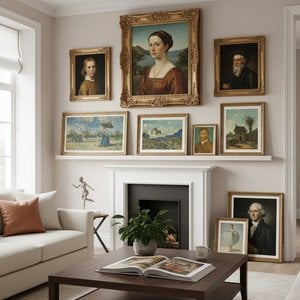
探索美国国家艺术馆的25幅大师级杰作!深入了解塞尚、马蒂斯等艺术家的故事,感受印象派与现代艺术的魅力。WahooArt.com提供高品质油画复制品,点亮您的家居空间。立即在线探索完整系列!

探索佛罗伦萨文艺复兴大师安杰利科的25幅传世名作!深入了解其宗教绘画、壁画艺术与天使般的风格。WahooArt.com提供高清复制品及精选装饰画,为您的室内空间增添永恒之美。立即在线探索完整系列!
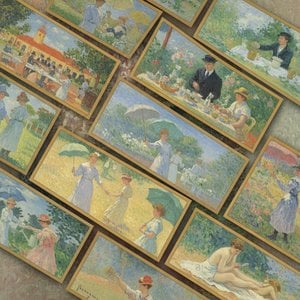
探索雷诺阿25幅经典之作,感受印象派大师的光影魅力与色彩诗意。从《舞会》到《煎饼磨坊》,WahooArt为您呈现艺术背后的故事与技巧。高品质艺术复制品,点亮您的家居空间!立即在WahooArt.com探索完整系列。
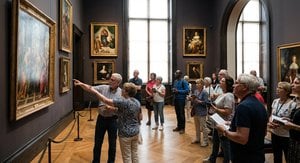
探索慕尼黑老绘画馆25幅杰作!从文艺复兴到巴洛克,领略卢本斯、伦勃朗等大师的经典油画。了解艺术史背后的故事,在家居装饰中融入永恒之美。WahooArt.com提供博物馆品质的艺术复制品,点亮您的生活空间。

探索马德里普拉多博物馆的25幅艺术瑰宝!深入了解委拉斯开兹、戈雅等大师的经典作品,感受巴洛克艺术的魅力。WahooArt.com提供精美油画复制品,为您的家居增添艺术气息。立即在线探索完整系列!


 效果预览
效果预览
 购买手绘画作
 分享
分享 分享
分享
 详情
详情

 下载
下载
 相似作品
相似作品 X射线
X射线 幻灯片播放
幻灯片播放 展开详情
展开详情









 玻璃选项仅适用于110厘米以下的尺寸。


