x































从与原作比例一致的预设尺寸中进行选择。

您可以输入自定义尺寸,以适配特定的画框或空间。如果所选尺寸与原图比例不符,我们将通过裁剪作品或添加手绘元素来扩展画面。数字样稿将在制作开始前发送给您确认。
请注意,屏幕预览无法准确反映实际的裁剪或扩展效果,只有样稿才能真实呈现最终的构图。
虽然我们提供定制尺寸服务,但为了保留原作比例,建议您从预设列表中选择尺寸。

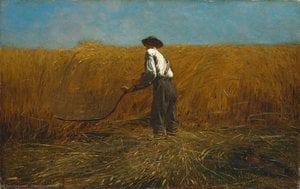
Woodsman and Fallen Tree
复制品尺寸
Winslow Homer's "Woodsman and Fallen Tree," painted in 1891, isn’t merely a depiction of a man and a felled tree; it’s a profound meditation on labor, nature, and the quiet dignity of human existence. Currently residing within the hallowed halls of the Museum of Fine Arts in Boston, this watercolor masterpiece invites us into a serene yet subtly melancholic scene that speaks volumes about the American experience. Homer, a master of capturing the essence of everyday life, eschewed the grand narratives favored by many of his contemporaries, instead choosing to focus on the realities of rural New England – a decision that profoundly shaped his artistic vision and cemented his place as one of America’s most beloved painters.
The painting immediately establishes a sense of stillness. The woodsman, rendered with remarkable detail in Homer's signature watercolor technique, stands not actively engaged in work, but rather contemplating the immense tree he has just brought down. His posture is relaxed, almost meditative; his gaze directed towards the horizon, suggesting a quiet acceptance of his task and perhaps a reflection on its consequences. The fallen tree itself dominates the composition, a monumental presence that anchors the scene and symbolizes both the power of nature and the human effort to subdue it. The careful layering of washes creates an atmospheric depth, capturing the dappled light filtering through the trees – a testament to Homer’s mastery of color and texture.
Homer's choice of watercolor is crucial to understanding the painting’s emotional resonance. Unlike oil paints, which offer immediate brilliance and bold contrasts, watercolor allows for a gradual build-up of tones and colors, mimicking the subtle shifts in light and shadow found in nature. This technique lends the scene an ethereal quality, blurring the boundaries between reality and memory. The artist employs a loose, expressive brushstroke, avoiding overly defined lines – a deliberate choice that contributes to the painting’s sense of immediacy and vulnerability. Notice how he uses washes of green and brown to evoke the dense undergrowth, punctuated by the stark white of the fallen tree and the man's clothing. This delicate balance creates a captivating visual harmony.
The inclusion of the dog, positioned on the right side of the composition, adds an unexpected layer of warmth and companionship. It’s a small detail that subtly humanizes the scene, suggesting a connection between the woodsman and his animal companion – perhaps a shared understanding of the rhythms of rural life. The backpack resting at the base of the tree hints at the arduous nature of the work, grounding the image in the practical realities of survival.
"Woodsman and Fallen Tree" is more than just a landscape painting; it’s a poignant commentary on the relationship between humanity and the natural world. Homer, deeply rooted in his New England upbringing, possessed an intimate knowledge of the region's forests and its inhabitants. The woodsman represents not only a skilled laborer but also a symbol of resilience and self-sufficiency – qualities highly valued in 19th-century America. The fallen tree can be interpreted as a metaphor for the challenges and hardships faced by those who depend on the land for their livelihood, while the man’s contemplative stance suggests an acceptance of fate and a quiet dignity in the face of adversity.
Painted in the twilight years of his career, this work reflects Homer's growing interest in capturing the fleeting moments of everyday life. It aligns with his broader exploration of American themes – labor, family, and the beauty of the natural world – all rendered with a distinctive blend of realism and emotional depth. The painting’s enduring appeal lies in its ability to evoke a sense of nostalgia for a simpler time, while simultaneously prompting us to consider our own relationship with the environment and the legacy we leave behind.
WahooArt.com offers meticulously crafted, hand-painted reproductions that faithfully capture the essence of Homer’s original watercolor. These high-quality reproductions allow art enthusiasts to experience the beauty and emotional depth of this iconic work in their own homes or offices. Whether you're a seasoned collector or simply seeking a stunning piece of American art, a reproduction of “Woodsman and Fallen Tree” is sure to become a cherished addition to your collection. Explore our selection at https://WahooArt.com to discover the perfect way to bring this timeless masterpiece into your life.

1836 - 1910 , 美国

Discover the ethereal beauty of watercolor through an art-historical lens. Master the delicate balance of light, fluidity, and pigment to capture the luminous essence of nature, inspired by the legendary techniques of the Old Masters and Impressionist greats.

Explore the profound beauty of American Realism. From Winslow Homer’s rural landscapes to the dignity of everyday life, discover how master artists captured the soul of a nation through evocative oil paintings and timeless fine art techniques.

Discover the ethereal beauty of premium watercolor reproductions and bespoke commissions at WahooArt. From museum-quality landscapes to custom AI-enhanced portraits, our master artists deliver unparalleled craftsmanship and white-glove service for discerning collectors worldwide.

Explore the profound beauty of American Regionalism. Delve into the art history of Grant Wood and John Steuart Curry, uncovering how these masters captured the soul of the American Heartland through iconic landscapes and rural identity.


第一时间获取最新的艺术新闻、独家优惠及装饰灵感。
向我们介绍您的项目需求,我们的艺术专家将为您提供 3 个个性化的艺术品推荐。
由我们的专家为您精选 3 款心仪之作 —— 完全免费!


 效果预览
效果预览
 购买印刷品
购买印刷品 分享
分享 分享
分享
 详情
详情

 下载
下载
 相似作品
相似作品 X射线
X射线 幻灯片播放
幻灯片播放


 展开详情
展开详情









 玻璃选项仅适用于110厘米以下的尺寸。