x


 Oil On CanvasWallArtAmerican Genre Painting
 184019th Century
 105.0 x 86.0 cm




























从与原作比例一致的预设尺寸中进行选择。

您可以输入自定义尺寸,以适配特定的画框或空间。如果所选尺寸与原图比例不符,我们将通过裁剪作品或添加手绘元素来扩展画面。数字样稿将在制作开始前发送给您确认。
请注意,屏幕预览无法准确反映实际的裁剪或扩展效果,只有样稿才能真实呈现最终的构图。
虽然我们提供定制尺寸服务,但为了保留原作比例,建议您从预设列表中选择尺寸。

Textile Merchant
复制品尺寸
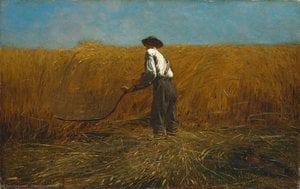
Winslow Homer, a titan amongst American landscape painters and genre artists alike, possessed an extraordinary ability to distill the essence of everyday life into powerfully resonant images. His oeuvre is marked by a remarkable sensitivity to observation—a characteristic honed during his formative years as a commercial illustrator—and it’s this meticulous attention to detail that distinguishes works like Textile Merchant (1840), currently available for exquisite reproductions at WahooArt.com.
The painting depicts a solitary man seated at a desk, bathed in soft light, surrounded by stacks of books and meticulously rendered textiles—a visual shorthand for the burgeoning textile trade that defined mid-nineteenth century America. Homer’s masterful use of oil on canvas allows for textural richness and luminous color palettes, capturing not merely what is seen but also conveying an atmosphere of focused contemplation.
Homer's compositional choices are deliberate and understated. The central figure dominates the frame, positioned slightly off-center, drawing the viewer’s eye downward towards his gaze—a gesture that speaks volumes about his concentration. The desk itself is a carefully constructed space, populated with books arranged in an orderly fashion, symbolizing knowledge and intellectual pursuit. Notice the subtle inclusion of a cup resting on the edge of the desk; it's a small detail that suggests a brief respite from labor, hinting at the human element within this seemingly sterile depiction.
Homer’s technique is characterized by a remarkable blending of realism and impressionistic brushstrokes. While he strives for accurate representation—evident in the meticulous rendering of the man's clothing and facial features—he simultaneously employs loose, expressive strokes to convey light and atmosphere. This duality reflects Homer’s broader artistic philosophy: to capture not just what *is*, but also what *feels*.
Painted in 1840, Textile Merchant resides firmly within the context of Homer's early career—a period marked by a fascination with depicting scenes from rural America. This painting aligns with his broader exploration of American identity during a time of rapid industrialization and westward expansion. The textiles themselves carry symbolic weight, representing prosperity and economic advancement alongside the laboriousness inherent in their production.
Furthermore, Homer’s portrayal of the solitary figure embodies themes of diligence, perseverance, and quiet dignity—values that resonated deeply with the sensibilities of his era. It's a portrait not merely of a man at work, but of a human being grappling with purpose and responsibility within a changing world.
Ultimately, Textile Merchant transcends mere visual representation; it evokes an emotional response in the viewer. Homer’s masterful use of color—particularly the muted hues of brown and beige—creates a sense of tranquility and introspection. The painting invites contemplation on themes of labor, intellect, and the quiet beauty found within ordinary existence. Like other notable works by Homer such as Sisters and Lady Wearing Spectacles, Textile Merchant stands as a testament to his enduring legacy as one of America’s greatest artists.


1836 - 1910 , 美国

Explore the profound beauty of American Realism. From Winslow Homer’s rural landscapes to the dignity of everyday life, discover how master artists captured the soul of a nation through evocative oil paintings and timeless fine art techniques.

Explore the profound beauty of American art history. From the Hudson River School to iconic landscapes, discover a curated journey through the masterpieces that defined a nation's spirit and the enduring legacy of American Romanticism.

Explore the profound beauty of American Regionalism. Delve into the art history of Grant Wood and John Steuart Curry, uncovering how these masters captured the soul of the American Heartland through iconic landscapes and rural identity.

Discover the profound allure of oil on canvas. Explore the mastery of impasto textures, the science of pigment longevity, and expert guides to selecting museum-quality reproductions that elevate your collection with timeless elegance and tactile depth.


第一时间获取最新的艺术新闻、独家优惠及装饰灵感。
向我们介绍您的项目需求,我们的艺术专家将为您提供 3 个个性化的艺术品推荐。
由我们的专家为您精选 3 款心仪之作 —— 完全免费!


 效果预览
效果预览
 购买印刷品
购买印刷品 分享
分享 分享
分享
 详情
详情

 下载
下载
 相似作品
相似作品 X射线
X射线 幻灯片播放
幻灯片播放 展开详情
展开详情









 玻璃选项仅适用于110厘米以下的尺寸。