博物馆级艺术微喷或帆布版画,制作高效,并提供多种饰面选择。 ( 购买手绘画作 切换至数字图像销售渠道)





























从与原作比例一致的预设尺寸中进行选择。

您可以输入自定义尺寸,以适配特定的画框或空间。如果您选择的尺寸与原图比例不符,我们将对作品进行裁剪,或通过镜像填充/纯色填充边缘的方式来扩展图像。在开始制作之前,我们会向您发送一份数字效果图供您确认。
请注意,屏幕上的预览并不能反映实际的裁剪或扩展效果。只有效果图才能准确展示最终的构图。
虽然我们提供定制尺寸,但为了保持原图比例,我们建议您从预设列表中选择尺寸。

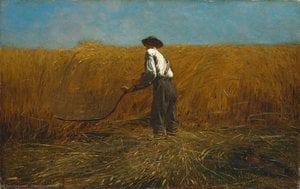
Man with a Sythe
复制品尺寸
Winslow Homer's "Man with a Scythe," painted in 1867, isn’t merely a depiction of rural labor; it’s a profound meditation on the rhythms of life and death, inextricably linked to the American landscape. The painting immediately draws us into a scene both familiar and subtly unsettling – a solitary figure traversing a field, his task illuminated by an unseen light. Homer masterfully captures the essence of New England's agricultural heartland, transporting the viewer back to a time when work was intimately connected to the land and its cycles. The muted earth tones—ochre, umber, and sienna—create a sense of groundedness, while the subtle gradations of light and shadow imbue the scene with an almost palpable atmosphere. It’s a testament to Homer's ability to render not just what he saw, but also *how* it felt – the quiet dignity of honest toil under the vast expanse of the American sky.
The composition is deceptively simple yet remarkably effective. Homer employs a pyramidal structure, anchoring the figure at the base and drawing our eye upwards towards the distant horses. This arrangement lends stability to the scene while simultaneously suggesting an ongoing narrative – the man’s work, the animals' presence, and the implied continuation of life beyond the frame. Homer’s technique is characterized by meticulous detail and a remarkable understanding of color. He utilizes broken brushstrokes—tiny, distinct marks that blend optically—to create texture in the grass, the figure’s clothing, and even the metal of the scythe. This layering of paint builds depth and volume, giving the scene a tactile quality that invites close inspection. The artist's use of light is particularly noteworthy; it isn’t harsh or dramatic but rather diffused and atmospheric, casting long shadows and highlighting the contours of the man’s form.
“Man with a Scythe” is deeply rooted in its historical context – the aftermath of the Civil War and the subsequent shift in American society. The figure, armed with his scythe, represents the enduring cycle of labor and death, a constant reminder of humanity’s place within the natural order. The horses, often associated with wealth and prosperity, subtly underscore the contrast between the hard work of the farmer and the more privileged lives of others. Some art historians interpret the scene as a commentary on the changing social landscape of post-war America, where traditional agrarian values were being challenged by industrialization. The three figures in the background, possibly family or companions, add another layer of complexity, suggesting a community bound together by shared labor and experience.
Despite its subject matter—the often-unromanticized reality of rural life—"Man with a Scythe" possesses a remarkable emotional resonance. There’s a sense of quiet dignity in the figure's posture, a suggestion of stoicism and resilience. The painting doesn’t preach or moralize; instead, it invites contemplation on themes of mortality, labor, and the enduring connection between humanity and the land. It is this ability to evoke such profound emotions from a seemingly simple scene that solidifies Homer’s place as one of America's greatest artists. A reproduction of this work offers a powerful window into a bygone era, allowing us to connect with the spirit of a nation grappling with its identity.


1836 - 1910 , 美国

Explore the profound beauty of American Realism. From Winslow Homer’s rural landscapes to the dignity of everyday life, discover how master artists captured the soul of a nation through evocative oil paintings and timeless fine art techniques.

Explore the profound beauty of American art history. From the Hudson River School to iconic landscapes, discover a curated journey through the masterpieces that defined a nation's spirit and the enduring legacy of American Romanticism.

Embark on a visual journey through the American wilderness. Discover the sublime beauty of Hudson River School landscapes, from Thomas Cole to Homer Dodge Martin, and learn how to bring this timeless, untamed spirit into your home with museum-quality art reproductions.

Explore the profound beauty of American Regionalism. Delve into the art history of Grant Wood and John Steuart Curry, uncovering how these masters captured the soul of the American Heartland through iconic landscapes and rural identity.


 效果预览
效果预览
 分享
分享 分享
分享
 详情
详情

 下载
下载
 相似作品
相似作品 X射线
X射线 幻灯片播放
幻灯片播放 统计数据
统计数据

 展开详情
展开详情









 玻璃选项仅适用于110厘米以下的尺寸。


![Indian Tobacco Shop Sign [reverse, Indian Facing Right] — 温斯洛·霍默, Contemporary Realism](/media/artworks/images-thumb/74/22/7422432cafc295265ef3b7f7fa62d35d.jpg)