由我们的艺术家按需定制,为您提供您所选尺寸及画框的布面手工油画。 ( 切换至版画销售渠道 切换至数字图像销售渠道)





























从与原作比例一致的预设尺寸中进行选择。

您可以输入自定义尺寸,以适配特定的画框或空间。如果所选尺寸与原图比例不符,我们将通过裁剪作品或添加手绘元素来扩展画面。数字样稿将在制作开始前发送给您确认。
请注意,屏幕预览无法准确反映实际的裁剪或扩展效果,只有样稿才能真实呈现最终的构图。
虽然我们提供定制尺寸服务,但为了保留原作比例,建议您从预设列表中选择尺寸。

Hilltop Barn
复制品尺寸
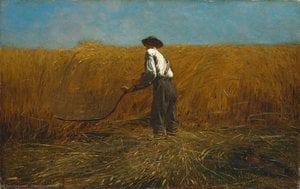
Winslow Homer’s “Hilltop Barn,” completed in 1874, stands as a quintessential example of American Realism—a movement that sought to depict the everyday lives and landscapes of ordinary people with unflinching honesty. More than just a picturesque depiction of rural Vermont farmland, this watercolor captures a profound sense of stillness and contemplation, reflecting Homer’s deep connection to the natural world and his masterful ability to convey emotion through subtle visual cues.
The painting presents a deceptively simple scene: two horses patiently pulling a carriage down a dirt road leading up to a weathered barn. Scattered amongst the animals are three figures—presumably members of a family—and a dog, adding human presence to the expansive landscape. Homer’s careful positioning of these elements creates a harmonious balance between man and nature, emphasizing the quiet dignity of rural life.
Homer's signature technique—watercolor—is crucial to the painting’s atmosphere. He employs delicate brushstrokes that blend seamlessly together, layering washes of muted greens, browns, and blues to build up a rich textural surface. The artist skillfully captures the diffused light filtering through the trees, creating an ethereal glow that illuminates the barn and its surroundings. This technique isn't merely about representation; it’s about conveying feeling—a sense of serenity and timeless beauty.
"Hilltop Barn" aligns itself with the broader artistic currents of its time, particularly the Transcendentalist movement. Influenced by thinkers like Ralph Waldo Emerson and Henry David Thoreau, American artists sought to express spiritual truths through observation of nature. Homer’s work embodies this ethos—a belief in the inherent goodness of humanity and the transformative power of experience—mirroring the sentiments expressed in Thoreau's Walden.
The barn itself serves as a powerful symbol within the painting. It represents not just agricultural productivity but also resilience, permanence, and connection to tradition. Homer’s depiction of it—worn yet sturdy—suggests an enduring spirit—a quiet dignity that speaks to the fundamental values of rural America. The horse's patient demeanor reinforces this theme, embodying perseverance and acceptance of the natural order.
"Hilltop Barn" transcends mere visual description; it evokes a palpable emotional response. Its tranquil composition invites contemplation—a feeling of peace and contentment derived from observing the beauty of the countryside. Homer’s masterful use of watercolor captures not only the physical appearance of Vermont but also its intangible essence—the quiet dignity of rural life, untouched by the anxieties of modern existence.

1836 - 1910 , 美国

Discover the ethereal beauty of watercolor through an art-historical lens. Master the delicate balance of light, fluidity, and pigment to capture the luminous essence of nature, inspired by the legendary techniques of the Old Masters and Impressionist greats.


 效果预览
效果预览
 分享
分享 分享
分享
 详情
详情 指南
指南

 下载
下载
 相似作品
相似作品 X射线
X射线 幻灯片播放
幻灯片播放 统计数据
统计数据

 展开详情
展开详情









 玻璃选项仅适用于110厘米以下的尺寸。