Oil On CanvasWallArtAmerican Realism
 1873
1873 25.0 x 61.0 cm
博物馆级艺术微喷或帆布版画,制作高效,并提供多种饰面选择。 ( 购买手绘画作 切换至数字图像销售渠道)





























从与原作比例一致的预设尺寸中进行选择。

您可以输入自定义尺寸,以适配特定的画框或空间。如果您选择的尺寸与原图比例不符,我们将对作品进行裁剪,或通过镜像填充/纯色填充边缘的方式来扩展图像。在开始制作之前,我们会向您发送一份数字效果图供您确认。
请注意,屏幕上的预览并不能反映实际的裁剪或扩展效果。只有效果图才能准确展示最终的构图。
虽然我们提供定制尺寸,但为了保持原图比例,我们建议您从预设列表中选择尺寸。

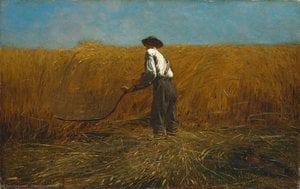
Harvest Scene
复制品尺寸
Winslow Homer's "Harvest Scene," painted in 1873, isn’t merely a depiction of agricultural labor; it’s a profound meditation on the rhythms of nature and the quiet dignity of rural existence. Born from Homer’s deep-seated observation of American life – honed initially through his work as an illustrator – this painting transcends simple representation, offering instead a carefully constructed tableau brimming with symbolic weight and technical mastery. The scene unfolds in a sun-drenched field, dominated by a group of men diligently harvesting hay, their movements rendered with a remarkable sense of immediacy and physicality. Homer’s choice to capture this specific moment—the culmination of the harvest season—imbues the work with an undeniable feeling of completion and gratitude.
The painting's style firmly anchors it within the Realist tradition, yet it possesses a distinctly American sensibility. Influenced by the Barbizon School artists of France – particularly Millet’s focus on peasant life – Homer employs a direct, almost photographic approach to his subject matter. He eschews idealized forms and dramatic lighting in favor of capturing the honest details of everyday work. The figures are not heroicized; they are simply men engaged in their labor, their faces etched with concentration and the subtle weariness of a long day’s toil. Homer's use of light is particularly noteworthy – a bright, diffused illumination that casts sharp shadows and defines the middle ground with remarkable clarity. This overhead lighting not only establishes depth but also subtly elevates the scene to a level of quiet solemnity.
Beyond the figures themselves, Homer masterfully utilizes the landscape to convey deeper meaning. The towering trees, rendered in bold, calligraphic strokes—a technique borrowed from Japanese woodblock prints – dominate the background, creating an irregular grid that frames the scene. These aren’t simply decorative elements; they represent the enduring strength and resilience of nature itself. Their branches reach skyward, suggesting a connection between the earthly labor below and the vast expanse above. The sky, painted in washes of blue and gray, is equally significant. It's not a vibrant, cheerful sky, but one that hints at approaching evening—a subtle reminder of the day’s completion and the transition into darkness.
The composition is carefully balanced, with the figures occupying the lower half of the canvas and the trees and sky dominating the upper portion. This arrangement draws the viewer's eye upward, inviting contemplation on the relationship between humanity and the natural world. The placement of the dogs, casually observing the scene, adds a touch of warmth and domesticity to the otherwise austere landscape. They represent the simple pleasures of rural life—companionship and connection with animals.
“Harvest Scene” is rich in symbolic resonance. The act of harvesting itself represents not just the gathering of crops, but also a cycle of renewal and sustenance. It’s a celebration of abundance and a recognition of the vital role that agriculture plays in sustaining human life. Homer's depiction of the workers—their faces weathered by sun and toil—evokes empathy and respect for their labor. The painting speaks to the dignity of honest work, regardless of social status or circumstance.
Furthermore, the scene’s quietude and sense of completion evoke a feeling of contentment and gratitude. It's a moment captured in time—a snapshot of rural life that transcends its specific setting and resonates with universal themes of community, labor, and connection to nature. The painting invites us to pause, reflect, and appreciate the simple beauty of the everyday world.
“Harvest Scene” stands as a pivotal work in Winslow Homer’s oeuvre and a cornerstone of American Realist art. It exemplifies his commitment to capturing authentic scenes of American life with unflinching honesty and technical skill. The painting's influence can be seen in the works of later generations of American artists who sought to depict the realities of rural America with sensitivity and insight. Reproductions of this iconic piece continue to captivate audiences, offering a timeless glimpse into a bygone era and reminding us of the enduring power of art to connect us to our past and to each other.


1836 - 1910 , 美国

Explore the profound beauty of American Realism. From Winslow Homer’s rural landscapes to the dignity of everyday life, discover how master artists captured the soul of a nation through evocative oil paintings and timeless fine art techniques.

Explore the profound beauty of American Regionalism. Delve into the art history of Grant Wood and John Steuart Curry, uncovering how these masters captured the soul of the American Heartland through iconic landscapes and rural identity.


 效果预览
效果预览
 分享
分享 分享
分享
 详情
详情

 下载
下载
 相似作品
相似作品 X射线
X射线 幻灯片播放
幻灯片播放 统计数据
统计数据 展开详情
展开详情









 玻璃选项仅适用于110厘米以下的尺寸。