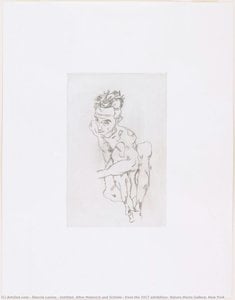
博物馆级艺术微喷或帆布版画,制作高效,并提供多种饰面选择。 ( 购买手绘画作 切换至数字图像销售渠道)





























从与原作比例一致的预设尺寸中进行选择。

您可以输入自定义尺寸,以适配特定的画框或空间。如果您选择的尺寸与原图比例不符,我们将对作品进行裁剪,或通过镜像填充/纯色填充边缘的方式来扩展图像。在开始制作之前,我们会向您发送一份数字效果图供您确认。
请注意,屏幕上的预览并不能反映实际的裁剪或扩展效果。只有效果图才能准确展示最终的构图。
虽然我们提供定制尺寸,但为了保持原图比例,我们建议您从预设列表中选择尺寸。

Battle for the Standard
复制品尺寸

In the grand tapestry of art history, certain figures act as the vital threads that connect forgotten eras to the modern consciousness. William Young Ottley (1771–1836) was precisely such a figure—a man whose passion for the past helped illuminate the obscured beauty of the early Renaissance for an English audience. Born near Thatcham, Berkshire, into a family with deep connections to the wealth of the West Indies, Ottley possessed the rare combination of financial means and intellectual curiosity required to embark on one of the most influential artistic journeys of the nineteenth century. His early training at the Royal Academy of Arts Schools provided him with a technical foundation, but it was his transformative decade in Italy that would forever alter his destiny and the trajectory of British art connoisseurship.
Arriving in Italy in 1791, Ottley entered a landscape of profound cultural upheaval. As the Napoleonic wars reshaped the continent, he found himself uniquely positioned to navigate the shifting tides of ownership and discovery. While many travelers sought only the grandeur of the High Renaissance, Ottley’s eye was drawn to the "Italian Primitives"—the delicate, spiritual, and often overlooked masters of the 14th and 15th centuries. His time in Rome and throughout the Italian peninsula was not merely a period of sightseeing, but an intensive period of scholarly excavation. He meticulously documented, studied, and acquired works that many contemporary collectors had dismissed, recognizing in the Trecento and Quattrocento styles a raw, emotive power that predated the polished perfection of later eras.
Upon his return to London in 1801, Ottley did not merely settle into a quiet life of leisure; instead, he became an arbiter of taste and a formidable force in the London art market. He possessed a remarkable ability to translate his Italian discoveries into a language that resonated with the British elite. Through strategic auctions at Christie’s and the cultivation of influential friendships—most notably with the great portraitist Sir Thomas Lawrence—he helped establish a new standard for collecting. His scholarly rigor was perhaps best exemplified by his seminal publication, The Italian School of Design, a work that served as a vital bridge between the rediscovered masters of Italy and the burgeoning intellectual circles of England.
His professional ascent reached its zenith when he was appointed Keeper of the Department of Prints and Drawings at the British Museum. In this prestigious role, Ottley applied his discerning eye to the preservation and promotion of graphic arts, ensuring that the treasures of the past were curated with the utmost care for future generations. His influence extended beyond the walls of the museum; he was a mentor to many and a guide to collectors, helping them navigate the complexities of building galleries that reflected both prestige and historical depth.
While history often remembers him as a scholar and collector, Ottley was also an accomplished amateur artist whose own hand sought to capture the essence of his beloved subjects. His drawings, such as the evocative The Battle of the Angels, reveal a deep respect for the line and composition of the masters he studied. His life’s work can be summarized through several key achievements:
Ultimately, William Young Ottley was more than a mere enthusiast; he was a cultural architect. By looking backward into the shadows of the early Renaissance, he provided the light necessary for the modern world to appreciate the foundational beauty of European art. His legacy lives on every time a student of history gazes upon a Florentine panel or a Roman drawing, recognizing the enduring spirit that Ottley worked so tirelessly to preserve.

1771 - 1836 , United Kingdom

Embark on a visual journey through history's most powerful war paintings. Explore the dramatic mastery of Romanticism and Realism through expert analysis of epic battle scenes on canvas, celebrating the profound emotion and artistry behind art history's greatest military masterpieces.

Explore the profound artistry of graphite drawing. Discover professional techniques for mastering depth, texture, and detail through a lens of art history, from classical sketches to modern masterpieces. Elevate your understanding of the pencil medium with our expert guide.

Discover the sophisticated mastery of graphite drawing. Explore expert techniques for achieving profound depth, intricate texture, and hyper-realistic detail through the alchemy of carbon, curated for the discerning art enthusiast and professional collector.

Elevate your artistic practice with this expert guide to mastering the line. Discover advanced techniques in graphite, charcoal, and contour drawing designed for art students seeking technical precision and expressive depth in their fine art studies.


 效果预览
效果预览
 分享
分享 分享
分享
 详情
详情 指南
指南

 下载
下载
 相似作品
相似作品 X射线
X射线 幻灯片播放
幻灯片播放 统计数据
统计数据


 展开详情
展开详情









 玻璃选项仅适用于110厘米以下的尺寸。