

博物馆级艺术微喷或帆布版画,制作高效,并提供多种饰面选择。 ( 订购纯手工绘制画作 切换至数字图像销售渠道)





























您可以从与原作比例一致的预设尺寸中进行选择。

请输入您所需的宽度和高度,以适配您的画框或墙面。由于印刷品只能进行裁剪,无法超出原图尺寸,因此若比例不一致,画面的一部分将会被裁切。在正式印刷之前,我们会为您发送一份数字效果图供您确认。本页面显示的图片并非最终裁剪后的效果——只有效果图才能展示真实的裁剪情况。
Highland Cattle
复刻品尺寸

William Luker, a British artist working primarily during the late 19th and early 20th centuries, remains a captivating figure within the landscape art tradition. Often overshadowed by his more prominent contemporaries, Luker’s meticulous detail and evocative use of light have secured him a devoted following amongst collectors and scholars alike. Born in London in 1867, he inherited a passion for painting from his father, William Luker Sr., a renowned artist celebrated for his depictions of rural England – a lineage that profoundly shaped Luker's artistic trajectory.
Luker’s early life was marked by familial challenges. His father’s struggles with depression and financial instability cast a long shadow over the family, influencing the young William to seek solace and creative expression through art. This period of hardship instilled in him a deep appreciation for the beauty of the natural world – a refuge from personal turmoil. He received his initial artistic training under his father, absorbing not only technical skills but also a particular sensibility towards capturing the serene essence of the English countryside.
Luker’s distinctive style is immediately recognizable through his masterful manipulation of light and color. He eschewed the dramatic, often brooding tones favored by some of his contemporaries, instead opting for a softer, more luminous palette. His paintings are characterized by an almost ethereal quality – as if bathed in the golden glow of late afternoon sunlight. This deliberate choice wasn’t merely aesthetic; it reflected Luker's desire to convey a sense of tranquility and harmony with nature.
His subjects typically centered around idyllic rural scenes: rolling hills dotted with sheep, meticulously rendered hunts in Scottish glens, and charming village life. However, Luker’s skill extended beyond simple representation. He possessed an uncanny ability to capture the fleeting effects of light on water, foliage, and stone – transforming ordinary landscapes into moments of breathtaking beauty. He frequently employed a technique of layering thin washes of color, building up depth and atmosphere with subtle gradations.
Among Luker’s most celebrated works is “Two Hunting Horses in a Landscape” (1852), a dynamic depiction of a Victorian hunting scene. The painting showcases his remarkable ability to convey movement and drama, capturing the energy of the horses and the intensity of the hunt with impressive detail. “A Halt in the Desert” (circa 1890) offers a contrasting study – a quiet, contemplative scene featuring a lone rider against a vast expanse of sand, demonstrating Luker’s versatility across different subject matter.
“Stag Hunt in Scotland” (1852), a particularly striking example of his work, exemplifies the artist's meticulous attention to detail and his ability to capture the rugged beauty of the Scottish Highlands. The painting is renowned for its dramatic lighting and the realistic portrayal of the animals and hunters. Luker’s artistic style evolved subtly throughout his career, reflecting both his technical mastery and his growing personal vision.
Despite not achieving widespread fame during his lifetime, William Luker's work has gained increasing recognition in recent decades. His paintings are now held in prestigious collections worldwide, and his influence can be seen in the works of later landscape artists. Luker’s legacy lies not only in his individual achievements but also in his embodiment of a particular aesthetic sensibility – a quiet reverence for nature and a profound understanding of light.
His dedication to capturing the subtle nuances of the English countryside, combined with his exceptional technical skill, ensures that William Luker remains a significant figure in Victorian art history. Further research into his life and work continues to reveal new insights into this talented and often overlooked artist.

1867 - 1909

Explore the life & work of James Giles (1801-1870), a master of Scottish landscape painting and favored artist of Queen Victoria. Discover his atmospheric realism & royal commissions.
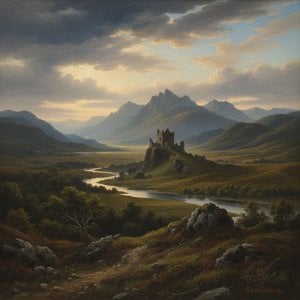
Explore the life & art of Alexander Nasmyth, a pivotal figure in Scottish Romantic landscape painting. Discover his iconic works, including portraits of Robert Burns, and learn about his lasting influence on national identity. Fine art reproductions available.
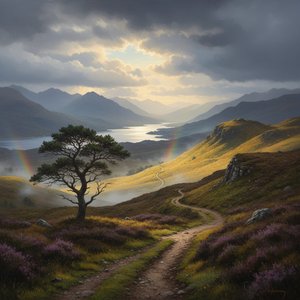
Explore the serene landscapes & majestic Highland cattle paintings of Louis Bosworth Hurt (1856-1929). Discover his mastery of atmospheric perspective and lasting legacy in British art. Learn more at WahooArt.

探索康斯塔布尔的25幅传世杰作!沉浸于英国田园风光,感受浪漫主义绘画大师的光影与色彩。高清油画复制、艺术品购买尽在WahooArt.com,为您的家居增添经典之美。立即在线探索完整系列!

Explore the profound beauty of the Scottish Highlands through the lens of Romanticism. Discover the history, technique, and atmospheric mastery behind iconic landscape paintings from the Old Masters to museum-quality oil reproductions for collectors.

 实景预览
实景预览
 分享
分享 分享
分享
 详情
详情 指南
指南

 下载作品
下载作品
 相似作品
相似作品 X射线
X射线 幻灯片播放
幻灯片播放 问答
问答
 统计数据
统计数据
 展开全文
展开全文









 玻璃选项仅适用于110厘米以下的尺寸。


