x
购买印刷品 购买印刷品购买手绘画作 购买手绘画作 分享分享
详情详情 加入收藏 加入收藏 下载下载 相似作品相似作品 幻灯片播放幻灯片播放

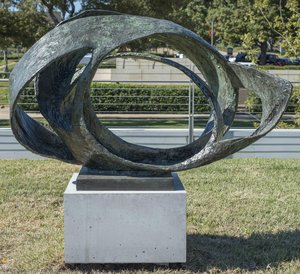
Figure lying on its side (Version V)

William Kenneth Armitage's 'Figure Lying on Its Side (Version V)' is a poignant bronze sculpture exploring themes of vulnerability and human form. Discover its geometric beauty and profound emotional depth.

Discover William Kenneth Armitage (1916-2002), a British sculptor celebrated for his semi-abstract bronze figures and the 'geometry of fear' style. Explore iconic works like "Both Arms" and delve into his artistic legacy.

购买高分辨率增强版数字图像,其品质远超在线预览。

每一份文件都由我们的内部专家使用先进工具与专业的后期润色技术精心打造。我们确保每一张图像都具备卓越的清晰度、精准的色彩还原度以及细腻的细节表现。

最终文件将在 72 小时内通过电子邮件交付,并针对专业、编辑及印刷用途进行了优化。其品质与顶级设计工作室、出版社和画廊所信赖的标准完全一致。

数字图像

下载高分辨率文件,用于个人展示、打印及创意项目。 (购买印刷品 购买印刷品购买手绘画作 购买手绘画作)

最终价格

$ 24.90

每份数字图像订单均包含

专业数字图像交付,品质保障

选择 WahooArt.com,您获得的不仅仅是一张图像——您收到的是经过专业级增强、精雕细琢的数字艺术作品,并享有满意保证。以下是您的订单中自动包含的所有内容:

shipping_icon
邮件快速送达

您的高分辨率数字图像文件将在下单后 72 小时内通过电子邮件发送给您 —— 即可立即使用。

canvas_icon
AI 增强型数字文件

您的艺术品经过专业优化,结合先进的 AI 技术与人工修饰,确保呈现极致的细节、清晰度与色彩准确度。

insurance_icon
终身免费重发服务

不小心删除了文件或找不到了?没关系——我们将随时为您免费重发。

tax_icon
无需进口费用,始终如一

即刻拥有您的艺术作品,无需支付任何关税、税费或运费——数字下载始终免税。

color_icon
色彩精准保证

我们通过专业工具与色彩管理技术,确保您的数字图像尽可能真实地还原原作色彩。

return_icon
60天满意保证

如果您对所购买的数字图像不满意,我们将在60天内为您进行修改或退还100%的款项——无需任何解释。

guarantee_icon
100% 退款保证

如果不满意?在收到数字文件后的60天内,我们为您提供全额退款——无需任何理由。

discount_icon
批量订单优惠

购买 3 张图片可享 10% 折扣 - 购买 5 张可享 15% 折扣 - 购买 10+ 张可享 20% 折扣。非常适合创意项目、画廊和机构使用。

作品概览

  • Artist: William Kenneth Armitage
  • Medium: Bronze
  • Artistic style: Geometry of Fear
  • Title: Figure lying on its side (Version V)
  • Dimensions: 38.1 x 82.5 x 22.3cm
  • Influences: Ancient art
  • Notable elements: Geometric, semi-abstract

艺术知识测试

每道题只有一个正确答案。

题目 1:
What is the primary subject of William Kenneth Armitage’s sculpture, ‘Figure Lying on Its Side (Version V)’?
题目 2:
In what year was ‘Figure Lying on Its Side (Version V)’ created?
题目 3:
William Kenneth Armitage is known for his use of which primary material in his sculptures?
题目 4:
The sculpture’s style, often described as ‘Geometry of Fear,’ reflects which broader artistic trend?
题目 5:
Which of the following best describes Armitage’s approach to representing the human figure?

The Sculptor's Introspection: William Kenneth Armitage’s “Figure Lying on Its Side”

William Kenneth Armitage’s “Figure Lying on Its Side (Version V)” isn’t merely a sculpture; it’s a distilled essence of human experience, rendered in the cool, enduring solidity of bronze. Completed in 1957, this piece stands as a pivotal work within Armitage's oeuvre, embodying his signature style – a deliberate simplification of the human form coupled with an underlying current of unease and existential questioning. The sculpture immediately commands attention not through overt drama, but through its quiet intensity; it’s a study in restraint, inviting prolonged contemplation rather than immediate judgment.

Armitage, emerging from the austerity of post-war Britain, was deeply influenced by the anxieties of his time. His work reflects this, eschewing traditional heroic representations and instead focusing on the vulnerability inherent within the human condition. The figure itself is remarkably ambiguous – neither definitively male nor female, young nor old – existing in a state of suspended animation, caught between repose and imminent movement. This deliberate lack of specificity allows viewers to project their own emotions and experiences onto the sculpture, fostering a deeply personal connection.

A Geometry of Fear: Armitage’s Artistic Language

Armitage's style is often described as “Geometry of Fear,” a term coined by critics to capture the way he employed sharp angles and fragmented forms to convey a sense of disorientation and psychological tension. “Figure Lying on Its Side” exemplifies this perfectly. The figure’s limbs are elongated, almost skeletal, creating a feeling of precariousness and vulnerability. The subtle curve of the torso is countered by the rigid lines of the chair-like structure attached to its side – an element that simultaneously grounds the sculpture and reinforces its sense of confinement. The bronze itself, chosen for its durability and ability to capture minute details, contributes significantly to the work’s impact; it possesses a tactile quality that invites touch while simultaneously conveying a sense of permanence.

Interestingly, Armitage drew inspiration from ancient art forms, particularly Cycladic sculpture – the enigmatic, abstract figures found on the Greek islands. These primitive forms, devoid of narrative and imbued with an almost ritualistic quality, resonate within Armitage’s work, suggesting a connection to primal human emotions and beliefs. The deliberate simplification of the figure echoes this ancient aesthetic, stripping away extraneous detail to reveal the core essence of form.

Symbolism and Interpretation: A Fragmented Self

The chair-like appendage attached to the figure’s side is particularly intriguing. It can be interpreted as a symbol of societal constraints, representing the pressures and expectations that shape our lives. Alternatively, it might suggest a yearning for connection or support – a desire to anchor oneself in a world often characterized by isolation. The figure's prone position further reinforces this sense of vulnerability, suggesting a state of surrender or perhaps even resignation.

Furthermore, the sculpture’s monochrome palette—a stark contrast against the warm tones of bronze—heightens its emotional impact. The absence of color forces viewers to focus on the form itself, intensifying the feeling of unease and prompting deeper reflection. The work is not about depicting a specific narrative; instead, it invites us to confront our own anxieties and uncertainties.

A Legacy of Quiet Intensity

“Figure Lying on Its Side (Version V)” remains a powerful testament to Armitage’s artistic vision – a poignant exploration of the human condition rendered in bronze. It's a work that rewards repeated viewing, revealing new layers of meaning with each encounter. Reproductions of this sculpture offer an accessible way to experience its profound emotional resonance, bringing its quiet intensity into homes and galleries alike. Its enduring appeal lies not in grand gestures or dramatic displays, but in its ability to capture the subtle complexities of human existence – a reminder that even in moments of vulnerability, there is beauty and significance to be found.


艺术家简介

A Life Sculpted in Bronze: The World of Kenneth Armitage

William Kenneth Armitage, known to the art world as Kenneth Armitage, emerged from the industrial heartland of Leeds, England, in 1916, a year steeped in the shadows of the First World War. His journey toward becoming one of Britain’s most significant sculptors of the 20th century was not predetermined but forged through dedication, artistic exploration, and the disruptive forces of global conflict. Early talent blossomed at Leeds College of Art from 1934 to 1937, a foundation upon which he built further skills at the prestigious Slade School of Fine Art in London until 1939. However, the looming specter of war interrupted his studies as he answered the call to serve in the Royal Artillery. This period undoubtedly shaped his perspective, instilling a sense of resilience and perhaps contributing to the underlying tension often perceived within his work. Following demobilization, Armitage found himself drawn to education, taking on a pivotal role at the Bath Academy of Art from 1946 to 1956, where he headed the sculpture department, nurturing a new generation of artists while simultaneously refining his own distinctive style.

The Geometry of Fear and Human Form

Armitage’s artistic signature lies in his compelling exploration of the human figure rendered primarily in bronze. He didn't seek to replicate reality but rather to distill it, stripping away extraneous detail to reveal the essence of form and emotion. His sculptures are characterized by a semi-abstract quality; figures remain recognizable as human, yet they are simplified, stylized, and often fragmented. This wasn’t merely an aesthetic choice but a deliberate attempt to convey a sense of vulnerability and existential questioning that resonated with the post-war climate. Geometric shapes play a crucial role in his visual language, lending structure and a certain austerity to his figures. Critics coined the term ‘Geometry of Fear’ to describe the work of Armitage alongside contemporaries like Lynn Chadwick and Henry Moore, recognizing a shared preoccupation with anxiety, alienation, and the fragility of human existence. However, while acknowledging Moore's profound influence – particularly his exploration of the human form in space – Armitage forged his own path, embracing a more angular, geometric approach that set him apart. The echoes of ancient art also resonate within his work; he drew inspiration from the simplified forms and archaic qualities found in Ancient Egyptian and Cycladic sculptures, imbuing his pieces with a timeless quality.

Recognition and Lasting Legacy

Throughout his career, Armitage received significant recognition for his contributions to British sculpture. A watershed moment arrived in 1958 when he was awarded Best International Sculpture under Age 45 at the Venice Biennale – an accolade that propelled him onto the international stage. This success was followed by further honors, including appointment as a Commander of the Order of the British Empire (CBE) in 1969 and election as an Associate Royal Academician in 1994. However, perhaps his most poignant legacy is embodied in “Both Arms,” unveiled in Millennium Square, Leeds, in 2001 with Nelson Mandela himself performing the honors. This sculpture became an instant landmark, a powerful symbol of reconciliation and hope for the city he called home. Other notable works like "Figure Lying on its Side (Version V)" – part of the British Council Collection – and “Legs Walking,” erected in City Square, Leeds, in 2018, continue to captivate audiences with their evocative forms and enduring themes.

A Continuing Dialogue

Kenneth Armitage passed away in London in 2002, leaving behind a rich artistic legacy that continues to inspire and provoke thought. His sculptures are celebrated not only for their aesthetic qualities but also for their ability to tap into universal human emotions – anxiety, loneliness, resilience, and the search for meaning. He wasn’t simply creating objects; he was initiating a dialogue about what it means to be human in a complex and often unsettling world. His work stands as a testament to the power of art to reflect, challenge, and ultimately transcend the limitations of our time. Today, his pieces are exhibited in major museums and public spaces across the UK and internationally, ensuring that his unique vision continues to resonate with generations to come. Armitage’s influence can be seen in the work of contemporary sculptors who continue to explore the boundaries between abstraction and figuration, demonstrating the enduring relevance of his artistic innovations.
William Kenneth Armitage

William Kenneth Armitage

1916 - 2002 , United Kingdom

基本信息

  • Artistic Movement Or Style: Semi-abstract sculpture
  • Artists Or Movements Influenced By This Artist: Abstract figurative art
  • Artists Who Influenced This Artist:
    • Henry Moore
    • Barbara Hepworth
  • Date Of Birth: July 18, 1916
  • Date Of Death: January 22, 2002
  • Full Name: William Kenneth Armitage
  • Nationality: British
  • Notable Artworks:
    • Both Arms
    • Mother and Child
    • Legs Walking
  • Place Of Birth: Leeds, United Kingdom