
博物馆级艺术微喷或帆布版画,制作高效,并提供多种饰面选择。 ( 购买手绘画作 切换至数字图像销售渠道)





























从与原作比例一致的预设尺寸中进行选择。

您可以输入自定义尺寸,以适配特定的画框或空间。如果您选择的尺寸与原图比例不符,我们将对作品进行裁剪,或通过镜像填充/纯色填充边缘的方式来扩展图像。在开始制作之前,我们会向您发送一份数字效果图供您确认。
请注意,屏幕上的预览并不能反映实际的裁剪或扩展效果。只有效果图才能准确展示最终的构图。
虽然我们提供定制尺寸,但为了保持原图比例,我们建议您从预设列表中选择尺寸。

Christ in the Sepulchre
复制品尺寸
“The Ecstasy,” painted by William Blake in 1822, stands as an emblem of Romantic idealism and a testament to the artist's unparalleled ability to translate inner experience into visual form. More than just a depiction of biblical narrative—the crucifixion of Jesus Christ—it’s a profound meditation on divine love, spiritual ascension, and the transformative power of imagination itself.
Blake’s “The Ecstasy” emerged during a period of fervent intellectual and artistic ferment—the Romantic Age. Influenced by thinkers like Rousseau and Coleridge, Blake championed the primacy of feeling over reason, advocating for an embrace of imagination as a conduit to spiritual truth. The painting reflects the broader cultural preoccupation with themes of divine revelation, moral regeneration, and the sublime experience of confronting the infinite.
Blake’s artwork is replete with symbolic imagery—each element contributing to a complex tapestry of meaning. The radiant light emanating from Jesus symbolizes divine illumination and spiritual enlightenment, while the angels represent messengers of God and guardians of virtue. The figures surrounding Jesus embody humanity's aspiration for holiness and communion with the divine.
"The Ecstasy" compels viewers to contemplate profound questions about faith, morality, and the human condition. Its luminous palette and dynamic composition evoke a sense of awe and wonder—drawing us into a realm beyond ordinary sensory experience. Blake’s masterpiece serves as an enduring reminder that true beauty resides not merely in outward appearance but also in the inner landscape of consciousness—a place where imagination reigns supreme and spiritual transformation becomes possible.


1757 - 1827 , 英国
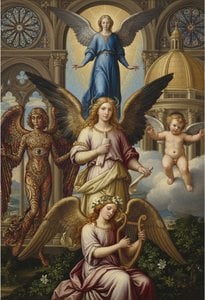
Explore the profound beauty of angelic figures in art history. From Renaissance masterpieces to celestial symbolism, our expert guide offers a sophisticated journey through the divine imagery of the Old Masters for discerning collectors and art enthusiasts.


 效果预览
效果预览
 分享
分享 分享
分享
 详情
详情

 下载
下载
 相似作品
相似作品 X射线
X射线 幻灯片播放
幻灯片播放 统计数据
统计数据
 展开详情
展开详情









 玻璃选项仅适用于110厘米以下的尺寸。


