效果预览 AR 预览 切换至版画销售渠道 购买手绘画作 分享
详情 指南 加入收藏 下载 相似作品 X射线 幻灯片播放 统计数据

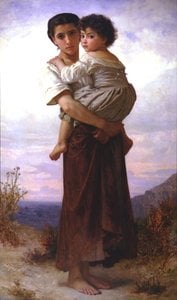
The Little Shepherdess

‘Shepherdess,’ created in 1889 by William-Adolphe Bouguereau, exemplifies Academicism style with Naturalism influences. This portrait depicts a serene woman holding a stick amidst a pastoral landscape featuring horses and birds—a testament to Bouguereau’s dedication to idealized realism.

拉罗谢尔 法国 威廉·阿道夫·布古雷欧 玻古雷歐 威廉·阿道夫·布古雷欧(1825-1905)是学院派现实主义大师,以其精湛的技艺和对古典美学的追求而闻名。作品充满活力与情感力量,展现神话场景、风俗画以及女性形象的宁静与优雅。他是学术艺术巅峰代表人物。 布古雷欧 Academic Realism Raphael 1825 1905 William-Adolphe Bouguereau French The Nymphaeum La Rochelle, France 巴黎,法国 2 威廉·阿道夫·布古雷欧出生在哪里?

购买高分辨率增强版数字图像,其品质远超在线预览。

每一份文件都由我们的内部专家使用先进工具与专业的后期润色技术精心打造。我们确保每一张图像都具备卓越的清晰度、精准的色彩还原度以及细腻的细节表现。

最终文件将在 72 小时内通过电子邮件交付,并针对专业、编辑及印刷用途进行了优化。其品质与顶级设计工作室、出版社和画廊所信赖的标准完全一致。

数字图像

下载高分辨率文件,用于个人展示、打印及创意项目。 ( 切换至版画销售渠道 购买手绘画作)

最终价格

$ 24.90

每份数字图像订单均包含

专业数字图像交付,品质保障

选择 WahooArt.com,您获得的不仅仅是一张图像——您收到的是经过专业级增强、精雕细琢的数字艺术作品,并享有满意保证。以下是您的订单中自动包含的所有内容:

shipping_icon
邮件快速送达

您的高分辨率数字图像文件将在下单后 72 小时内通过电子邮件发送给您 —— 即可立即使用。

canvas_icon
AI 增强型数字文件

您的艺术品经过专业优化,结合先进的 AI 技术与人工修饰,确保呈现极致的细节、清晰度与色彩准确度。

insurance_icon
终身免费重发服务

不小心删除了文件或找不到了?没关系——我们将随时为您免费重发。

tax_icon
无需进口费用,始终如一

即刻拥有您的艺术作品,无需支付任何关税、税费或运费——数字下载始终免税。

color_icon
色彩精准保证

我们通过专业工具与色彩管理技术,确保您的数字图像尽可能真实地还原原作色彩。

return_icon
100天满意保证

如果您对所购数字图像不满意,我们将在100天内为您进行修改或提供100%的全额退款——无需任何理由。

guarantee_icon
100% 退款保证

不满意?在收到数字文件后的100天内,您可以申请全额退款——无需任何理由。

discount_icon
批量订单优惠

购买 3 张图片可享 10% 折扣 - 购买 5 张可享 15% 折扣 - 购买 10+ 张可享 20% 折扣。非常适合创意项目、画廊和机构使用。

作品概览

  • Medium: Oil on Canvas
  • Notable elements or techniques: Detailed realism; luminous color palette
  • Title: The Little Shepherdess
  • Artist: William-Adolphe Bouguereau
  • Influences:
    • Raphael
    • Titian
  • Subject or theme: Rural pastoral scene
  • Artistic style: Idealized beauty

艺术知识测试

每道题只有一个正确答案。

题目 1:
What artistic style is William-Adolphe Bouguereau’s ‘The Little Shepherdess’ primarily characterized by?
题目 2:
According to the description, what prominent element contributes to the impression of serenity in the painting?
题目 3:
The image depicts a woman holding a stick. What does this gesture suggest about her character?
题目 4:
What artistic influences did Bouguereau draw upon during his training at the École des Beaux-Arts?
题目 5:
What is one notable feature of Bouguereau’s technique that contributes to the painting's luminous quality?

A Vision of Pastoral Serenity

In the luminous realm of William-Adolphe Bouguereau’s "The Little Shepherdess," completed in 1889, viewers are transported into a meticulously crafted world where innocence and pastoral beauty converge. This quintessential masterpiece of Academic Impressionism serves as more than a mere depiction of rural life; it is an invitation to witness a moment of profound tranquility. The painting portrays a young woman, her presence radiating a sense of purity and grace, seated amidst a verdant meadow. Beside her, the subtle presence of a shepherd boy gazing with quiet adoration adds a layer of tender narrative, suggesting the romanticized societal ideals of the Belle Époque. As the eye wanders through the composition, the inclusion of horses and the soft rustle of trees in the background reinforce a theme of timeless tradition and the harmonious coexistence of humanity and nature.

The technical brilliance of Bouguereau is nowhere more evident than in his masterful use of the glazing technique. By layering thin, translucent washes of color over a precise underpainting, the artist achieved a breathtakingly luminous quality that seems to emanate from within the canvas itself. Every texture—from the soft, tactile wool of the shepherdess's attire to the delicate, sun-drenched blades of grass—is rendered with an unparalleled realism that borders on the divine. His brushstrokes are nearly invisible, serving only to create a soft, diffused glow that bathes the figures in warmth. This meticulous attention to detail ensures that the skin tones possess a lifelike vitality, making the subject feel present and breathing, a hallmark of his commitment to the classical ideals of beauty.

Historical Resonance and Symbolic Depth

To understand "The Little Shepherdess" is to understand the cultural heartbeat of late 19th-century France. Created during an era fascinated by mythological narratives and the idealized representation of womanhood, the work draws deep inspiration from the Old Masters. Bouguereau’s reverence for Raphael is palpable, particularly in how he translates the spiritual weight of Renaissance frescoes into a modern, pastoral setting. The painting embodies the Victorian obsession with moral virtue and domestic tranquility, presenting an idyllic version of the countryside that offered a soothing escape from the rapid industrialization of the age. It is a window into a lost era of perceived simplicity and grace.

Beyond its visual splendor, the artwork carries a profound emotional weight that continues to captivate collectors and decorators alike. The symbolism of the shepherdess—often representing innocence and the untainted soul—resonates deeply within the domestic space. For the interior designer, this piece offers a sense of calm and sophisticated nostalgia, making it an ideal focal point for rooms intended to evoke peace and reflection. Whether viewed as a study in classical technique or an emotional journey into a sunlit meadow, "The Little Shepherdess" remains a timeless testament to the enduring power of beauty, offering a soulful connection to the heights of academic artistry.


艺术家简介

William-Adolphe Bouguereau - A Life Immersed in Beauty

Born in 1825, amidst the vineyards and olive groves of La Rochelle, France, William-Adolphe Bouguereau’s life was destined to be a celebration of classical ideals and breathtaking realism. From an early age, his artistic inclinations were nurtured, leading him to Paris and the prestigious École des Beaux-Arts. There, under the guidance of François-Edouard Picquenot, he honed his skills, absorbing the lessons of the Old Masters – Raphael and Titian foremost among them. These influences weren’t mere imitation; they became the bedrock upon which Bouguereau built a unique artistic vision, one characterized by meticulous detail, luminous color palettes, and an unwavering commitment to portraying beauty in its most idealized form. He wasn't simply painting what he *saw*, but rather what he believed to be inherently beautiful, striving for a perfection that resonated with the aesthetic sensibilities of his time.

The Architect of Academic Perfection

Bouguereau’s artistic style is often described as academic realism, and rightly so. He possessed an unparalleled mastery of anatomy, light, and composition. His canvases are populated by figures rendered with astonishing precision – the delicate curve of a shoulder, the subtle flush of skin, the expressive depth of an eye. But his work transcends mere technical skill; it’s infused with emotion and narrative power. He frequently depicted mythological scenes, transforming ancient tales into vibrant, emotionally resonant moments. *The Birth of Venus*, for example, isn't just a depiction of a goddess emerging from the sea; it’s a celebration of feminine grace and ethereal beauty. Similarly, works like *Zenobia Found by Shepherds on the Banks of the Araxes* capture vulnerability and pathos with remarkable sensitivity. Beyond mythology, Bouguereau found inspiration in everyday life – shepherdesses tending their flocks, young girls at play, mothers cradling their children. These genre scenes, while seemingly simple, are imbued with a sense of dignity and tenderness that elevates them to the realm of art. *Faneuse (1869)* exemplifies this approach, portraying a young woman in a tranquil landscape with an exquisite attention to detail and atmosphere. His dedication to capturing innocence is particularly evident in paintings like *Child at Bath*, where the delicate rendering of skin and light creates a truly captivating image.

A Legacy Challenged and Rediscovered

During his lifetime, Bouguereau enjoyed immense popularity and critical acclaim. He was a favorite of the Salon, receiving numerous awards and commissions. His paintings were sought after by collectors and museums alike. However, with the advent of modernism in the early 20th century, his work fell out of favor. The abstract forms and radical experimentation of artists like Picasso and Matisse stood in stark contrast to Bouguereau’s traditional style, and he was often dismissed as a sentimental academician. For decades, his name languished in obscurity, overshadowed by the avant-garde movements that dominated the art world. Yet, the story doesn't end there. In recent years, there has been a significant revival of interest in Bouguereau’s work. Art historians and collectors have begun to recognize his technical brilliance and artistic integrity. His paintings are now celebrated for their beauty, skill, and emotional depth. This rediscovery is not merely a nostalgic yearning for the past; it's a recognition that Bouguereau was a master craftsman who deserved a place among the great artists of all time. His influence can be seen in contemporary figurative painting, where artists continue to draw inspiration from his mastery of form and light. ## Influences and Artistic Style Bouguereau’s artistic vision was profoundly shaped by the Old Masters – Raphael and Titian – whose meticulous anatomical accuracy and luminous color palettes served as models for his own work. He absorbed their techniques of drawing, painting, and composition with unwavering devotion. Like Raphael, Bouguereau prioritized classical ideals of beauty and harmony, striving to achieve a perfection that transcended mere realism. His approach to anatomy was particularly noteworthy; he dissected cadavers extensively, meticulously studying the musculature and skeletal structure of the human body. This anatomical knowledge informed his depictions of figures with astonishing precision – every muscle fiber rendered with painstaking detail. Bouguereau’s use of color was equally masterful. He employed a palette that echoed the harmonies of Titian's paintings, utilizing warm hues to convey emotion and luminosity to illuminate his subjects. His compositions were carefully balanced, reflecting the principles of classical architecture—creating visual stability and grandeur. ## Major Achievements and Recognition Bouguereau achieved unparalleled success during his lifetime as a painter and teacher. He won the Prix de Rome in 1850 with *Zenobia Found by Shepherds on the Banks of the Araxes*, securing him a prestigious residency at Villa Medici in Rome, where he honed his skills and studied the masterpieces of Renaissance art. His Salon paintings garnered widespread acclaim and numerous awards, establishing him as one of the most celebrated artists of his era. He was particularly admired for his depictions of mythological figures—particularly Venus—and genre scenes portraying pastoral life. Bouguereau’s influence extended beyond his own artistic output; he mentored countless aspiring painters, fostering a new generation of artists committed to upholding classical traditions. His legacy continues to inspire figurative painting today, demonstrating the enduring power of meticulous draftsmanship and emotional expression. ## Enduring Appeal and Legacy Despite initial skepticism from avant-garde critics, Bouguereau’s work has experienced a remarkable resurgence in popularity in recent decades. Art historians have rediscovered his artistic integrity and technical brilliance, recognizing him as a pivotal figure in 19th-century French painting. His paintings are now housed in prominent museums worldwide—including the Musée d’Orsay in Paris, The J. Paul Getty Museum—ensuring that his vision of beauty will continue to captivate audiences for generations to come. Bouguereau's art stands as a testament to the pursuit of perfection and an unwavering belief in the timeless appeal of classical ideals—a legacy deserving of continued admiration and study.
威廉·阿道夫·布古雷欧

威廉·阿道夫·布古雷欧

1825 - 1905 , 法国

基本信息

  • Artistic Movement Or Style: 学院主义绘画风格
  • Artists Who Influenced This Artist:
    • 拉斐尔
    • 提提安
  • Date Of Birth: 1825年11月30日
  • Date Of Death: 1905年8月19日
  • Full Name: William-Adolphe Bouguereau
  • Nationality: 法国人
  • Notable Artworks:
    • 圣罗克像
    • 阿尔卡迪亚和缪斯
    • 少女沐浴
  • Place Of Birth: 法国拉罗谢尔市