Oil On CanvasWallArtAbstract Expressionism
 1967Modern
 47.0 x 61.0 cm
由我们的艺术家按需定制,为您提供您所选尺寸及画框的布面手工油画。 ( 切换至版画销售渠道 切换至数字图像销售渠道)





























从与原作比例一致的预设尺寸中进行选择。

您可以输入自定义尺寸,以适配特定的画框或空间。如果所选尺寸与原图比例不符,我们将通过裁剪作品或添加手绘元素来扩展画面。数字样稿将在制作开始前发送给您确认。
请注意,屏幕预览无法准确反映实际的裁剪或扩展效果,只有样稿才能真实呈现最终的构图。
虽然我们提供定制尺寸服务,但为了保留原作比例,建议您从预设列表中选择尺寸。

White Nude
复制品尺寸
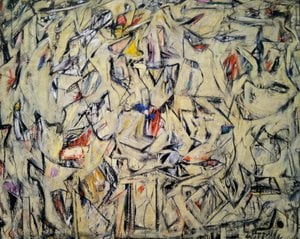
To stand before Willem de Kooning’s White Nude is to enter a realm where the boundaries between the physical form and raw, unbridantly emotion begin to dissolve. This 1967 masterpiece serves as a profound window into the psyche of one of the most influential figures of the Abstract Expressionist movement. The canvas does not merely present a subject; it stages a confrontation. At its heart lies a central female figure, rendered in striking whites that seem to struggle against an encroaching tide of color and texture. This is not a portrait of a person so much as it is a portrait of a feeling—a turbulent, pulsating energy that captures the very essence of human vulnerability and strength intertwined.
The composition invites the viewer to look beyond the surface. While the central figure commands attention, the periphery of the work is alive with smaller, ghostly forms that suggest a larger, more complex narrative of existence. These secondary figures, nestled within the chaotic landscape of the background, create a sense of depth and psychological layering, as if we are witnessing a fragment of a much larger, more turbulent dreamscape. For the discerning collector or interior designer, this piece offers a commanding presence, acting as a focal point that demands contemplation and sparks deep conversation within any sophisticated space.
De Kooning’s technical mastery is found in his refusal to be contained by traditional boundaries. Eschewing the polished finish of classical realism, he embraced the impasto technique, applying paint with a ferocity that leaves behind a physical topography on the canvas. Each stroke is a record of an action; the thick, textured ridges and valleys of pigment create a rhythmic movement that guides the eye across the surface in a dance of light and shadow. This aggressive application of paint—often described as slashing or swirling—imbued the work with a sense of spontaneous creation, making the act of painting itself part of the artwork's soul.
The palette is a deliberate study in contrast. The starkness of the white subject matter provides a necessary anchor amidst a sea of jarring, high-energy hues. Deep blacks, fiery reds, and sun-drenched yellows collide without seeking harmony, instead opting for a tension that mirrors the internal conflicts of the human condition. This intentional dissonance is what gives the reproduction such life; when captured in a high-quality hand-painted format, these textures and colors retain their ability to vibrate with an almost tactile intensity, bringing the restless spirit of New York's postwar art scene into the modern home.
To understand White Nude, one must understand the era of its birth. Emerging from the cultural upheaval of the mid-20th century, De Kooning was a pioneer in rejecting the rigid constraints of European Modernism. He sought to forge a new, uniquely American visual language—one that could articulate the anxieties, the uncertainties, and the profound transformations of a world recovering from global conflict. His work reflects a period where artists were no longer content to depict reality with photographic precision; they felt a desperate need to capture the truth of experience, even if that truth was messy, fragmented, and chaotic.
For those seeking to adorn their surroundings with art that possesses both historical weight and contemporary relevance, this work stands as a testament to the enduring power of abstraction. It is more than a decoration; it is an invitation to experience the sublime. Whether placed in a minimalist gallery-style setting or a richly textured study, De Kooning’s vision continues to challenge our perceptions, reminding us that within the chaos of color and form, there lies a profound and beautiful human truth.


1904 - 1997 , 荷兰

Explore the profound emotional depth of Abstract Expressionism. From Pollock's dynamic drips to de Kooning's gestural mastery, our expert guide offers art collectors a sophisticated analysis of this transformative movement and its enduring legacy in modern fine art.


 效果预览
效果预览
 分享
分享 分享
分享
 详情
详情

 下载
下载
 相似作品
相似作品 X射线
X射线 幻灯片播放
幻灯片播放 统计数据
统计数据 展开详情
展开详情









 玻璃选项仅适用于110厘米以下的尺寸。