博物馆级艺术微喷或帆布版画,制作高效,并提供多种饰面选择。 ( 购买手绘画作 切换至数字图像销售渠道)





























从与原作比例一致的预设尺寸中进行选择。

您可以输入自定义尺寸,以适配特定的画框或空间。如果您选择的尺寸与原图比例不符,我们将对作品进行裁剪,或通过镜像填充/纯色填充边缘的方式来扩展图像。在开始制作之前,我们会向您发送一份数字效果图供您确认。
请注意,屏幕上的预览并不能反映实际的裁剪或扩展效果。只有效果图才能准确展示最终的构图。
虽然我们提供定制尺寸,但为了保持原图比例,我们建议您从预设列表中选择尺寸。

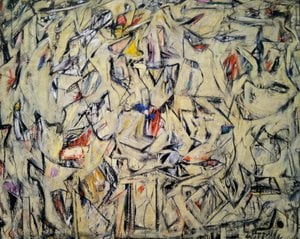
Untitled
复制品尺寸
In the realm of twentieth-century modernism, few works possess the raw, turbulent energy found in Willem de Kooning’s Untitled. This striking piece serves as a profound psychological record of an era defined by postwar anxiety and a restless search for new meaning. At first glance, the viewer is met with a composition that defies easy categorization, pulling the eye into a swirling vortex of form and shadow. The subject matter—a depiction of the female form—emerges not through delicate lines, but through a series of fragmented gestures and muscular contours that suggest both presence and dissolution. It is a work that does not merely sit upon the canvas; it vibrates with an unsettling dynamism, capturing the very essence of Abstract Expressionism.
The technique employed here is a masterclass in what is often termed "action painting." De Kooning utilizes thick, impasto strokes and heavy applications of pigment to build a surface that feels almost sculptural. The use of charcoal-like textures and deep shading creates a sense of physical struggle, as if the artist were wrestling with the medium itself to pull meaning from chaos. This tactile quality is essential for anyone seeking to appreciate the piece; it invites a visual exploration of the layers, where every scrape and smudge tells the story of a deliberate, energetic movement. For the discerning collector or interior designer, this texture provides a sophisticated depth that can anchor a room, offering a focal point that changes character depending on the light and perspective.
To understand the emotional weight of this work, one must look to the historical landscape of the mid-1960s. The piece reflects a period of intense transformation, where the boundaries between figuration and pure abstraction were being aggressively redrawn. De Kooning, a titan of the New York School, moved away from the more recognizable subjects of his earlier career to embrace a language of fragmentation. This stylistic shift mirrors the fractured realities of a world navigating the complexities of the modern age. The painting embodies a sense of existential inquiry, using the human form as a vessel for exploring themes of identity, vulnerability, and strength.
Beyond its historical significance, the artwork offers an unparalleled emotional impact. There is a certain "terrible beauty" in its chaos—a way in which the tension between the heavy, dark strokes and the emerging light creates a rhythmic, almost musical quality. It evokes a sense of movement that is both chaotic and controlled, making it an ideal selection for spaces designed to inspire contemplation or bold intellectual engagement. Whether displayed in a contemporary gallery setting or as a centerpiece in a curated residential collection, this reproduction brings with it the enduring power of De Kooning’s vision: a testament to the beauty found within the struggle of creation.


1904 - 1997 , 荷兰
Unveil the visceral power of Abstract Expressionism. Our expert exploration delves into the transformative legacies of Pollock, Rothko, and De Kooning, offering discerning collectors a profound understanding of the New York School’s enduring mastery and historical impact.

Explore the profound emotional depth of Abstract Expressionism. From Pollock's dynamic drips to de Kooning's gestural mastery, our expert guide offers art collectors a sophisticated analysis of this transformative movement and its enduring legacy in modern fine art.


 效果预览
效果预览
 分享
分享 分享
分享
 详情
详情 指南
指南

 下载
下载
 相似作品
相似作品 X射线
X射线 幻灯片播放
幻灯片播放 统计数据
统计数据

 展开详情
展开详情









 玻璃选项仅适用于110厘米以下的尺寸。