博物馆级艺术微喷或帆布版画,制作高效,并提供多种饰面选择。 ( 购买手绘画作 切换至数字图像销售渠道)





























从与原作比例一致的预设尺寸中进行选择。

您可以输入自定义尺寸,以适配特定的画框或空间。如果您选择的尺寸与原图比例不符,我们将对作品进行裁剪,或通过镜像填充/纯色填充边缘的方式来扩展图像。在开始制作之前,我们会向您发送一份数字效果图供您确认。
请注意,屏幕上的预览并不能反映实际的裁剪或扩展效果。只有效果图才能准确展示最终的构图。
虽然我们提供定制尺寸,但为了保持原图比例,我们建议您从预设列表中选择尺寸。

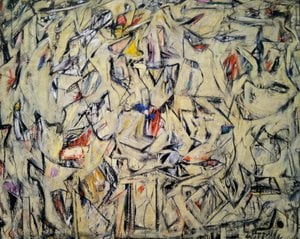
Untitled (21)
复制品尺寸
“Untitled (21),” painted in 1955 by Willem de Kooning, stands as a cornerstone of Abstract Expressionism, embodying the movement's core tenets: spontaneity, emotional intensity, and a rejection of representational conventions. This monumental canvas—measuring approximately 200.7 cm x 175.3 cm—immediately commands attention with its vibrant palette dominated by fiery reds and oranges, punctuated by subtle greens that contribute to an overall sense of dynamism.
“Untitled (21)” emerged against a backdrop of postwar anxieties and intellectual ferment. Following World War II, American artists sought to grapple with trauma and disillusionment through art that prioritized emotion over rational thought. De Kooning’s work aligns perfectly with this ethos, reflecting the psychological complexities inherent in navigating a world scarred by conflict.
As Nicholas Mirzoeff eloquently observes in “How to See the World,” the woman's gaze—implied but not explicitly rendered—suggests an inward focus, mirroring the broader preoccupation with subjectivity during the era. This subtle detail speaks volumes about De Kooning’s artistic ambition: to convey profound emotional resonance without resorting to conventional visual representations.
The color choices – red and orange – are deliberately assertive, conveying passion and vitality. Simultaneously, the green hues introduce a counterpoint of tranquility and growth, hinting at themes of nurturing and resilience. The woman’s embrace of the child symbolizes protection and unconditional love—powerful concepts that resonate across cultures and generations.
"Untitled (21)" continues to captivate viewers with its visceral energy and uncompromising honesty. It stands as a testament to Willem de Kooning’s mastery of abstraction, demonstrating how artistic innovation can transcend mere visual aesthetics to communicate profound emotional truths. Its enduring appeal lies in its ability to provoke contemplation and inspire awe—qualities that define the very essence of great art.

1904 - 1997 , 荷兰

Explore the profound emotional depth of Abstract Expressionism. From Pollock's dynamic drips to de Kooning's gestural mastery, our expert guide offers art collectors a sophisticated analysis of this transformative movement and its enduring legacy in modern fine art.

Explore the profound elegance of De Stijl. Discover how Piet Mondrian and the masters of Neoplasticism utilized geometric harmony and primary colors to redefine modern abstraction. An authoritative guide for the discerning collector seeking timeless, structured beauty.


 效果预览
效果预览
 分享
分享 分享
分享
 详情
详情 指南
指南

 下载
下载
 相似作品
相似作品 X射线
X射线 幻灯片播放
幻灯片播放 统计数据
统计数据
 展开详情
展开详情









 玻璃选项仅适用于110厘米以下的尺寸。