博物馆级艺术微喷或帆布版画,制作高效,并提供多种饰面选择。 ( 订购纯手工绘制画作 切换至数字图像销售渠道)





























您可以从与原作比例一致的预设尺寸中进行选择。

请输入您所需的宽度和高度,以适配您的画框或墙面。由于印刷品只能进行裁剪,无法超出原图尺寸,因此若比例不一致,画面的一部分将会被裁切。在正式印刷之前,我们会为您发送一份数字效果图供您确认。本页面显示的图片并非最终裁剪后的效果——只有效果图才能展示真实的裁剪情况。
The Acrobat
复刻品尺寸
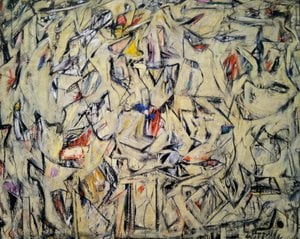
In Willem de Kooning’s 1942 masterpiece, The Acrobat, the viewer is immediately drawn into a profound state of quietude interrupted by an underlying tension. The painting presents a solitary man, dressed in a striking yellow shirt, seated in a moment of repose that feels far from peaceful. While his body remains still, his gaze is directed away from the observer, looking toward something unseen beyond the frame. This deliberate positioning creates an immediate sense of detachment and introspection, inviting those who stand before it to contemplate the complexities of the human psyche. There is a palpable melancholy in his expression, a feeling of being lost in thought, which transforms a simple portrait into a deep exploration of solitude.
Beyond its subject matter, The Acrobat serves as a powerful testament to the burgeoning movement of Abstract Expressionism. De Kooning eschews the precise, representational lines of traditional portraiture in favor of a more spontaneous and emotional language. The technique is characterized by thick, heavy impasto, where the paint is applied with such vigor that the canvas itself seems to pulsate with life. These expressive brushstrokes do not merely depict a man; they convey a state of being. The textured surfaces capture a sense of movement and struggle, as if the artist’s very gestures were an attempt to wrestle meaning from chaos. For the collector or interior designer, this piece offers a commanding presence, bringing a tactile, energetic dimension to any space.
To understand the true depth of this work, one must consider the historical shadow cast by its creation in 1942. As the world was gripped by the anxieties of World War II, de Kooning channeled that collective uncertainty into his art. The painting is rich with symbolic layers that speak to both resilience and mortality. While the man embodies the adaptability and inner fortitude of an acrobat—balancing through life's pressures—the inclusion of a clock on the wall serves as a poignant memento mori. It is a silent reminder of the relentless passage of time and the fleeting nature of existence. Through this delicate balance of subject and symbol, de Kooning creates a work that is not only visually captivating but emotionally resonant, making it an enduring inspiration for those who appreciate art that speaks to the very core of the human experience.
可进行幻灯片浏览:查看 威廉·德库宁 的《The Acrobat》 的 幻灯片展示 页面。
关于 威廉·德库宁 的《The Acrobat》,记录了其规格 (Portrait) 与建议摆放空间 (Living Room) 这两项陈列信息。
威廉·德库宁 的《The Acrobat》 的亮度为 Soft Shadow。亮度描述了色彩呈现出的反射光量。

1904 - 1997 , 荷兰

Discover the transformative power of premium abstract oil paintings. WahooArt offers bespoke, hand-painted masterpieces and expert art consultation to elevate luxury interiors with unmatched craftsmanship, authenticity, and global delivery.

 实景预览
实景预览
 分享
分享 分享
分享
 详情
详情 指南
指南

 下载作品
下载作品
 相似作品
相似作品 X射线
X射线 幻灯片播放
幻灯片播放 问答
问答
 统计数据
统计数据

 展开全文
展开全文









 玻璃选项仅适用于110厘米以下的尺寸。