博物馆级艺术微喷或帆布版画,制作高效,并提供多种饰面选择。 ( 购买手绘画作 切换至数字图像销售渠道)





























从与原作比例一致的预设尺寸中进行选择。

您可以输入自定义尺寸,以适配特定的画框或空间。如果您选择的尺寸与原图比例不符,我们将对作品进行裁剪,或通过镜像填充/纯色填充边缘的方式来扩展图像。在开始制作之前,我们会向您发送一份数字效果图供您确认。
请注意,屏幕上的预览并不能反映实际的裁剪或扩展效果。只有效果图才能准确展示最终的构图。
虽然我们提供定制尺寸,但为了保持原图比例,我们建议您从预设列表中选择尺寸。

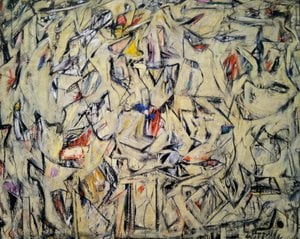
Study for backdrop (labyrinth),1946, private
复制品尺寸
This vibrant, largely unknown work by Willem de Kooning, tentatively titled ‘Study for backdrop (labyrinth)’, offers a compelling glimpse into the artist's intensely personal and profoundly influential approach to Abstract Expressionism. Painted in 1946, during a period of intense experimentation and stylistic shifts within his oeuvre, the canvas pulsates with an almost primal energy – a testament to de Kooning’s relentless pursuit of raw emotion through purely formal means. The painting isn't simply a composition; it’s a visceral outpouring, a captured moment of restless contemplation rendered in bold, unapologetic color.
‘Study for backdrop (labyrinth)’ emerges from a pivotal moment in art history – the burgeoning Abstract Expressionist movement following World War II. De Kooning, along with artists like Jackson Pollock and Mark Rothko, was part of the “second generation” of American abstract painters who rejected European traditions and sought to forge a distinctly American artistic language. This period saw an increasing emphasis on individual expression and subjective experience, moving away from representational art towards purely formal concerns. De Kooning’s work reflects this shift, prioritizing the act of painting itself over any external subject or narrative.
The title, ‘Study for backdrop (labyrinth)’, hints at a process of exploration and experimentation. The term “study” suggests a preliminary sketch or working model, while "labyrinth" evokes a sense of complexity, disorientation, and perhaps even the artist's own internal struggles. It’s possible this piece was intended as a preparatory study for a larger mural or theatrical backdrop, further emphasizing its functional and dynamic nature.
Despite its abstract qualities, ‘Study for backdrop (labyrinth)’ is rich in symbolic potential. The animals themselves can be interpreted as representing primal instincts, anxieties, or even the artist’s own fragmented psyche. The sports ball, a seemingly incongruous element, might symbolize competition, chaos, or the disruption of established order – themes frequently explored by de Kooning.
Ultimately, the painting's power lies in its ability to evoke a strong emotional response. The frenetic energy, jarring colors, and fragmented forms combine to create a sense of unease, tension, and perhaps even exhilaration. It’s a work that demands attention, inviting viewers to confront their own perceptions and emotions.
This exceptional piece offers a rare opportunity to acquire a significant work by one of the 20th century’s most important artists. A hand-painted reproduction captures not only the visual impact of ‘Study for backdrop (labyrinth)’ but also the textural richness and emotional depth of de Kooning's technique. Its dynamic composition and bold use of color make it an ideal addition to a wide range of interior design schemes, from modern minimalist spaces to more eclectic settings. This artwork is more than just decoration; it’s an investment in art history and a testament to the enduring power of Abstract Expressionism.


1904 - 1997 , 荷兰

Explore the profound elegance of De Stijl. Discover how Piet Mondrian and the masters of Neoplasticism utilized geometric harmony and primary colors to redefine modern abstraction. An authoritative guide for the discerning collector seeking timeless, structured beauty.


 效果预览
效果预览
 分享
分享 分享
分享
 详情
详情 指南
指南

 下载
下载
 相似作品
相似作品 X射线
X射线 幻灯片播放
幻灯片播放 统计数据
统计数据

 展开详情
展开详情









 玻璃选项仅适用于110厘米以下的尺寸。