Oil On CanvasWallArtAbstract Expressionism
 1939Early Medieval
 97.0 x 87.0 cm
由我们的艺术家按需定制,为您提供您所选尺寸及画框的布面手工油画。 ( 切换至版画销售渠道 切换至数字图像销售渠道)





























您可以从与原作比例一致的预设尺寸中进行选择。

请输入您需要的宽度和高度,以适配您的画框或墙面。由于作品为手工绘制,若您选择不同的尺寸比例,艺术家可能会在画面边缘多画一些或稍作裁剪 —— 由您决定。在开始绘画之前,我们会为您发送一份数字效果图供您确认。本页面上展示的图片并非最终实物 —— 只有效果图才能反映真实结果。
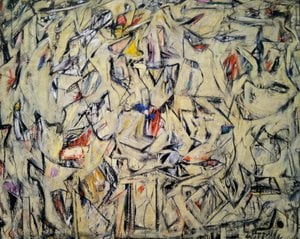
Seated Man
复刻品尺寸说明
Willem de Kooning's “Seated Man,” painted in 1939, isn’t merely a depiction of a man at rest; it’s a potent distillation of the artist’s evolving approach to capturing human emotion and experience. This oil on canvas, measuring a modest yet significant 97 x 87 cm, currently resides within the Hirshhorn Museum and Sculpture Garden in Washington D.C., offering viewers an intimate glimpse into the mind of a pivotal figure in the New York School of art. De Kooning’s work during this period represents a fascinating crossroads – a deliberate exploration of realism interwoven with the burgeoning abstraction that would define his legacy, creating a dynamic tension within each piece.
The painting immediately draws the eye to its central subject: a man seated in a chair, his posture relaxed yet imbued with an underlying sense of contemplation. His arms are crossed, suggesting both vulnerability and self-possession. The deliberate use of color – primarily yellows and browns – contributes significantly to the work’s mood. The bright yellow shirt contrasts sharply with the darker tones of the figure's clothing and the chair, creating a visual rhythm that guides the viewer’s gaze across the canvas. Notably, de Kooning eschews a completely smooth finish; visible brushstrokes are prominent, adding texture and immediacy to the scene – a characteristic hallmark of his style.
The composition itself is carefully constructed to establish a clear dialogue between form and space. The man occupies the left side of the frame, anchoring the viewer’s attention while simultaneously allowing the right half of the canvas to be dominated by a dining table. This arrangement isn't arbitrary; it subtly suggests a domestic scene, a moment of quiet contemplation or perhaps even a shared meal. Two bowls are placed on the table, one closer to the center and the other slightly further away – a detail that invites speculation about their contents and the context of the gathering. A bottle is positioned in the upper left corner, adding another layer of visual interest and subtly directing the eye upwards.
The placement of these objects isn’t simply decorative; it contributes to the painting's overall sense of ambiguity. Is this a portrait of an individual lost in thought? Or does it represent a broader commentary on human interaction and the rituals of daily life? De Kooning deliberately avoids providing easy answers, leaving the interpretation open to the viewer’s own sensibility.
“Seated Man” is deeply rooted in de Kooning's early experimentation with abstract expressionism. While retaining elements of realism – particularly in the depiction of the man’s face and posture – the painting demonstrates a willingness to distort and fragment forms, anticipating the more radical gestures that would characterize his later work. This exploration of the human figure, often rendered with a sense of unease or even violence, reflects de Kooning's broader engagement with themes of identity, alienation, and the complexities of modern life. His work during this period was profoundly influenced by artists like Jackson Pollock and Franz Kline, whose techniques he absorbed and adapted to his own unique vision.
“Seated Man” stands as a significant testament to de Kooning’s contribution to the development of abstract expressionism. It exemplifies his ability to balance realism with abstraction, capturing not only the outward appearance of a subject but also its underlying emotional state. The painting's blend of observation and invention makes it a compelling study for art enthusiasts and scholars alike, offering insights into the artist’s creative process and his place within the broader context of 20th-century art. Reproductions of this powerful work offer a tangible connection to a pivotal moment in artistic history, allowing viewers to experience de Kooning's vision firsthand.
"Seated Man" 的色彩基调由以 Driftwood (#cb935b) 为主的 Dark 色系构成。
《Seated Man》采用Oil On Canvas创作,原件尺寸为97 x 87 cm。
"Seated Man" 的背后是 威廉·德库宁 及其所属的 Abstract Expressionism 流派。

1904 - 1997 , 荷兰

Explore the profound emotional depth of Abstract Expressionism. From Pollock's dynamic drips to de Kooning's gestural mastery, our expert guide offers art collectors a sophisticated analysis of this transformative movement and its enduring legacy in modern fine art.


 实景预览
实景预览
 发送
发送 分享
分享
 详情
详情 指南
指南

 下载图片
下载图片
 相似作品
相似作品 X射线
X射线 幻灯片播放
幻灯片播放 统计数据
统计数据 阅读全文
阅读全文









 玻璃选项仅适用于110厘米以下的尺寸。