效果预览 AR 预览 购买手绘画作 切换至数字图像销售渠道 分享
详情 指南 加入收藏 下载 相似作品 X射线 幻灯片播放 统计数据

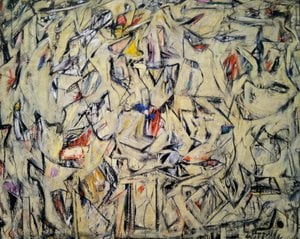
Landscape at Stanton Street

Explore Willem de Kooning's 'Landscape at Stanton Street,' a dynamic lithograph capturing urban energy through swirling lines and abstract forms. A raw, expressive piece of American Abstract Expressionism.

鹿特丹 荷兰 威廉·德·库宁 de Kooning 抽象表现主义大师威廉·德·库宁,以其大胆的笔触和情感丰富的作品闻名。探索他的标志性“女人”系列、充满活力的城市景观以及对现代艺术的深远影响。 抽象表现主义 纽约画派 阿什利·古尔基 1904年4月24日 1997年3月19日 威廉·德·库宁 荷兰裔美国人 《女人一》 荷兰鹿特丹 美国 3 威廉·德·库宁出生在哪个国家?

艺术微喷/版画

博物馆级艺术微喷或帆布版画,制作高效,并提供多种饰面选择。 ( 购买手绘画作 切换至数字图像销售渠道)

P118B $10
P118H $10
P118W $10
P438Z $10
P508JH $12
P508YH $12
P805H $10
P805Z $10
P919BZ $10
P919G $10
P919XJ $10
P959ZH $10
P968JZ $12
W106C $8
W218G $10
W218JH $8
W218Y $10
W307PJ $10
W316G $10
W316PJ $8
W316Y $10
W398PJ $8
W4111J $10
W500HY $15
W500JH $15
W692G $12
W849H $8
W940BG $15
W953PJ $8

标准尺寸
定制
CM
INCH

从与原作比例一致的预设尺寸中进行选择。

宽度
高度

您可以输入自定义尺寸,以适配特定的画框或空间。如果您选择的尺寸与原图比例不符,我们将对作品进行裁剪,或通过镜像填充/纯色填充边缘的方式来扩展图像。在开始制作之前,我们会向您发送一份数字效果图供您确认。
请注意,屏幕上的预览并不能反映实际的裁剪或扩展效果。只有效果图才能准确展示最终的构图。
虽然我们提供定制尺寸,但为了保持原图比例,我们建议您从预设列表中选择尺寸。

全球配送(),仅需 2 周即可送达,无需等待标准流程的 4/5 周。(25 September)

why_choose_icon
全球免费特快专递服务
why_choose_icon
优质亚麻画布
why_choose_icon
全程运输保险
why_choose_icon
关税退款保证
why_choose_icon
色彩还原度保证
why_choose_icon
100天退货政策(仅限瑕疵品)
why_choose_icon
100%退款保证
why_choose_icon
多件购买优惠

总计金额

$ 68

reproduction

Landscape at Stanton Street

艺术微喷/版画

复制品尺寸

-

最终总价

$ 68

作品概览

  • Movement: Abstract Expressionism
  • Artist: Willem de Kooning
  • Influences: Van de Velde
  • Medium: Lithograph on paper
  • Notable elements or techniques: Swirling lines, gestural marks, monochromatic palette
  • Year: 1971
  • Artistic style: Abstract, Dynamic

艺术知识测试

每道题只有一个正确答案。

题目 1:
What artistic movement is Willem de Kooning most closely associated with?
题目 2:
The lithograph 'Landscape at Stanton Street' primarily utilizes which color palette?
题目 3:
Which technique is most evident in the creation of 'Landscape at Stanton Street', contributing to its textured appearance?
题目 4:
The composition of 'Landscape at Stanton Street' is characterized by:
题目 5:
Based on the description, what feeling or atmosphere does 'Landscape at Stanton Street' evoke?

Landscape at Stanton Street: A De Kooning Vision of Urban Flux

Willem de Kooning’s “Landscape at Stanton Street,” painted in 1971, isn't merely a depiction of a street scene; it’s an intensely felt embodiment of urban energy and the complexities of modern life. This lithograph, born from the raw dynamism of Abstract Expressionism, invites us into a world where recognizable forms dissolve into swirling lines and gestural marks, creating a powerful visual experience that resonates with both anxiety and exhilaration. De Kooning, already a titan of his era, was grappling with the shifting landscape of New York City – its relentless growth, its fractured identities, and the sense of disorientation it could evoke – and this work serves as a potent distillation of those feelings. The piece’s genesis in a lithograph technique is crucial; the inherent texture of the stone or metal plate, combined with the careful application of ink, lends an immediate physicality to the image, mirroring the energy de Kooning sought to convey.

The Language of Line and Form

At first glance, “Landscape at Stanton Street” appears chaotic – a tangle of dark and light, thick and thin lines that seem to collide and intertwine. However, beneath this apparent disorder lies a carefully constructed composition. De Kooning masterfully employs curvilinear forms, reminiscent of both organic growth and the rigid geometry of cityscapes, creating a sense of movement and flow. There’s no single point of focus; instead, the eye is drawn on a journey across the surface, following the currents of line and shape. The deliberate absence of traditional perspective—the vanishing point, the illusion of depth—further contributes to the feeling of disorientation, mirroring the experience of navigating an unfamiliar urban environment. The monochromatic palette – primarily shades of black, white, and gray – amplifies this effect, stripping away any distractions and forcing us to confront the raw materiality of the lines themselves.

A Technique of Controlled Chaos

The lithograph process itself is integral to understanding “Landscape at Stanton Street.” Lithography demands a delicate balance between control and spontaneity. De Kooning’s initial sketch guides the artist as he applies ink to the stone, creating an image that is both meticulously planned and intuitively executed. The resulting surface isn't smooth; it’s textured with subtle variations in tone and density, reflecting the physicality of the process and adding a layer of visual interest. The use of overlapping lines creates a sense of layering and recession, suggesting depth without relying on traditional perspective techniques. This technique allows de Kooning to capture not just the appearance of a landscape but also its underlying energy and emotional resonance. The influence of artists like Franz Kline, known for his bold, gestural marks, is clearly evident in this work—a deliberate departure from representational painting towards an expressionistic approach.

Symbolism and Emotional Resonance

While “Landscape at Stanton Street” resists straightforward interpretation, it’s impossible to ignore the underlying symbolism. The fragmented forms can be seen as representing the fractured nature of urban life – its constant change, its conflicting identities, and its potential for both beauty and alienation. The swirling lines evoke a sense of movement and dynamism, mirroring the relentless pace of city life. The work's emotional impact is undeniably complex; it’s not simply joyful or melancholic but rather a potent blend of both. There’s an underlying tension, a feeling of unease that speaks to the anxieties inherent in navigating a rapidly changing world. It’s a landscape viewed through the lens of experience—a reflection on the human condition within the context of a sprawling metropolis.

Bringing De Kooning's Vision Home

WahooArt offers meticulously crafted hand-painted reproductions of “Landscape at Stanton Street,” allowing you to bring this iconic work into your own space. Our artists replicate de Kooning’s distinctive style and technique with exceptional precision, capturing the raw energy and emotional depth of the original lithograph. Whether you're an art collector, a design enthusiast, or simply someone seeking a unique piece of art for your home, a WahooArt reproduction offers a beautiful and authentic way to experience the power of Willem de Kooning’s vision. Explore our selection today and discover how this captivating landscape can transform your surroundings.

艺术家简介

抽象表现主义的先驱:威廉·德·库宁的一生

威廉·德·库宁,一个与抽象表现主义的原始能量和深刻情感紧密相连的名字,于1904年出生于荷兰鹿特丹。他早年的生活充满了家庭的分裂——父母在他很小的时候就离婚了——这或许在他内心种下了对不断探索的渴望,这种渴望将贯穿他的艺术生涯。十二岁时离开了正规学校,德·库宁在一家商业艺术公司当学徒,为他的技术技能奠定了基础,同时也激发了他摆脱传统束缚的愿望。在鹿特丹的图像艺术与技术科学学院的晚间课程提供了进一步的基础训练,但真正推动他前往美国的是一种对更具活力、更富表现力的语言的渴望。1926年,他抵达美国并非一帆风顺;他以偷渡的方式登上了一艘船,体现了他作为一个寻求新视野的局外人的精神。纽约市成为了他的故乡,这座城市充满活力的,有时又粗犷的气息深刻地影响了他的艺术风格。他从事各种工作——油漆工、木匠——同时不懈地追求他的艺术愿景,将城市的脉搏融入到他的作品中。

从都市景象到抽象狂潮

德·库宁早期的画作反映了他周围的城市景观:捕捉纽约生活动力的城市风景和肖像。然而,这些都只是通往更深刻的情感探索的垫脚石。一个关键时刻是他与阿什利·戈尔基的联系,戈尔基的影响证明是变革性的。戈尔基鼓励德·库宁进行抽象实验,培养了一种为了追求更深层次的东西而瓦解传统表现形式的意愿。三十年代,德·库宁参与了通过进步工作管理局(WPA)的社会现实主义和壁画项目,这段时期磨练了他的技能,但也突出了纯粹表征艺术的局限性。他发现自己被斯图亚特·戴维斯和约翰·格雷厄姆等艺术家的作品所吸引,他们也在各自的领域内突破界限。这种影响力的汇集逐渐使他远离了字面描绘,转向一种日益抽象的语言。这不是突然的变化,而是一个缓慢燃烧的过程——一种由智力好奇心和对艺术真理的不懈追求推动的刻意瓦解既定规范。

《女人》系列:一项具有里程碑意义的成就

二战后,德·库宁成为蓬勃发展的抽象表现主义运动中的核心人物。这段时期标志着一个转折点,最终形成了他标志性的“女人”系列(1950-1953 年)。这些画作——包括宏伟的《Woman I》——不仅仅是女性形象的描绘;它们是对女性气质、性欲和人类情感复杂性的深刻探索。以粗犷的笔触、碎片化的形式以及色彩的令人震惊的并置为特征,《女人》系列挑战了传统的审美观念和表现形式。它们具有争议性,甚至让一些人感到震惊,但它们的强大之处恰在于它们拒绝顺从。德·库宁并非有意创造理想化的形象;他试图捕捉其主题原始、未驯服的本质。《“女人”》系列之外,《The Glazier》和《Excavation》等作品进一步展示了他对纹理、色彩和构图的大师级掌握。他不回避混乱或模糊;相反,他将它们视为他艺术语言不可分割的一部分。

不断演变的风景与持久的遗产

在 1960 年代,德·库宁的风格经历了又一次重大的演变。虽然抽象仍然是其作品的核心,但景观元素开始发挥更突出的作用,通常采用更明亮的调色板和更流畅、更自由的笔触。他一生中都不断尝试新的技术和材料,从不满足于安于现状。他的后期作品展示了一种令人难以置信的能力,可以在保持对核心艺术原则忠实的同时重新发明自己。威廉·德·库宁的历史意义是不可否认的。他帮助纽约市成为全球艺术中心,挑战了欧洲传统的统治地位,并为后来的艺术家们铺平了道路。他的作品至今仍能激发敬畏和辩论,提醒我们抽象的力量能够传达深刻的情感真相。德·库宁于 1997 年去世,留下了一大批具有影响力的作品,这些作品证明了他对艺术创新的坚定承诺以及他作为二十世纪最重要的美国艺术家之一的持久遗产。《他的影响至今仍在回响》。
威廉·德库宁

威廉·德库宁

1904 - 1997 , 荷兰

艺术家简介

  • 全名: 威廉·德·库宁
  • 出生地点: 鹿特丹,荷兰
  • 出生日期: 1904年4月24日
  • 受影响的艺术家或流派: ['纽约画派']
  • 国籍: 荷兰裔美国人
  • 影响艺术家:
    • 阿什利·古尔基
    • 斯图亚特·戴维斯
    • 约翰·格雷厄姆
  • 死亡日期: 1997年3月19日
  • 艺术流派或风格: 抽象表现主义
  • 著名作品:
    • 《女人一》
    • 《玛丽莲·梦露》
    • 《躺卧的男人(肯尼迪)》
    • 《挖掘》
探索按主题、风格和特征分类的艺术作品。