由我们的艺术家按需定制,为您提供您所选尺寸及画框的布面手工油画。 ( 切换至版画销售渠道
切换至数字图像销售渠道)
从与原作比例一致的预设尺寸中进行选择。
您可以输入自定义尺寸,以适配特定的画框或空间。如果所选尺寸与原图比例不符,我们将通过裁剪作品或添加手绘元素来扩展画面。数字样稿将在制作开始前发送给您确认。
请注意,屏幕预览无法准确反映实际的裁剪或扩展效果,只有样稿才能真实呈现最终的构图。
虽然我们提供定制尺寸服务,但为了保留原作比例,建议您从预设列表中选择尺寸。
Devil at the Keyboard
复制品尺寸
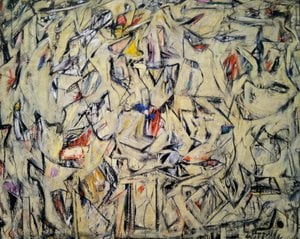
To stand before Willem de Kooning’s Devil at the Keyboard is not merely to observe paint on canvas; it is to confront a raw, untamed outpouring of human emotion. This piece, dating from 1976, pulses with the unmistakable vitality of Abstract Expressionism. De Kooning’s signature style refuses polite categorization, instead inviting the viewer into a dynamic, almost chaotic conversation between form and gesture. The surface itself seems agitated, built up through layers of paint that speak to the artist's physical engagement with his medium. It is a work that demands proximity, rewarding closer inspection with glimpses of structure beneath the exhilarating frenzy.
While the overall composition screams abstraction—a riot of color and energetic strokes—the eye is immediately drawn to the central figure: a man sporting a mustache, poised dramatically with a pitchfork. This juxtaposition of recognizable, almost portrait-like elements against the backdrop of pure abstraction creates profound tension. The inclusion of details, such as the tie worn by this commanding figure, anchors the chaos in a semblance of narrative reality. Yet, these figures are never static; they writhe within the composition alongside other less defined forms scattered across the canvas. It suggests a gathering, a moment charged with unspoken drama, where the mundane accoutrements of modern life clash violently with primal artistic impulse.
De Kooning’s technique here is masterful in its apparent carelessness. The paint application is thick, visceral, and immediate—a testament to his belief in painting as an act of physical wrestling with the material. One can almost hear the scrape of the palette knife or the aggressive sweep of the brush. Symbolically, the devil motif combined with the keyboard suggests a complex negotiation between creation and transgression; perhaps the very act of artistic genius is inherently fraught with struggle. The pitchfork itself acts as an extension of this tension—a tool both agricultural and confrontational. For the collector or designer, understanding this underlying symbolic weight elevates the piece from mere decoration to profound cultural artifact.
Owning a reproduction of Devil at the Keyboard is choosing to infuse a space with undeniable life force. This painting does not whisper; it declares. Its vibrant, complex palette and restless energy make it an unparalleled focal point in any room—be it a gallery wall or a sophisticated living area that craves artistic grit. It speaks to a modern sensibility that values process over polish, embracing the beautiful messiness of human experience. It is art for those who appreciate depth, history, and the sheer, exhilarating power of paint applied with uncompromising conviction.
1904 - 1997 , 荷兰