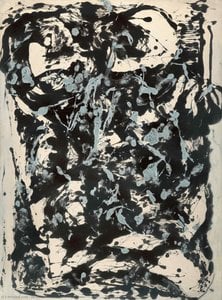
1999
1999 246.0 x 146.0 cm
博物馆级艺术微喷或帆布版画,制作高效,并提供多种饰面选择。 ( 订购此收藏品的纯手工复刻画作 切换至数字图像销售渠道)
您可以从与原作比例一致的预设尺寸中进行选择。

请输入您所需的宽度和高度,以适配您的画框或墙面。由于印刷品只能进行裁剪,无法超出原图尺寸,因此若比例不一致,画面的一部分将会被裁切。在正式印刷之前,我们会为您发送一份数字效果图供您确认。本页面显示的图片并非最终裁剪后的效果——只有效果图才能展示真实的裁剪情况。
Untitled
复刻品尺寸说明
"Untitled" 拥有专属的 统计数据 页面。该页面通过国家和语言维度的细分,展示了该作品及艺术家其他作品的每月访问量趋势图。
"Untitled" 的形式为 Tall,原件尺寸为 246 x 146 cm。这两项信息在规划复制品时都非常有用。
Wang Dongling 的《Untitled》 的色彩分析记录了一种 Statement 的对比与 Strong Color Unity 的和谐。

Wang Dongling, born in Rudong, China, in 1945, stands as one of the most revered figures in contemporary Chinese art. His journey is a fascinating synthesis of rigorous classical training – specifically, his deep immersion in traditional calligraphy – with an increasingly bold exploration of abstract expressionism. More than simply an artist, Dongling embodies a bridge between centuries-old artistic heritage and the dynamic spirit of modern China, forging a unique visual language that continues to captivate audiences worldwide.
Dongling’s early life was steeped in the discipline of calligraphy. He began his formal training at the Zhejiang Academy, laying a foundational understanding of brushwork, ink control, and the profound philosophical undercurrents embedded within Chinese writing. This grounding proved crucial as he later transitioned to a more experimental approach, driven by an insatiable curiosity about the possibilities beyond representational art. His shift wasn’t abrupt; rather, it was a gradual evolution fueled by exposure to Western abstract expressionism – movements like those of Pollock and Rothko – which ignited within him a desire to liberate calligraphy from its traditional constraints.
Dongling’s most recognized body of work, often referred to as “calligraphic paintings,” represents the culmination of this transformative journey. These monumental pieces are not mere imitations of calligraphy; they are entirely new artistic expressions born from a deep respect for their roots. He describes these works as "poetry painted," meticulously layering calligraphic forms onto vast canvases with an almost meditative intensity. The process is deeply performative, often involving extended periods of intense brushwork and physical exertion – mirroring the very act of writing itself.
Central to Dongling’s approach is his deliberate use of monochrome palettes, predominantly shades of grey. This choice isn't arbitrary; it serves to heighten the focus on texture, gesture, and the inherent dynamism of the ink. The absence of color forces the viewer to engage with the materiality of the medium – the subtle variations in tone, the delicate interplay of wet and dry brushstrokes, and the sheer physicality of the artwork. His work is frequently described as “abstract ink art,” a term that accurately captures its unique blend of tradition and innovation.
A defining characteristic of Dongling’s practice is his incorporation of performance into the creation of his ‘calligraphic paintings.’ He doesn't simply apply ink to canvas; he *performs* the act of writing, translating poems – often from classical Chinese literature – into gestural abstractions. These performances are not mere demonstrations of skill but deeply ritualistic events, imbued with a sense of spiritual intensity. As Roberta Smith noted in her New York Times review, Dongling “liberates calligraphic gesture, form and space from the bounds of text.”
This emphasis on embodied action is further explored through his technique of ‘chemical photography.’ By directly applying ink to silver-gelatin photographic paper, he captures the very traces of his movements – the pressure of his brush, the angle of his hand, the subtle shifts in tone. This process creates a layered dialogue between performance and image, revealing the intimate connection between the artist’s body and the artwork.
Wang Dongling's work has garnered widespread recognition both within China and internationally. He is considered one of the foremost living calligraphers in China, holding the distinction of being granted three solo exhibitions at the National Art Museum of China. His pieces have been exhibited extensively across Europe, North America, and Asia, including prestigious venues such as the Metropolitan Museum of Art in New York and the British Museum in London.
Currently, Dongling serves as Director of the Modern Calligraphy Research Center at the China Academy of Arts in Hangzhou, continuing to nurture and promote the art form he has so profoundly shaped. His legacy extends beyond individual artworks; he represents a vital link between China’s rich artistic past and its dynamic future, demonstrating how tradition can be both honored and reimagined through innovative expression.

1945 - , China


 实景预览
实景预览
 发送
发送 分享
分享
 详情
详情 指南
指南

 下载图片
下载图片
 相似作品
相似作品 X射线
X射线 幻灯片播放
幻灯片播放 统计数据
统计数据 阅读全文
阅读全文






































 玻璃选项仅适用于110厘米以下的尺寸。