
由我们的艺术家按需定制,为您提供您所选尺寸及画框的布面手工油画。 ( 切换至版画销售渠道 切换至数字图像销售渠道)





























从与原作比例一致的预设尺寸中进行选择。

您可以输入自定义尺寸,以适配特定的画框或空间。如果所选尺寸与原图比例不符,我们将通过裁剪作品或添加手绘元素来扩展画面。数字样稿将在制作开始前发送给您确认。
请注意,屏幕预览无法准确反映实际的裁剪或扩展效果,只有样稿才能真实呈现最终的构图。
虽然我们提供定制尺寸服务,但为了保留原作比例,建议您从预设列表中选择尺寸。

Self Portrait
复制品尺寸
Vincent van Gogh's "Self Portrait," a work shrouded in quiet intensity, isn’t merely a depiction of an artist; it’s a raw and profoundly personal glimpse into the mind of a man wrestling with his demons and striving for connection. Painted during a period of relative stability – though even that was punctuated by Van Gogh’s characteristic emotional storms – this piece offers a rare moment of composure, yet beneath the surface lies a palpable sense of vulnerability and searching. The painting immediately draws the eye to the artist himself, clad in a simple, deep blue shirt, a color often associated with faith and introspection within his oeuvre. His gaze is direct, unwavering, meeting the viewer’s eyes with an almost unsettling honesty. It's not a boastful or triumphant look; rather, it’s one of quiet observation, as if he’s simultaneously inviting scrutiny and guarding a deeply held secret.
Van Gogh’s distinctive style is immediately recognizable in this work. The brushstrokes are thick, impastoed – layers of paint built up with visible energy and movement. This technique isn't simply decorative; it’s integral to the painting’s emotional impact. Each stroke seems to vibrate with feeling, mirroring the turbulence within Van Gogh himself. Notice how he uses short, choppy strokes around the edges of his hat and face, creating a sense of restlessness and unease, while smoother, more deliberate strokes define the blue shirt, suggesting a yearning for stability. The color palette is deliberately restrained – primarily blues, yellows, and browns – yet these hues are rendered with remarkable intensity. The vibrant yellow straw hat, a striking element against the darker background, could be interpreted as a symbol of hope or perhaps even a defiant gesture against the encroaching darkness.
The inclusion of two figures in the background adds layers of complexity to the composition. These individuals – likely friends or acquaintances – are rendered with less detail, almost as if they exist on the periphery of Van Gogh’s consciousness. Their presence suggests a desire for connection, for companionship, yet also hints at an isolation that was a constant struggle for the artist. The background itself is deliberately blurred, creating a sense of depth and drawing attention back to the central figure. This technique, characteristic of Post-Impressionism, moves beyond mere representation towards conveying mood and atmosphere. It’s important to note that Van Gogh painted several self-portraits during this period, and each offers a slightly different perspective on his state of mind – a testament to the ever-shifting nature of his inner world.
The “Self Portrait” is rich in symbolic potential. The hat itself has been suggested by some scholars as representing a connection to rural life, perhaps a longing for simpler times before the pressures of artistic ambition consumed him. The direct gaze, so often interpreted as challenging or confrontational, could also be seen as an invitation to understand – a plea for empathy and recognition. More broadly, this painting embodies Van Gogh’s lifelong quest for meaning and purpose, his struggle to reconcile his spiritual beliefs with the realities of human suffering. It's a poignant reminder that even in moments of apparent calm, the artist was perpetually grappling with profound questions about himself and the world around him. The work stands as a powerful testament to the enduring legacy of an artist who dared to paint not just what he saw, but what he *felt*.

1853 - 1890 , 荷兰
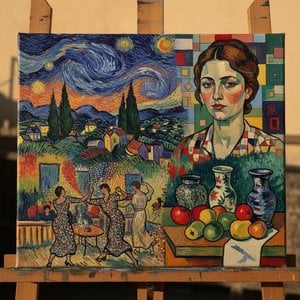
Unveil the profound revolution of Post-Impressionism. Explore how masters like Van Gogh and Cézanne utilized bold colors and emotional depth to transcend mere representation, laying the foundation for modern art. A sophisticated journey through history's most emotive brushstrokes.

Master the nuances of Impressionism vs. Post-Impressionism with our expert guide. Explore the revolutionary shift from Monet’s fleeting light to Van Gogh’s emotional depth. Discover how these iconic movements continue to inspire fine art collectors and modern interiors today.

Explore the profound emotional depth of Van Gogh's impasto technique. Discover how his sculptural brushstrokes and textured oil layers define Post-Impressionism through an expert art-historical lens, perfect for discerning collectors and fine art enthusiasts.


 效果预览
效果预览
 分享
分享 分享
分享
 详情
详情

 下载
下载
 相似作品
相似作品 X射线
X射线 幻灯片播放
幻灯片播放 统计数据
统计数据

 展开详情
展开详情









 玻璃选项仅适用于110厘米以下的尺寸。


![鸢尾花 [1889]](/media/artworks/images-thumb/ca/85/ca85582a4fd1dc392efef83ec4dc3124.jpg)


