
由我们的艺术家按需定制,为您提供您所选尺寸及画框的布面手工油画。 ( 切换至版画销售渠道 切换至数字图像销售渠道)





























您可以从与原作比例一致的预设尺寸中进行选择。

您可以输入自定义尺寸,以适配特定的画框或空间。如果所选尺寸与原图比例不符,我们将通过裁剪作品或添加手绘元素来扩展画面。数字样稿将在制作开始前发送给您确认。
请注意,屏幕预览无法准确反映实际的裁剪或扩展效果,只有样稿才能真实呈现最终的构图。
虽然我们提供定制尺寸服务,但为了保留原作比例,建议您从预设列表中选择尺寸。

Zebras (orange)
复刻品尺寸说明
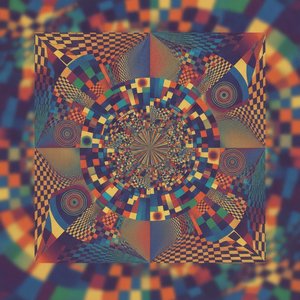
“Zebras (orange),” a captivating work by Victor Vasarely, transcends the simple depiction of animal forms; it's an immersive exploration of perception and movement, firmly rooted in the principles of Op Art. Painted with a deliberate distortion, the image presents a warped face—a motif that immediately draws the viewer into a world where reality is playfully challenged. The vibrant orange background acts as a dynamic counterpoint to the stark black and white pattern, intensifying the visual impact and creating an almost hallucinatory effect. This piece exemplifies Vasarely’s pioneering work in kinetic art, anticipating the movement and dynamism of later optical illusions.
Born in 1906 in Pécs, Croatia, Victor Vasarely’s artistic trajectory was shaped by a confluence of influences. Initially pursuing medical studies, he abandoned this path for painting in 1927, driven by an innate fascination with visual form and abstraction. His enrollment at the Podolini-Volkmann Academy and subsequent immersion within Sándor Bortnyik’s “Műhely” workshop – profoundly influenced by the Bauhaus movement – proved crucial. The Bauhaus emphasis on functional design, geometric abstraction, and the exploration of optical phenomena provided the theoretical framework for Vasarely's groundbreaking approach. This period established his core belief: that art could be constructed through precise mathematical relationships, creating illusions of movement and depth without relying on traditional representational techniques.
Vasarely’s technique in “Zebras (orange)” is characterized by meticulous layering and the use of flat, unmodulated color. The black and white pattern isn't a naturalistic representation but rather a precisely constructed series of geometric shapes—primarily circles and lines—arranged to create an optical illusion of movement and depth. This deliberate distortion of form is central to Op Art’s goal: to stimulate the viewer’s visual cortex and evoke a sense of dynamic energy. The orange background isn't merely a backdrop; it actively participates in this illusion, amplifying the perceived movement and contributing to the overall captivating effect. The painting demonstrates Vasarely's mastery of color theory and his ability to manipulate perception through carefully calibrated geometric arrangements.
While seemingly a simple depiction of a zebra’s face, “Zebras (orange)” operates on multiple levels. The distorted form can be interpreted as a rejection of traditional representational art, embracing abstraction as a means of exploring the fundamental nature of perception. The animal motif itself—often associated with speed, power, and wildness—is rendered in a controlled, almost sterile manner, highlighting the tension between instinct and intellect. The overall effect is one of intense visual stimulation, provoking a sense of wonder and inviting contemplation on the relationship between art, perception, and reality. This piece resonates with a powerful emotional impact through its manipulation of the viewer’s senses.

1906 - 1997 , 克罗地亚

Discover the profound beauty of abstract art. Our expert guide explores geometric abstraction, Op Art, and Expressionism, offering connoisseurs deep insights into collecting and curating powerful, non-representational masterpieces for sophisticated interiors.
Explore the mesmerizing world of Victor Vasarely. Discover how his Bauhaus-inspired Op Art masters the science of perception through geometric abstraction and vibrant color. A sophisticated guide for discerning art collectors seeking to understand the legacy of optical illusion.

Explore the profound spiritual depth of geometric abstraction. From Malevich's Suprematism to modern masters, our expert guide reveals how pure form and color command presence in fine art collections.


 实景预览
实景预览
 发送
发送 分享
分享
 详情
详情 指南
指南

 下载图片
下载图片
 相似作品
相似作品 X射线
X射线 幻灯片播放
幻灯片播放 统计数据
统计数据

 阅读全文
阅读全文









 玻璃选项仅适用于110厘米以下的尺寸。


