
由我们的艺术家按需定制,为您提供您所选尺寸及画框的布面手工油画。 ( Switch to Print Switch to Digital Image)





























从与原作比例一致的预设尺寸中进行选择。

您可以输入自定义尺寸,以适配特定的画框或空间。如果所选尺寸与原图比例不符,我们将通过裁剪作品或添加手绘元素来扩展画面。数字样稿将在制作开始前发送给您确认。
请注意,屏幕预览无法准确反映实际的裁剪或扩展效果,只有样稿才能真实呈现最终的构图。
虽然我们提供定制尺寸服务,但为了保留原作比例,建议您从预设列表中选择尺寸。

Zaphir 1
复制品尺寸
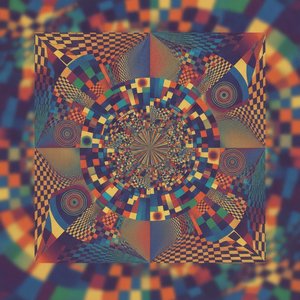
Victor Vasarely’s "Zaphir 1" is more than just a painting; it's an experience, a visual exploration of perception and the power of geometric abstraction. This work, characteristic of Vasarely’s pioneering role in Op Art and Kinetic art, invites viewers into a world where circles—in vibrant hues of blue, green, yellow, orange, and punctuated by stark black—interact to create a dynamic, almost pulsating composition. The painting isn't about depicting a scene or object from the real world; instead, it’s an investigation into how our eyes and brains interpret patterns, shapes, and color relationships. It is a testament to Vasarely’s lifelong dedication to understanding and manipulating visual perception.
To truly appreciate "Zaphir 1," one must understand the journey of its creator. Born Károly Vásárhelyi in Pécs, Croatia (then part of Austria-Hungary), Victor Vasarely initially pursued medical studies before embracing his artistic calling. His formal training at the Podolini-Volkmann Academy and later Sándor Bortnyik’s workshop – deeply influenced by the Bauhaus movement – laid the foundation for his unique style. The Bauhaus ethos, with its emphasis on functional design and geometric abstraction, resonated profoundly with Vasarely's evolving vision. He wasn't interested in replicating reality; he sought to create a new visual language based on fundamental geometric principles. This pursuit led him to abandon traditional painting techniques in favor of a systematic approach, meticulously constructing his compositions from basic shapes—circles, squares, and triangles—arranged according to precise mathematical relationships.
“Zaphir 1” exemplifies Vasarely’s mastery of optical illusion. The arrangement of the circles – varying in size and position – isn't random; it is carefully calculated to create a sense of depth, movement, and vibration. The contrasting colors further amplify this effect, playing tricks on the eye and blurring the boundaries between the individual shapes. It’s as if the circles are not static forms but rather spheres suspended in space, gently rotating or expanding. Vasarely's technique involved layering these geometric elements with precision, creating a complex interplay of positive and negative space that draws the viewer into an immersive visual experience. He aimed to create art that wasn't merely seen but *felt*, engaging the senses and challenging conventional notions of perception.
While seemingly abstract, Vasarely’s work carries a deeper symbolic weight. His systematic approach was not just about aesthetics; it was also rooted in his belief that art should be accessible to everyone. He envisioned a world where art wasn't confined to museums or galleries but integrated into everyday life—enhancing urban spaces and enriching the human environment. The circles themselves can be interpreted as symbols of wholeness, continuity, and interconnectedness – universal themes that resonate across cultures. "Zaphir 1," therefore, becomes more than just a visually striking composition; it’s a statement about the power of art to inspire, engage, and democratize visual experience. It is an invitation to see the world through a new lens—one shaped by geometry, color, and the boundless possibilities of human perception.

1906 - 1997 , 克罗地亚

Explore the profound evolution of Neo-Abstract art. Discover how bold geometric forms, vibrant chromatic depth, and tactile textures redefine modern expression for the discerning collector seeking sophisticated, high-impact masterpieces for contemporary interiors.

Explore the profound spiritual depth of geometric abstraction. From Malevich's Suprematism to modern masters, our expert guide reveals how pure form and color command presence in fine art collections.

Discover the profound beauty of abstract art. Our expert guide explores geometric abstraction, Op Art, and Expressionism, offering connoisseurs deep insights into collecting and curating powerful, non-representational masterpieces for sophisticated interiors.

Embark on a visual journey through the mesmerizing world of Op Art. Discover the masters of optical illusion, explore geometric abstraction, and learn how to curate high-impact kinetic works for your private collection with expert guidance from art professionals.
Explore the mesmerizing world of Victor Vasarely. Discover how his Bauhaus-inspired Op Art masters the science of perception through geometric abstraction and vibrant color. A sophisticated guide for discerning art collectors seeking to understand the legacy of optical illusion.


 效果预览
效果预览
 分享
分享 分享
分享
 详情
详情

 下载
下载
 相似作品
相似作品 X射线
X射线 幻灯片播放
幻灯片播放 Stats
Stats
 展开详情
展开详情









 玻璃选项仅适用于110厘米以下的尺寸。


