
由我们的艺术家按需定制,为您提供您所选尺寸及画框的布面手工油画。 ( 切换至版画销售渠道 切换至数字图像销售渠道)





























您可以从与原作比例一致的预设尺寸中进行选择。

请输入您需要的宽度和高度,以适配您的画框或墙面。由于作品为手工绘制,若选择不同比例的尺寸,艺术家可能会在画面边缘多画一些或稍作裁剪 —— 由您决定。在开始绘画之前,我们会为您发送一份数字效果图供您确认。本页面上展示的图片并非最终实物 —— 只有效果图才能反映真实结果。
Sikra
复刻品尺寸
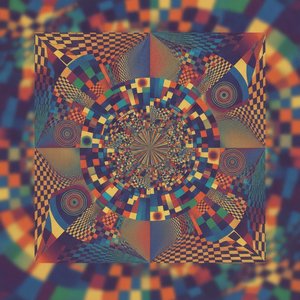
To encounter Victor Vasarely’s “Sikra” is to step away from the stillness of traditional viewing and enter a realm where the canvas breathes, pulses, and vibrates with an engineered energy. This masterpiece stands as a cornerstone of the Op Art movement—a revolution in visual perception that challenged the mid-20th century to reconsider the very mechanics of sight. The painting is not merely a static arrangement of pigment; it is an intellectual exploration into how our eyes interpret color and form, reflecting Vasarely's profound fascination with the intersection of mathematics and artistic expression. As the viewer engages with the work, the surface seems to undergo a rhythmic dance, creating a kinetic experience that transforms a flat plane into a dynamic, living entity.
The visual language of “Sikra” is built upon a foundation of meticulous geometric precision. The composition is dominated by a mesmerizing interplay of vibrant hues—bold blues juxtaposed against fiery reds, and sunny yellows dancing alongside verdant greens. Within this chromatic landscape, Vasarely employs a complex framework of circles, squares, and triangles. These shapes are not merely decorative elements; they embody mathematical concepts such as tessellations and fractals, where repeating geometric patterns create an illusion of depth and movement without the need for overlapping layers. Through the careful manipulation of color gradients and spatial relationships, Vasarely achieves a sense of structural tension, making the eye wander through a labyrinth of light and perceived motion.
The genesis of such groundbreaking work lies in the unique life journey of the artist himself. Born Károly Vaszary in 1906 in Pécs, Vasarely’s path toward becoming the "grandfather" of Op Art was anything but linear. Originally pursuing medical studies at Eötvös Loránd University, his transition to the fine arts in 1927 marked a pivot from studying human anatomy to mastering a different kind of anatomy: the mechanics of perception. His formative years in Budapest, particularly his enrollment in Sándor Bortnyik’s Műhely workshop, deeply embedded him in the principles of the Bauhaus movement. This exposure to functional design and geometric abstraction became the DNA of his later works, instilling a lifelong dedication to the idea that art could be both mathematically rigorous and universally accessible.
For the modern collector or interior designer, “Sikra” offers more than just aesthetic beauty; it provides a focal point of profound intellectual depth. The painting’s ability to interact with its environment—changing its perceived character depending on light and angle—makes it an extraordinary choice for sophisticated spaces. Whether placed in a contemporary gallery setting or as a bold statement piece in a curated residential interior, the work invites conversation and contemplation. It serves as a reminder of a time when art broke free from the window-like perspective of the past to become a direct, visceral experience, offering a timeless sense of wonder that continues to captivate the human spirit.

1906 - 1997 , 克罗地亚

Embark on a visual journey through the mesmerizing world of Op Art. Discover the masters of optical illusion, explore geometric abstraction, and learn how to curate high-impact kinetic works for your private collection with expert guidance from art professionals.

Explore the profound spiritual depth of geometric abstraction. From Malevich's Suprematism to modern masters, our expert guide reveals how pure form and color command presence in fine art collections.
Explore the mesmerizing world of Victor Vasarely. Discover how his Bauhaus-inspired Op Art masters the science of perception through geometric abstraction and vibrant color. A sophisticated guide for discerning art collectors seeking to understand the legacy of optical illusion.


 实景预览
实景预览
 分享
分享 分享
分享
 详情
详情 指南
指南

 下载作品
下载作品
 相似作品
相似作品 X射线
X射线 幻灯片播放
幻灯片播放 Q&A
Q&A 统计数据
统计数据

 展开全文
展开全文









 玻璃选项仅适用于110厘米以下的尺寸。


