
由我们的艺术家按需定制,为您提供您所选尺寸及画框的布面手工油画。 ( 切换至版画销售渠道 切换至数字图像销售渠道)





























从与原作比例一致的预设尺寸中进行选择。

您可以输入自定义尺寸,以适配特定的画框或空间。如果所选尺寸与原图比例不符,我们将通过裁剪作品或添加手绘元素来扩展画面。数字样稿将在制作开始前发送给您确认。
请注意,屏幕预览无法准确反映实际的裁剪或扩展效果,只有样稿才能真实呈现最终的构图。
虽然我们提供定制尺寸服务,但为了保留原作比例,建议您从预设列表中选择尺寸。

Quasar
复制品尺寸
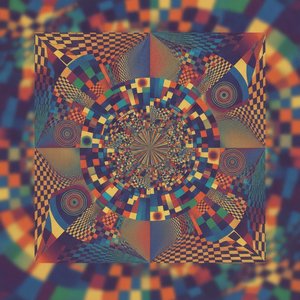
Victor Vasarely's 'Quasar' is not merely a painting; it’s an invitation into the very fabric of perception, a testament to the revolutionary impact of Op Art and the burgeoning field of kinetic art. Created by a mind initially drawn to medicine but ultimately captivated by the visual world, this piece embodies Vasarely’s lifelong dedication to dissecting and reconstructing our understanding of space and movement. The artwork's deceptively simple arrangement – a vibrant blue background punctuated by precisely calibrated squares – belies a profound intellectual and artistic endeavor. It represents a pivotal moment in 20th-century art, reflecting the era’s fascination with scientific advancements, particularly Einstein’s theories of relativity, and their influence on artistic expression.
Born Károly Vaszary in 1906 in Pécs, Croatia – then part of Austria-Hungary – Vasarely's journey began with a formal education in medicine. However, his artistic inclinations soon took hold, leading him to the Podolini-Volkmann Academy and, crucially, Sándor Bortnyik’s ‘Műhely’ workshop. This environment, deeply rooted in the principles of Bauhaus functional design and geometric abstraction, provided the fertile ground for Vasarely's unique vision to flourish. The influence is immediately apparent in 'Quasar': the meticulously arranged squares aren’t randomly placed; they are precisely calculated to create an optical illusion, a deliberate manipulation of the viewer’s perception of depth and movement. This technique, central to Op Art, aimed to evoke a sense of dynamism and vibration within the artwork itself.
'Quasar' transcends a simple geometric exercise; it’s a visual representation of cosmic phenomena, echoing the scientific fascination with quasars – incredibly luminous objects at the edge of the observable universe. The dynamic arrangement of squares can be interpreted as a metaphor for the energy and movement inherent in these celestial bodies. More broadly, the artwork speaks to humanity's innate desire to understand the vastness and complexity of the cosmos. The piece evokes feelings of wonder, curiosity, and perhaps even a sense of awe at the power and beauty of the universe. It’s a reminder that art can be both intellectually stimulating and profoundly moving.

1906 - 1997 , 克罗地亚

Embark on a visual journey through the mesmerizing world of Op Art. Discover the masters of optical illusion, explore geometric abstraction, and learn how to curate high-impact kinetic works for your private collection with expert guidance from art professionals.
Explore the mesmerizing world of Victor Vasarely. Discover how his Bauhaus-inspired Op Art masters the science of perception through geometric abstraction and vibrant color. A sophisticated guide for discerning art collectors seeking to understand the legacy of optical illusion.


 效果预览
效果预览
 分享
分享 分享
分享
 详情
详情

 下载
下载
 相似作品
相似作品 X射线
X射线 幻灯片播放
幻灯片播放 统计数据
统计数据

 展开详情
展开详情









 玻璃选项仅适用于110厘米以下的尺寸。


