


从与原作比例一致的预设尺寸中进行选择。

您可以输入自定义尺寸,以适配特定的画框或空间。如果所选尺寸与原图比例不符,我们将通过裁剪作品或添加手绘元素来扩展画面。数字样稿将在制作开始前发送给您确认。
请注意,屏幕预览无法准确反映实际的裁剪或扩展效果,只有样稿才能真实呈现最终的构图。
虽然我们提供定制尺寸服务,但为了保留原作比例,建议您从预设列表中选择尺寸。

Nebulus II
复制品尺寸
Victor Vasarely's Nebulus II is not merely a visual spectacle; it’s an invitation, a carefully constructed challenge to the very nature of perception. Created in the mid-20th century by this pivotal figure in Op Art and kinetic art, the work embodies a profound exploration into how our eyes interpret depth, movement, and form. The piece immediately captivates with its complex layering of three overlapping spheres, each meticulously rendered as an intricate tessellation of cubes – a visual puzzle designed to subtly shift your perspective with every glance.
Born Károly Vaszary in 1906 in Pécs, Croatia (then part of Austria-Hungary), Victor Vasarely's artistic trajectory was remarkably unconventional. Initially pursuing a medical degree, he abandoned this path in 1927 to embrace the burgeoning world of painting, ultimately finding his true calling within geometric abstraction. His formative years were spent at the Podolini-Volkmann Academy and, crucially, in Sándor Bortnyik’s “Műhely” workshop – a space deeply rooted in the principles of Bauhaus functional design. This exposure ignited Vasarely's lifelong pursuit of understanding how visual elements interact to shape our perception, laying the foundation for his groundbreaking contributions to Op Art.
Nebulus II is a testament to the power of digital art. Executed through meticulous pixel manipulation and advanced rendering techniques, the artwork showcases a remarkable level of control over form and illusion. The smooth textures achieved are entirely dependent on this digital process, creating an almost hyper-realistic effect despite the abstract subject matter. The artist’s deliberate use of angular lines and sharply defined cubes within the tessellations further enhances the sense of depth and movement, skillfully mimicking the effects of forced perspective – making the spheres appear to recede into the background with a convincing three-dimensional quality.
While Nebulus II eschews overt symbolism or emotional narratives, its impact lies precisely in its ability to provoke a visceral response. The artwork’s primary function is not to represent something tangible but to challenge our assumptions about reality. It's an exploration of the subjective nature of perception, inviting viewers to actively participate in constructing their own interpretation. The piece resonates with a sense of intellectual curiosity and wonder – a reminder that the world we perceive is often far more complex and fascinating than it initially appears.

1906 - 1997 , 克罗地亚
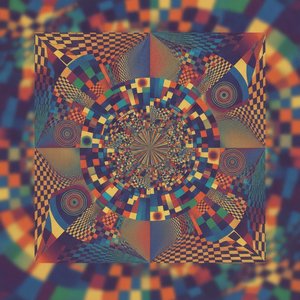
Explore the mesmerizing world of Victor Vasarely. Discover how his Bauhaus-inspired Op Art masters the science of perception through geometric abstraction and vibrant color. A sophisticated guide for discerning art collectors seeking to understand the legacy of optical illusion.

Embark on a visual journey through the mesmerizing world of Op Art. Discover the masters of optical illusion, explore geometric abstraction, and learn how to curate high-impact kinetic works for your private collection with expert guidance from art professionals.

Explore the profound spiritual depth of geometric abstraction. From Malevich's Suprematism to modern masters, our expert guide reveals how pure form and color command presence in fine art collections.
Elevate your digital portfolio with exclusive, unrepeatable original artist NFTs at WahooArt. Discover a curated selection of premium digital masterpieces and generative abstractions designed for the discerning collector seeking true scarcity and artistic prestige.


 购买印刷品
购买印刷品 分享
分享 分享
分享
 详情
详情

 下载
下载
 相似作品
相似作品 幻灯片播放
幻灯片播放

 展开详情
展开详情






































 玻璃选项仅适用于110厘米以下的尺寸。


