
博物馆级艺术微喷或帆布版画,制作高效,并提供多种饰面选择。 ( 购买手绘画作 切换至数字图像销售渠道)





























从与原作比例一致的预设尺寸中进行选择。

您可以输入自定义尺寸,以适配特定的画框或空间。如果您选择的尺寸与原图比例不符,我们将对作品进行裁剪,或通过镜像填充/纯色填充边缘的方式来扩展图像。在开始制作之前,我们会向您发送一份数字效果图供您确认。
请注意,屏幕上的预览并不能反映实际的裁剪或扩展效果。只有效果图才能准确展示最终的构图。
虽然我们提供定制尺寸,但为了保持原图比例,我们建议您从预设列表中选择尺寸。

MEH2
复制品尺寸
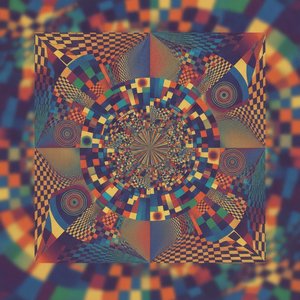
“MEH2,” a captivating work by Hungarian artist Victor Vasarely, is more than just a painting; it's an invitation to explore the very nature of visual perception. Executed in a vibrant palette of blue and yellow against a stark black backdrop, this piece exemplifies Vasarely’s pioneering role as one of the foremost figures in Op Art – Optical Art. Born Károly Vaszary in 1906 in Pécs, Croatia, his artistic trajectory began unexpectedly, initially driven by an interest in medicine before he was drawn to the expressive possibilities of color and form. This shift culminated in a lifelong dedication to dissecting and manipulating how our eyes interpret visual information, a pursuit deeply rooted in the principles of geometric abstraction.
Vasarely’s artistic journey was profoundly shaped by his time within Sándor Bortnyik’s “Műhely” workshop, a space deeply influenced by the revolutionary ideas emanating from the Bauhaus school. This environment fostered an intense focus on functional design, precise geometric forms, and the exploration of kinetic principles – the idea that perception is not static but actively constructed by the eye. “MEH2” directly reflects this influence; the meticulously arranged squares, seemingly independent yet harmoniously integrated, are designed to create a dynamic visual experience, shifting subtly with the viewer’s perspective. The artist wasn't simply depicting shapes; he was engineering an illusion, challenging our assumptions about how we see and understand the world around us.
The painting’s technique is characterized by a remarkable precision and control. Vasarely employed a layering method, meticulously applying thin washes of paint to create the illusion of depth and movement. The black background serves not merely as a void but actively contributes to the optical effect, intensifying the vibrancy of the blue and yellow squares and further emphasizing their geometric relationships. The scattered smaller black squares are strategically placed to disrupt the overall pattern, adding another layer of complexity and reinforcing the artwork’s engagement with visual perception. This careful orchestration of color and form is a hallmark of Vasarely's work – a testament to his rigorous approach to artmaking.
While “MEH2” resists straightforward interpretation, it’s clear that Vasarely was less concerned with depicting a recognizable subject than with exploring the fundamental properties of visual experience. The geometric patterns evoke a sense of order and control, yet simultaneously create an unsettling dynamism – a feeling of constant movement and shifting perspective. This tension between stability and flux speaks to the inherent ambiguity of perception itself. The artwork’s bold colors and intricate design are undeniably captivating, inviting viewers to lose themselves in its mesmerizing patterns and contemplate the fascinating relationship between art, science, and the human eye. It's a piece that demands attention, prompting introspection and offering a unique visual reward.

1906 - 1997 , 克罗地亚
Explore the mesmerizing world of Victor Vasarely. Discover how his Bauhaus-inspired Op Art masters the science of perception through geometric abstraction and vibrant color. A sophisticated guide for discerning art collectors seeking to understand the legacy of optical illusion.


 效果预览
效果预览
 分享
分享 分享
分享
 详情
详情 指南
指南

 下载
下载
 相似作品
相似作品 X射线
X射线 幻灯片播放
幻灯片播放 统计数据
统计数据

 展开详情
展开详情









 玻璃选项仅适用于110厘米以下的尺寸。


