































从与原作比例一致的预设尺寸中进行选择。

您可以输入自定义尺寸,以适配特定的画框或空间。如果您选择的尺寸与原图比例不符,我们将对作品进行裁剪,或通过镜像填充/纯色填充边缘的方式来扩展图像。在开始制作之前,我们会向您发送一份数字效果图供您确认。
请注意,屏幕上的预览并不能反映实际的裁剪或扩展效果。只有效果图才能准确展示最终的构图。
虽然我们提供定制尺寸,但为了保持原图比例,我们建议您从预设列表中选择尺寸。

Koska Mez
复制品尺寸
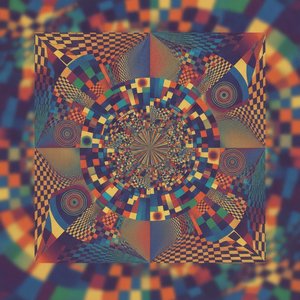
Victor Vasarely's Koska Mez (Honeycomb), painted in 1962, is more than just a visual puzzle; it’s a profound meditation on the nature of perception itself. This vibrant artwork, dominated by a bold yellow square punctuated with countless meticulously placed circles, embodies the core tenets of Op Art – Optical Art – a movement that emerged in the mid-20th century and sought to stimulate optical illusions through geometric abstraction. Vasarely, a key figure in this revolutionary style, wasn’t simply interested in creating pretty pictures; he was driven by a desire to scientifically explore how our eyes and brains interpret visual information. The painting's deceptively simple composition immediately draws the viewer into a dynamic interplay of space and movement, challenging our assumptions about depth and perspective.
Understanding Koska Mez requires acknowledging its historical context. Vasarely’s artistic journey began with a formal medical education, a testament to the rigorous intellectualism that would later inform his work. However, a pivotal encounter with Sándor Bortnyik's ‘Műhely’ workshop – directly influenced by the Bauhaus school – fundamentally shifted his trajectory. The Bauhaus emphasized functional design and geometric abstraction, principles that resonated deeply with Vasarely’s burgeoning interest in visual dynamics. This training instilled within him a fascination with kinetic art—the idea that perception itself could be manipulated through carefully controlled optical effects. The influence of Piet Mondrian and other early abstract artists is also evident, but Vasarely pushed beyond mere representation to create works that actively engaged the viewer’s senses.
Vasarely's technique in Koska Mez is remarkably precise. Each circle, rendered with meticulous attention to detail, contributes to the overall illusion of depth and movement. The varying sizes and positions of the circles create a sense of recession, mimicking the way our eyes perceive distance. He employed a layering technique, applying paint in thin washes to build up the intensity of color and achieve the desired optical effect. This careful control over scale, color, and placement is what elevates the work beyond mere decoration; it’s a deliberate manipulation of visual perception. The use of bright yellow, a color associated with energy and optimism, further amplifies this dynamic quality.
While ostensibly abstract, Koska Mez can be interpreted as representing a microcosm – a ‘honeycomb’ suggesting order within apparent chaos. The repetition of the circles evokes a sense of infinity, mirroring the vastness of space and the complexities of the universe. The artwork's impact is profoundly engaging; it invites contemplation on our relationship with visual information and challenges us to question our own perceptions. Vasarely aimed not just to create an image but to trigger a visceral response – a feeling of movement, energy, and perhaps even a sense of wonder. This piece remains a powerful example of how art can be both intellectually stimulating and emotionally resonant.

1906 - 1997 , 克罗地亚

Explore the profound spiritual depth of geometric abstraction. From Malevich's Suprematism to modern masters, our expert guide reveals how pure form and color command presence in fine art collections.
Explore the mesmerizing world of Victor Vasarely. Discover how his Bauhaus-inspired Op Art masters the science of perception through geometric abstraction and vibrant color. A sophisticated guide for discerning art collectors seeking to understand the legacy of optical illusion.


 效果预览
效果预览
 购买手绘画作
 分享
分享 分享
分享
 详情
详情

 下载
下载
 相似作品
相似作品 X射线
X射线 幻灯片播放
幻灯片播放

 展开详情
展开详情









 玻璃选项仅适用于110厘米以下的尺寸。


