
博物馆级艺术微喷或帆布版画,制作高效,并提供多种饰面选择。 ( 订购纯手工绘制画作 切换至数字图像销售渠道)





























您可以从与原作比例一致的预设尺寸中进行选择。

请输入您所需的宽度和高度,以适配您的画框或墙面。由于印刷品只能进行裁剪,无法超出原图尺寸,因此若比例不一致,画面的一部分将会被裁切。在正式印刷之前,我们会为您发送一份数字效果图供您确认。本页面显示的图片并非最终裁剪后的效果——只有效果图才能展示真实的裁剪情况。
Ion-20
复刻品尺寸
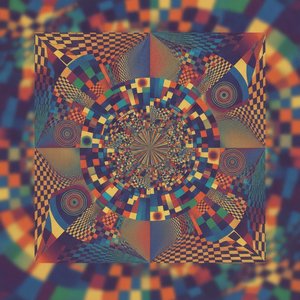
“Ion-20,” created by the visionary Victor Vasarely, is more than just a painting; it's an invitation to question your perception. This striking work, rendered in vibrant red, blue, and white hues, exemplifies the groundbreaking style of Op Art – Optical Art – that captivated the art world in the mid-20th century. Vasarely, born Károly Vaszary in 1906 in Pécs, Croatia, initially pursued a medical career before dedicating himself to exploring the fascinating relationship between mathematics and visual experience. His journey began with formal training at the Podolini-Volkmann Academy and the influential Műhely workshop under Sándor Bortnyik, where he absorbed the principles of functional design and geometric abstraction – concepts that would become the bedrock of his artistic practice.
At first glance, “Ion-20” appears as a chaotic jumble of squares. However, a closer examination reveals a meticulously constructed illusion. Vasarely’s genius lies in manipulating color and form to create an optical effect, deliberately disrupting our natural tendency to perceive objects as stable and unified. The overlapping shapes, varying sizes, and contrasting colors actively engage the viewer's eye, generating a sense of movement and depth that seems to defy the two-dimensional surface. This technique, central to Op Art, challenges the brain’s processing of visual information, creating a dynamic and mesmerizing experience. The painting’s title, “Ion-20,” subtly hints at the underlying mathematical principles – specifically, the concept of ionization – that informed Vasarely's artistic explorations.
Created using oil on canvas, "Ion-20" is a prime example of Op Art’s broader aims. Emerging in the 1960s, Op Art sought to translate scientific theories about perception and visual illusions into artistic expression. Artists like Vasarely were fascinated by the way our eyes and brains interpret patterns and shapes, leading them to create works that deliberately tricked the viewer's senses. This movement was heavily influenced by developments in psychology and neuroscience, reflecting a growing interest in understanding how we see the world. Vasarely’s work anticipated later explorations in motion graphics and digital art, demonstrating the enduring power of manipulating visual perception.
"Ion-20" doesn't convey explicit narrative content; its strength lies in its purely formal qualities. The geometric abstraction represents a detachment from representational imagery, focusing instead on the fundamental elements of form and color. The vibrant palette evokes feelings of energy, dynamism, and perhaps even a slight sense of disorientation – mirroring the perceptual challenges presented by the artwork. This piece is an invitation to contemplate the nature of perception itself, prompting viewers to consider how their brains actively construct reality.

1906 - 1997 , 克罗地亚
Explore the mesmerizing world of Victor Vasarely. Discover how his Bauhaus-inspired Op Art masters the science of perception through geometric abstraction and vibrant color. A sophisticated guide for discerning art collectors seeking to understand the legacy of optical illusion.

Embark on a visual journey through the mesmerizing world of Op Art. Discover the masters of optical illusion, explore geometric abstraction, and learn how to curate high-impact kinetic works for your private collection with expert guidance from art professionals.

 实景预览
实景预览
 分享
分享 分享
分享
 详情
详情 指南
指南

 下载作品
下载作品
 相似作品
相似作品 X射线
X射线 幻灯片播放
幻灯片播放 问答
问答
 统计数据
统计数据

 展开全文
展开全文









 玻璃选项仅适用于110厘米以下的尺寸。


