
博物馆级艺术微喷或帆布版画,制作高效,并提供多种饰面选择。 ( 订购此收藏品的纯手工复刻画作 切换至数字图像销售渠道)
您可以从与原作比例一致的预设尺寸中进行选择。

请输入您所需的宽度和高度,以适配您的画框或墙面。由于印刷品只能进行裁剪,无法超出原图尺寸,因此若比例不一致,画面的一部分将会被裁切。在正式印刷之前,我们会为您发送一份数字效果图供您确认。本页面显示的图片并非最终裁剪后的效果——只有效果图才能展示真实的裁剪情况。
Harmas
复刻品尺寸说明
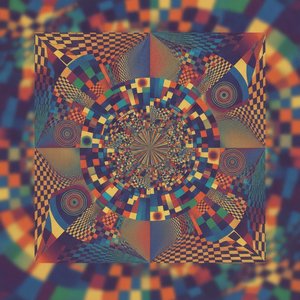
To stand before Harmas is to step directly into the mind of its creator, Victor Vasarely. This piece is not merely an arrangement of color and pattern; it is a vibrant intellectual puzzle, a visual meditation on structure itself. The eye is immediately drawn into the intricate dance between the bold red checks and the myriad small circles that populate the background. It possesses the undeniable energy characteristic of Op Art—an art movement that dared to challenge the very nature of what we perceive as solid form. Vasarely masterfully manipulates these elements, creating an optical vibration that seems to shift and breathe with every passing glance.
Technically speaking, Harmas showcases a sophisticated understanding of geometric abstraction. The composition reads almost like a meticulously crafted mosaic or a complex collage, suggesting the painstaking assembly of countless colored squares into a cohesive whole. While the overall effect is one of vibrant chaos, there is an underlying mathematical rigor. Vasarely’s signature technique involves using simple, repeating geometric units—dots, lines, and checks—to trick the viewer's perception. The scattering of those deep red dots acts as both an anchor point and a disruptive element, adding necessary depth and contrast to the otherwise patterned plane. It is this tension between order and perceived instability that gives the work its electrifying quality.
The title itself, Harmas, hints at the core philosophical underpinning of the piece: harmony or balance. In Vasarely’s hands, geometry transcends mere decoration; it becomes a vehicle for exploring universal principles. The interplay between opposing patterns—the structured grid against the scattered points—suggests that true harmony is not found in simplicity, but rather in the dynamic equilibrium achieved through contrast and complexity. It invites us to consider our own internal balances, suggesting that life’s most beautiful moments are often those where disparate elements coexist.
Created in 1964, this work sits at a fascinating juncture in art history, emerging from the intellectual ferment following the Bauhaus movement and solidifying Op Art as a global phenomenon. For the modern collector or designer, owning a reproduction of Harmas is acquiring more than just wall decor; it is acquiring a piece of conceptual art that speaks to the modernist fascination with structure and perception. Emotionally, the painting is invigorating. It demands engagement, refusing to allow the viewer to simply pass by. Instead, it compels you to slow down, to look closer, and to participate actively in the artwork’s visual dialogue.

1906 - 1997 , 克罗地亚

Discover the profound beauty of abstract art. Our expert guide explores geometric abstraction, Op Art, and Expressionism, offering connoisseurs deep insights into collecting and curating powerful, non-representational masterpieces for sophisticated interiors.
Explore the mesmerizing world of Victor Vasarely. Discover how his Bauhaus-inspired Op Art masters the science of perception through geometric abstraction and vibrant color. A sophisticated guide for discerning art collectors seeking to understand the legacy of optical illusion.

Explore the profound spiritual depth of geometric abstraction. From Malevich's Suprematism to modern masters, our expert guide reveals how pure form and color command presence in fine art collections.

Embark on a visual journey through the mesmerizing world of Op Art. Discover the masters of optical illusion, explore geometric abstraction, and learn how to curate high-impact kinetic works for your private collection with expert guidance from art professionals.


 发送
发送 分享
分享
 详情
详情 指南
指南

 下载图片
下载图片
 相似作品
相似作品 幻灯片播放
幻灯片播放 统计数据
统计数据

 阅读全文
阅读全文






































 玻璃选项仅适用于110厘米以下的尺寸。


