
由我们的艺术家按需定制,为您提供您所选尺寸及画框的布面手工油画。 ( 切换至版画销售渠道 切换至数字图像销售渠道)





























从与原作比例一致的预设尺寸中进行选择。

您可以输入自定义尺寸,以适配特定的画框或空间。如果所选尺寸与原图比例不符,我们将通过裁剪作品或添加手绘元素来扩展画面。数字样稿将在制作开始前发送给您确认。
请注意,屏幕预览无法准确反映实际的裁剪或扩展效果,只有样稿才能真实呈现最终的构图。
虽然我们提供定制尺寸服务,但为了保留原作比例,建议您从预设列表中选择尺寸。

Caopeo
复制品尺寸
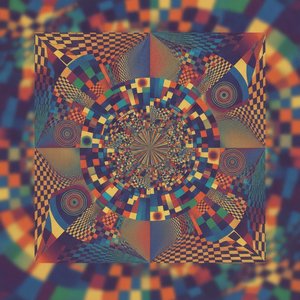
Victor Vasarely’s “Caopeo” isn’t merely a painting; it’s an invitation, a carefully constructed illusion designed to challenge and delight the viewer. Created in 1962, this seminal work exemplifies the core tenets of Op Art – Optical Art – a movement that sought to evoke sensory experiences through purely visual means. Born Károly Vaszary in 1906 in Pécs, Croatia (then part of Austria-Hungary), Vasarely’s artistic trajectory began unexpectedly with medical studies before he decisively embraced the world of art in 1927. His journey, fueled by a fascination with geometry and perception, led him to develop a revolutionary style that continues to resonate today.
The composition of “Caopeo” is deceptively simple. A square canvas explodes with a dynamic arrangement of circles – varying in size from prominent to subtle – all contained within a rigorously structured grid. This isn’t haphazard; each circle contributes to the overall illusion, creating an intense sense of movement and depth. The strategic use of scale—larger circles receding into the background while smaller ones appear closer—is a key technique employed by Vasarely to trick the eye and generate this captivating effect. It's a deliberate manipulation of visual cues, forcing the viewer to actively engage with the artwork rather than passively observing it.
Understanding “Caopeo” requires acknowledging its roots in the intellectual currents of the early 20th century. Vasarely’s artistic development was profoundly shaped by his time at Sándor Bortnyik’s Műhely workshop, a school deeply influenced by the Bauhaus movement. The Bauhaus emphasized functional design and geometric abstraction – principles that directly informed Vasarely's approach to art. This connection to the Bauhaus legacy is crucial; it highlights “Caopeo” as part of a broader artistic dialogue concerned with exploring the relationship between form, space, and perception.
While undeniably abstract, "Caopeo" invites contemplation about the nature of visual experience. The stark black and white palette intensifies the geometric impact, emphasizing the artwork's focus on perception and illusion. Vasarely wasn’t interested in depicting recognizable objects; instead, he sought to create a purely visual language that could evoke emotional responses through its manipulation of form and space. The work’s enduring appeal lies in its ability to stimulate the viewer’s senses and provoke a sense of wonder – a reminder that reality itself is often an illusion.
The artwork's impact is achieved through Vasarely’s precise technique, utilizing oil paints on canvas. The smooth application of paint creates a surface texture that enhances the optical effect, while the limited color palette – black and white – maximizes the visual intensity. This meticulous approach, combined with Vasarely’s innovative use of geometric abstraction, cemented his place as one of the most influential figures in Op Art.

1906 - 1997 , 克罗地亚

Explore the profound spiritual depth of geometric abstraction. From Malevich's Suprematism to modern masters, our expert guide reveals how pure form and color command presence in fine art collections.
Explore the mesmerizing world of Victor Vasarely. Discover how his Bauhaus-inspired Op Art masters the science of perception through geometric abstraction and vibrant color. A sophisticated guide for discerning art collectors seeking to understand the legacy of optical illusion.


 效果预览
效果预览
 分享
分享 分享
分享
 详情
详情 指南
指南

 下载
下载
 相似作品
相似作品 X射线
X射线 幻灯片播放
幻灯片播放 统计数据
统计数据

 展开详情
展开详情









 玻璃选项仅适用于110厘米以下的尺寸。


