

博物馆级艺术微喷或帆布版画,制作高效,并提供多种饰面选择。 ( 订购纯手工绘制画作 切换至数字图像销售渠道)





























您可以从与原作比例一致的预设尺寸中进行选择。

请输入您所需的宽度和高度,以适配您的画框或墙面。由于印刷品只能进行裁剪,无法超出原图尺寸,因此若比例不一致,画面的一部分将会被裁切。在正式印刷之前,我们会为您发送一份数字效果图供您确认。本页面显示的图片并非最终裁剪后的效果——只有效果图才能展示真实的裁剪情况。
Two Boys before an Easel
复刻品尺寸
The composition presents two young boys positioned before an easel, captured in a medium close-up. In the foreground, one boy is seen in profile, his face illuminated by a concentrated light source that defines the contours of his features. He wears a garment with a sleeve made of saturated purple satin, which reflects light with a distinct sheen. Behind him, a second boy is partially visible, his presence more obscured by the shadows. The background remains dark and indistinct, lacking specific architectural or environmental details. This use of chiaroscuro creates a sharp contrast between the illuminated skin tones and the deep blacks and browns that dominate the surrounding space. The brushwork is precise, particularly where light hits the folds of the purple fabric and the soft curls of the hair.
The color palette relies on muted golds and heavy, dark tones to establish a somber atmosphere. The texture of the clothing, specifically the silk-like quality of the sleeve, is rendered with careful attention to how light interacts with different surfaces. Lines are used to define the edges of the figures against the darkness, though they remain soft in areas of transition. The focus remains fixed on the interaction between the subjects and the object of their attention: a sketch or painting resting upon the easel.
This work is characteristic of the 17th-century Utrecht Caravaggism style, a movement that integrated Italian Baroque principles into Northern European painting. The technique emphasizes realism through the dramatic application of light and shadow to sculpt forms out of darkness. Such methods were common among artists who had studied in Rome and brought back an interest in intense, realistic representation and the use of sudden, directional light. The subject matter—an artist or student observing a work on an easel—suggests themes of observation and the process of learning.
The painting reflects a period of artistic experimentation where painters moved between intense, dark compositions and more classical, lighter styles. In this specific piece, the heavy shadows and the focus on a single, brightly lit subject point to the influence of Caravaggio's approach to composition. The way the light catches the edge of the boy's profile and the texture of his clothing demonstrates a commitment to capturing the physical reality of light hitting varied materials, from skin to satin.
"Two Boys before an Easel" 的版权状态 —— 属于公有领域 —— 其版权已过期 —— 取决于艺术家于 1671 年逝世这一事实。
“Two Boys before an Easel” 传达出一种 Reflective 的情感。这种情感基调描述了作品给人的印象。
就视觉亮度而言,Jacob van Oost 的《Two Boys before an Easel》 呈现出 deep_shadow 的效果。

Step into the elegance of the Baroque era with our curated guide to Sir Anthony van Dyck's top 25 masterpieces. Explore royal portraits and Flemish brilliance through museum-quality art reproductions and timeless decor inspiration. Discover all masterpieces on WahooArt.com.

Immerse yourself in the profound emotion of Rogier van der Weyden. Explore 25 iconic Early Netherlandish masterpieces, from intricate textures to divine pathos. Find inspiration for museum-quality art reproductions and decor. Discover all masterpieces on WahooArt.com.
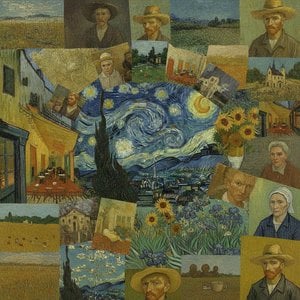
Explore 25 iconic Van Gogh masterpieces and their stories. Discover museum-quality art at WahooArt.com.

Explore 25 iconic Van Gogh and modern masterpieces from the Kröller-Müller Museum. Discover the full collection online at WahooArt.com.

 实景预览
实景预览
 分享
分享 分享
分享
 详情
详情 指南
指南

 下载作品
下载作品
 相似作品
相似作品 X射线
X射线 幻灯片播放
幻灯片播放 问答
问答
 统计数据
统计数据


 展开全文
展开全文









 玻璃选项仅适用于110厘米以下的尺寸。


