
 PaintingContemporary Realism
 1942Modern
 23.0 x 17.0 cm
 Leo Baeck Institute
博物馆级艺术微喷或帆布版画,制作高效,并提供多种饰面选择。 ( 购买手绘画作 切换至数字图像销售渠道)





























从与原作比例一致的预设尺寸中进行选择。

您可以输入自定义尺寸,以适配特定的画框或空间。如果您选择的尺寸与原图比例不符,我们将对作品进行裁剪,或通过镜像填充/纯色填充边缘的方式来扩展图像。在开始制作之前,我们会向您发送一份数字效果图供您确认。
请注意,屏幕上的预览并不能反映实际的裁剪或扩展效果。只有效果图才能准确展示最终的构图。
虽然我们提供定制尺寸,但为了保持原图比例,我们建议您从预设列表中选择尺寸。

Terezin: Still-life.
复制品尺寸
In the quiet, shadowed corners of art history, few works possess the profound emotional weight found in Terezin: Still-life. Painted in 1942 by the Czech-American artist Norbert Troller, this intimate composition serves as much more than a mere study of objects; it is a hauntingly beautiful testament to the human spirit amidst the darkness of the Theresienstadt concentration camp. At first glance, the viewer is met with a collection of mundane items—a red lipstick tube, various bowls, cups, and bottles—arranged with a deliberate, almost rhythmic precision. Yet, beneath this surface-level arrangement lies a narrative of survival and the desperate attempt to maintain a sense of normalcy and dignity in an environment defined by deprivation.
The composition is anchored by the striking presence of a single red lipstick tube, positioned centrally like a beacon of color against the more muted tones of the surrounding vessels. This splash of crimson acts as a powerful symbol of identity and the lingering traces of civilization. Surrounding this focal point, the artist has meticulously placed bowls and bottles that create a sense of structured space within the frame. The way the light interacts with the glass of the bottles and the curves of the ceramic bowls suggests a mastery of form, where each object occupies its own small territory of existence, much like the prisoners themselves striving to hold onto their individual humanity.
Technically, Troller utilizes a style that blends the observational precision of traditional still life with a poignant, documentary-like gravity. The arrangement of the three bowls and two cups creates a visual movement that guides the eye across the table, yet there is an underlying tension in the stillness. The artist’s background as an architect is subtly evident in the balanced, architectural placement of the objects, providing a sense of order to a world that had descended into chaos. This structural stability provides a stark, moving contrast to the historical reality of the work's creation, making the painting an evocative piece for collectors who value art that speaks to the depth of the human experience.
For the discerning collector or interior designer, Terezin: Still-life offers a unique opportunity to possess a piece of profound historical significance. As a high-quality reproduction, it brings a sophisticated and contemplative energy to any space, serving as a conversation starter that invites deep reflection. It is not merely a decoration but an emotional anchor—a reminder that even in the most desolate circumstances, beauty and the will to create can endure. This work stands as a masterpiece of resilience, making it an invaluable addition to a collection dedicated to art that transcends time and touches the very soul.


1896 - 1984 , Czech Republic
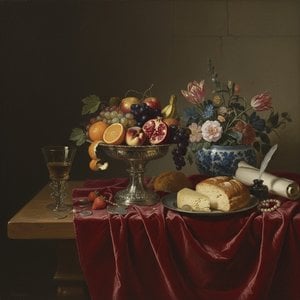
Embark on a sophisticated journey through the history of still life art. From Dutch Golden Age masterpieces to Baroque opulence, explore the profound symbolism and timeless beauty of the world's most exquisite table compositions.

Embark on a sophisticated journey through art history with our exploration of still life masterpieces. Discover the profound symbolism behind classical paintings of drinks and fruit, curated for the true connoisseur seeking timeless elegance and academic depth.

Explore the profound evolution of Cubist still life, from Cézanne's structural foundations to the fragmented brilliance of Braque and Léger. Discover how geometric abstraction redefined reality through a sophisticated lens of form, color, and modern artistic mastery.


 效果预览
效果预览
 分享
分享 分享
分享
 详情
详情

 下载
下载
 相似作品
相似作品 X射线
X射线 幻灯片播放
幻灯片播放 统计数据
统计数据 展开详情
展开详情









 玻璃选项仅适用于110厘米以下的尺寸。


