
 501
501 38.0cm x 56.0cm
购买高分辨率增强版数字图像,其品质远超在线预览。
每一份文件都由我们的内部专家使用先进工具与专业的后期润色技术精心打造。我们确保每一张图像都具备卓越的清晰度、精准的色彩还原度以及细腻的细节表现。
最终文件将在 72 小时内通过电子邮件交付,并针对专业、编辑及印刷用途进行了优化。其品质与顶级设计工作室、出版社和画廊所信赖的标准完全一致。
选择 WahooArt.com,您获得的不仅仅是一张图像——您收到的是经过专业级增强、精雕细琢的数字艺术作品,并享有满意保证。以下是您的订单中自动包含的所有内容:

您的高分辨率数字图像文件将在下单后 72 小时内通过电子邮件发送给您 —— 即可立即使用。

您的艺术品经过专业优化,结合先进的 AI 技术与人工修饰,确保呈现极致的细节、清晰度与色彩准确度。

不小心删除了文件或找不到了?没关系——我们将随时为您免费重发。

即刻拥有您的艺术作品,无需支付任何关税、税费或运费——数字下载始终免税。

我们通过专业工具与色彩管理技术,确保您的数字图像尽可能真实地还原原作色彩。

如果您对所购数字图像不满意,我们将在100天内为您进行修改或提供100%的全额退款——无需任何理由。

不满意?在收到数字文件后的100天内,您可以申请全额退款——无需任何理由。

购买 3 张图片可享 10% 折扣 - 购买 5 张可享 15% 折扣 - 购买 10+ 张可享 20% 折扣。非常适合创意项目、画廊和机构使用。

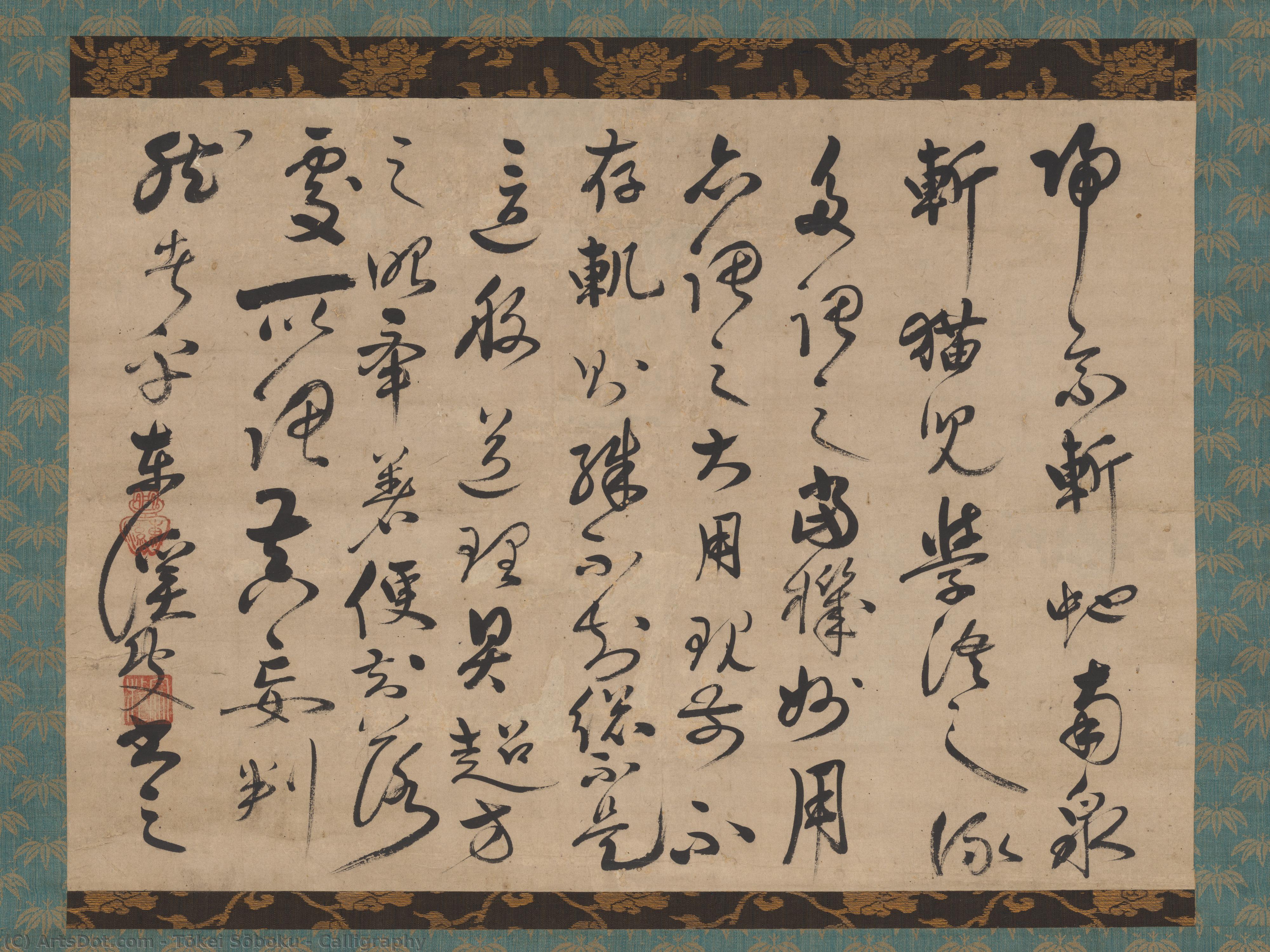
In the heart of Kyoto, a city where the echoes of ancient traditions meet the shifting tides of modernity, the life of Tōkei Sōboku (東渓宗牧) unfolded as a profound meditation on form and spirit. Born in 1883, Sōboku emerged during the Shōwa period, an era defined by a complex negotiation between Japan's venerable past and an encroaching global modernism. He was not merely a practitioner of calligraphy; he was a scholar-artist whose very existence served as a bridge between the disciplined rigors of classical scholarship and the expressive freedom of contemporary artistic thought. His journey was one of deep spiritual contemplation, rooted in the intellectual soil of Kyoto, where every stroke of his brush was informed by a lifetime of studying the delicate balance of the universe.
Sōbanc’s formative years were steeped in an education that transcended simple technical training. He immersed himself in the profound depths of Confucian classics and the meditative complexities of Zen Buddhism, disciplines that provided the philosophical scaffolding for his later masterpieces. This dual foundation instilled in him a reverence for harmony, balance, and the pursuit of enlightenment—values that would become the heartbeat of his work. Under the guidance of the era's most esteemed masters, he mastered the foundational mechanics of ink blending and brush control, yet he never allowed himself to be imprisoned by them. While he held a deep respect for the meticulous traditions of Chinese calligraphy, particularly in the precision of seal execution and compositional equilibrium, Sōboku possessed a restless, innovative spirit that sought to breathe new life into ancient characters.
What truly distinguishes the work of Tōkei Sōboku is his courageous departure from rigid convention. While many of his contemporaries found comfort in the repetition of established styles, Sōboku engaged in a deliberate dialogue with tradition, often challenging it through subtle experimentation. He possessed a rare ability to synthesize the weight of historical technique with a modernist sensibility that embraced nuance and texture. His calligraphy was never static; it moved with an organic vitality, incorporating delicate variations in ink density and unexpected touches of color that suggested a deeper, more tactile dimension to the written word.
This stylistic evolution allowed his art to resonate on both an intellectual and emotional level. To observe a Sōboku piece is to witness a controlled tension between the structured and the spontaneous. His work often reflects:
Beyond his individual achievements as a painter and calligrapher, Tōkei Sōboku’s historical significance lies in his role as a mentor and a cultural custodian. As a respected teacher, he nurtured generations of aspiring artists, passing down the wisdom of the old masters while encouraging them to find their own unique voices within the modern landscape. He helped ensure that the profound spiritual essence of Japanese calligraphy would not be lost to the rapid industrialization of the 20th century, but rather transformed into a living, breathing medium capable of expressing the complexities of a new age.
His legacy remains a testament to the power of artistic synthesis. By refusing to choose between the past and the present, Sōboku created a space where tradition could evolve without losing its soul. Today, his works stand as enduring monuments to the Shōwa period's artistic flourishing, reminding us that true innovation is most powerful when it is anchored in a deep understanding of what came before. Through his brush, the ancient wisdom of Kyoto continues to speak, offering a timeless lesson in beauty, discipline, and the eternal pursuit of harmony.

1883 - 1953 , Japan

 效果预览
效果预览
 切换至版画销售渠道
 分享
分享 分享
分享
 详情
详情 指南
指南

 下载
下载
 相似作品
相似作品 X射线
X射线 幻灯片播放
幻灯片播放 统计数据
统计数据 展开详情
展开详情


