由我们的艺术家按需定制,为您提供您所选尺寸及画框的布面手工油画。 ( 切换至版画销售渠道 切换至数字图像销售渠道)





























您可以从与原作比例一致的预设尺寸中进行选择。

您可以输入自定义尺寸,以适配特定的画框或空间。如果所选尺寸与原图比例不符,我们将通过裁剪作品或添加手绘元素来扩展画面。数字样稿将在制作开始前发送给您确认。
请注意,屏幕预览无法准确反映实际的裁剪或扩展效果,只有样稿才能真实呈现最终的构图。
虽然我们提供定制尺寸服务,但为了保留原作比例,建议您从预设列表中选择尺寸。

St Matthew
复刻品尺寸说明
Titian Ramsay Peale II's “St Matthew” is not merely a portrait; it’s a quiet contemplation rendered in oil, a testament to the enduring influence of the High Renaissance filtered through the sensibilities of an early 19th-century American artist. The painting depicts two figures engaged in what appears to be earnest conversation – one, presumably St. Matthew himself, distinguished by a flowing robe and a thoughtful beard, holding a pencil as if poised to capture inspiration. His companion, younger and clean-shaven, listens intently, creating a dynamic interplay of age and experience, wisdom and receptivity. The intimacy of the scene is striking; the figures are closely positioned, drawing the viewer into their private world. The circular frame adds an unusual depth, almost like peering through a window into another time, enhancing the sense of focused introspection.
To understand “St Matthew,” one must consider Titian Ramsay Peale II’s lineage. Born in 1799, he was the son of Charles Willson Peale, a pivotal figure in American portraiture and founder of one of the nation's first museums. This familial connection wasn’t simply about inheritance; it was an immersion into a world where art was intertwined with scientific inquiry and civic duty. Peale II consciously embraced the aesthetic principles of the High Renaissance – a period characterized by harmonious composition, idealized forms, and a profound interest in humanism. While many American artists of his time were grappling with distinctly national styles, Peale II looked to Italy for inspiration, specifically to masters like Raphael and Titian (from whom he took his first name), seeking to recreate the elegance and spiritual depth of their work. This dedication to classical ideals is evident in the careful modeling of forms, the subtle use of chiaroscuro – the play of light and shadow – and the overall sense of balance and serenity that permeates “St Matthew.”
The symbolism within "St. Matthew" is layered and invites contemplation. The inclusion of a pencil in the hand of St. Matthew is particularly significant. Traditionally depicted with writing implements like quills or books, the pencil suggests a more modern approach to recording divine inspiration – perhaps alluding to the evolving role of art itself as a means of interpreting faith. It’s a subtle nod towards the artist's own profession and the power of visual representation. The attentive posture of the younger man could represent the burgeoning Christian community or even the artist himself, seeking guidance from the apostle. The painting isn’t a dramatic narrative scene; it’s a moment of quiet revelation, emphasizing the intellectual and spiritual journey inherent in both faith and artistic creation. It's a visual meditation on how knowledge is passed down, interpreted, and ultimately, given new form.
For many years, Titian Ramsay Peale II remained somewhat overshadowed by his more famous father and brother, Rembrandt. However, recent scholarship has begun to recognize the unique qualities of his work – a refined technique, a deep understanding of Renaissance principles, and a quiet emotional resonance that sets him apart. “St Matthew” exemplifies this rediscovery. It’s a painting that rewards close viewing, revealing subtle details and inviting viewers to engage with its timeless themes. As an artwork for the modern home, it offers a touch of historical elegance and intellectual depth, capable of transforming any space into a haven of contemplation and beauty. A reproduction of “St Matthew” isn't just acquiring a beautiful image; it’s welcoming a piece of American artistic heritage – a Renaissance echo resonating across time.

1799 - 1885 , 美国
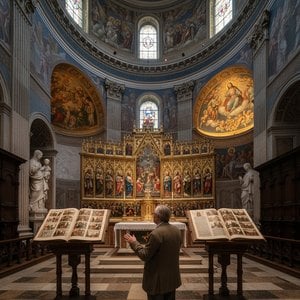
Explore the profound beauty of iconic religious artworks. From Renaissance masterpieces to sacred iconography, our expert guide delves into the spiritual power, symbolism, and enduring legacy of history's most divine paintings for the true art enthusiast.
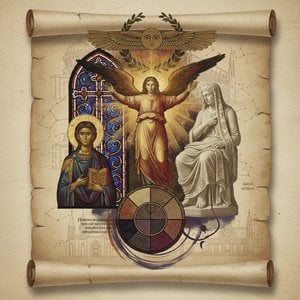
Explore the profound impact of spiritual themes in fine art. From Renaissance iconography to Baroque drama, discover how sacred symbolism and divine visions have shaped art history through a scholarly and reflective lens.
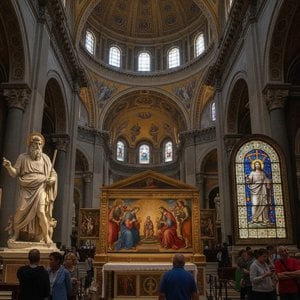
Explore the profound beauty of sacred art through a curated journey of masterpieces. From Renaissance iconography to Baroque drama, discover how history's greatest artists captured the divine presence in timeless works of spiritual transcendence.

Immerse yourself in the sacred grandeur of Baroque church interiors. Explore museum-quality, hand-painted oil reproductions and bespoke religious art commissions. From breathtaking frescoes to dramatic altarpieces, we bring historical majesty to your luxury space with unmatched expertise.
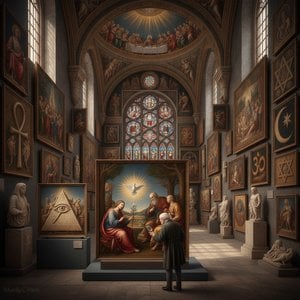
Explore the profound power of religious symbolism in art history. From Renaissance masterpieces to sacred iconography, uncover the hidden meanings behind divine details in a deep dive into classical art excellence.


 实景预览
实景预览
 发送
发送 分享
分享
 详情
详情 指南
指南

 下载图片
下载图片
 相似作品
相似作品 X射线
X射线 幻灯片播放
幻灯片播放 统计数据
统计数据


 阅读全文
阅读全文









 玻璃选项仅适用于110厘米以下的尺寸。