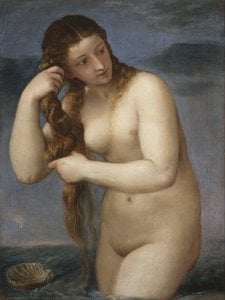
博物馆级艺术微喷或帆布版画,制作高效,并提供多种饰面选择。 ( 购买手绘画作 切换至数字图像销售渠道)





























从与原作比例一致的预设尺寸中进行选择。

您可以输入自定义尺寸,以适配特定的画框或空间。如果您选择的尺寸与原图比例不符,我们将对作品进行裁剪,或通过镜像填充/纯色填充边缘的方式来扩展图像。在开始制作之前,我们会向您发送一份数字效果图供您确认。
请注意,屏幕上的预览并不能反映实际的裁剪或扩展效果。只有效果图才能准确展示最终的构图。
虽然我们提供定制尺寸,但为了保持原图比例,我们建议您从预设列表中选择尺寸。

St Luke
复制品尺寸
Emerging from the shadow of his celebrated father, Charles Willson Peale, and a lineage steeped in artistic endeavor, Titian Ramsay Peale II presents us with a quietly compelling work in “St Luke.” This painting isn't merely a depiction of the Gospel writer; it’s a testament to Peale II’s dedication to the High Renaissance aesthetic, a style he embraced with meticulous precision. The image centers on a man, clearly identified as St. Luke through historical context and artistic convention, holding a book – a symbol of knowledge, faith, and the written word itself. His gaze is direct, almost stern, conveying a sense of solemn responsibility and intellectual weight. The artist’s handling of light and shadow imbues the figure with a sculptural quality, reminiscent of masters like Raphael or Leonardo da Vinci, whom Peale II clearly admired.
Beyond the straightforward portraiture, “St Luke” is rich in subtle symbolism. The book held so close to his chest isn’t simply an attribute; it represents the very foundation of Christian doctrine, a treasure guarded with reverence. The inclusion of two sheep – one positioned near the upper left corner and another towards the bottom right – adds layers of meaning. In Christian iconography, sheep often symbolize followers or humanity guided by faith, subtly linking St. Luke not only to the act of writing but also to his role as a shepherd of souls. The overall composition isn’t flamboyant; it's deliberately restrained, fostering an atmosphere of contemplation and reverence. Peale II wasn’t aiming for dramatic spectacle but rather for a quiet, profound spiritual resonance.
Titian Ramsay Peale II demonstrated a mastery of oil painting techniques inherited from his father and refined through dedicated study. The smooth application of paint, the careful modeling of form, and the nuanced use of color all point to an artist deeply versed in classical principles. While details regarding the specific size and materials remain unknown, it’s evident that Peale II prioritized precision and detail. His work stands apart from the more flamboyant Romantic styles gaining prominence during his lifetime; he remained steadfastly committed to the clarity, balance, and idealized forms of the Renaissance. This dedication positions him as a fascinating figure – an artist seemingly out of time, yet creating works of enduring beauty and spiritual depth.
For many years, Titian Ramsay Peale II remained somewhat overlooked in art historical narratives. However, recent scholarship has begun to illuminate his significant contributions, recognizing him not only as a skilled painter but also as a dedicated naturalist and explorer – a true Renaissance man in the American context. “St Luke” serves as an excellent example of his artistic prowess, offering a glimpse into a world where faith, intellect, and artistic skill converged. A reproduction of this work would bring a sense of quiet dignity and timeless beauty to any space, inviting contemplation and serving as a reminder of the enduring power of art and belief.

1799 - 1885 , 美国

Explore the profound beauty of American Regionalism. Delve into the art history of Grant Wood and John Steuart Curry, uncovering how these masters captured the soul of the American Heartland through iconic landscapes and rural identity.

Explore the profound beauty of American art history. From the Hudson River School to iconic landscapes, discover a curated journey through the masterpieces that defined a nation's spirit and the enduring legacy of American Romanticism.


 效果预览
效果预览
 分享
分享 分享
分享
 详情
详情

 下载
下载
 相似作品
相似作品 X射线
X射线 幻灯片播放
幻灯片播放 统计数据
统计数据


 展开详情
展开详情









 玻璃选项仅适用于110厘米以下的尺寸。