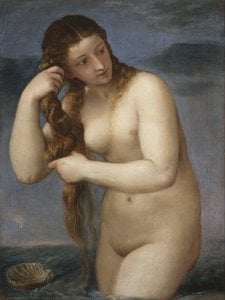
博物馆级艺术微喷或帆布版画,制作高效,并提供多种饰面选择。 ( 订购纯手工绘制画作 切换至数字图像销售渠道)





























您可以从与原作比例一致的预设尺寸中进行选择。

请输入您所需的宽度和高度,以适配您的画框或墙面。由于印刷品只能进行裁剪,无法超出原图尺寸,因此若比例不一致,画面的一部分将会被裁切。在正式印刷之前,我们会为您发送一份数字效果图供您确认。本页面显示的图片并非最终裁剪后的效果——只有效果图才能展示真实的裁剪情况。
St Augustine
复刻品尺寸
Titian Ramsay Peale II's "St Augustine" is more than just a portrait; it’s a quiet contemplation rendered in oil, a testament to the enduring power of faith and intellectual pursuit. The painting centers on the figure of St Augustine of Hippo, one of the most influential theologians and philosophers in Christian history. Peale presents him not as a distant icon, but as a man deeply immersed in thought, his gaze directed inward, suggesting a profound inner life. The artist’s meticulous attention to detail – evident in the rendering of Augustine's beard and the folds of his garments – speaks to a dedication to both technical skill and respectful representation. The composition is deliberately focused on the face and upper body, drawing the viewer into an intimate encounter with this pivotal figure.
Born in 1799, Titian Ramsay Peale II inherited a rich artistic lineage as the son of Charles Willson Peale, a celebrated American portraitist. This familial influence undoubtedly shaped his early training and instilled within him an appreciation for capturing the likeness and character of his subjects. However, Peale II distinguished himself through a clear affinity for the High Renaissance aesthetic – a style characterized by its emphasis on balance, harmony, and idealized forms. This is particularly evident in “St Augustine,” where the figure’s features are rendered with a classical grace reminiscent of Italian masters. The inclusion of a clock in the background adds an intriguing layer to the composition; it could symbolize the passage of time, the weight of history, or perhaps even Augustine's own reflections on temporality and eternity.
St Augustine himself is laden with symbolic meaning. As Bishop of Hippo, he was a pivotal figure in shaping Christian doctrine, particularly his writings on grace, sin, and redemption. Peale’s depiction subtly alludes to these intellectual contributions; the contemplative pose suggests Augustine's tireless pursuit of truth and understanding. The staff held in his hand is a traditional symbol of pastoral authority, representing his role as a shepherd guiding his flock. Beyond the religious symbolism, the painting also evokes a sense of humanism – a celebration of individual intellect and spiritual yearning that was central to Renaissance thought. The overall effect is one of quiet dignity and profound introspection.
For many years, Titian Ramsay Peale II remained somewhat overshadowed by his more famous father. However, recent scholarship has begun to recognize the unique contributions of this talented artist. His work represents a fascinating intersection of American artistic traditions and European Renaissance ideals. “St Augustine” stands as a compelling example of his skill and vision – a painting that invites viewers to engage with both the historical figure it portrays and the enduring questions of faith, knowledge, and the human condition. A reproduction of this piece would bring not only aesthetic beauty but also a sense of intellectual depth and spiritual resonance to any space.
"St Augustine" 是 蒂坦·拉姆齐·皮尔二世 High Renaissance 时期的代表作,其创作主题涵盖了 classical grace, venetian style, spiritual depth, augustine symbolism, family legacy。
蒂坦·拉姆齐·皮尔二世 的《St Augustine》 在整体 Elegant 的氛围中,传达出一种 Reflective 的情感。
蒂坦·拉姆齐·皮尔二世 的《St Augustine》 的色彩对比度为 Gentle。
在19世纪的美国艺术版图中,蒂坦·拉姆齐·皮尔二世占据了一个独特且极具功能性的位置,他的艺术实践始终在科学记录与正式艺术创作的交汇点上展开。他于1799年11月17日出生在宾夕法尼亚州费城的哲学厅(Philosophical Hall),是查尔斯·威尔逊·皮尔与伊丽莎白·德佩赛(Elizabeth DePeyser)最小的儿子。他的一生可以用“拒绝被单一学科定义”来概括。作为一名美国艺术家、博物学家、探险家兼科学插画师,他在野外考察那严谨细致的记录需求与画室绘画那规范严整的艺术要求之间游刃有余,穿梭自如。
他的职业生涯并非单纯对唯美主义的追求,而是一场对观察力的实践应用。他将生命中的大部分时光都奉献给了对物质世界的记录,这项任务要求他不仅要具备画家的感性,更要拥有技术人员般的严谨。这种双重身份使他能够驾驭截然不同的环境——从博物馆那受控的陈列空间,到探险途中变幻莫测的荒野地形。1885年3月13日,他于费城逝世,留下的艺术遗产超越了风格化的抽象,转而更加强调其创作主体所蕴含的结构性真实感。
若要深入理解蒂坦·拉姆齐·皮尔二世,必须首先审视“皮尔”这个姓氏背后沉甸甸的历史分量。他出生于一个堪称美国艺术与科学生命力核心引擎的显赫家族。作为早期美国肖像画的关键人物查尔斯·威尔逊·皮尔之子,他的成长环境始终处于美术与自然历史的交汇点。那绝非一段静谧的童年时光,而是在一个由艺术家与知识分子组成的庞大且紧密联系的家族网络中成长,他的兄弟们包括拉斐尔、伦勃朗、鲁本斯和富兰克林·皮尔,共同构成了这个充满创造力的生态系统。他的血缘关系错综复杂,其中还包括同父异母的兄弟姐妹,如索福尼斯巴·安古斯乔拉·皮尔,以及他的名字所承袭的先辈——蒂坦·拉姆齐·皮尔一世。
他所接受的训练既具实践性又极其严苛。他不仅仅是一名美学的追随者,更是家族式观察事业的参与者。他的手足们,包括詹姆斯、安娜·克莱普尔和玛格丽塔·皮尔,都身处这种高强度的创作环境之中。这种家族结构意味着他的教育与父亲及兄弟们的实践工作是密不可分的。他学会了同时透过肖像画家的敏锐与自然主义者的严谨去观察世界。正是这种双重教育,为他日后开创出一条连接科学记录与古典绘画的艺术之路,奠定了坚实的技术基石。
蒂坦·拉姆齐·皮尔二世的职业生涯,其核心在于一种许多同时代艺术家都难以企及的对实证观察的执着追求。他并非仅仅在远处遥望自然,而是积极投身于19世纪初那些重大的科学探索之中。他的野外考察工作起步很早,包括在1817年至1818年间,与乔治·奥德、威廉·麦克卢尔和托马斯·赛共同前往佛罗里达州和佐治亚州进行考察。这种早期的实地沉浸,为他建立起一种严谨的记录模式。在1819年至1820年间,他随同斯蒂芬·哈里曼·朗的探险队深入落基山脉与大平原。这些在荒野中的岁月,赋予了他解剖学与植物学的精准视角,也为他日后转向更具正式性的艺术创作奠定了坚实的科学基础。
1833年,他当选为美国哲学学会会员,这标志着他在科学界地位的稳固。这一荣誉也恰逢他最重要的机构贡献期:在1838年至1842年间,他参与了美国探险队(United States Exploring Expedition)。作为此次探险队的首席自然学家,蒂坦·拉姆齐·皮尔二世的工作早已超越了简单的插图绘制,而是进入了科学领导者的领域。他能够完美地在自然学家的严谨观察与绘图师的精湛技艺之间架起桥梁,这使他成为这些大规模海洋与陆地测量任务中不可或缺的瑰宝。
即便后来他的重心转向了其他的职业职责,他与系统性信息记录之间的纽带从未断裂。他在联邦政府机构中保持着长期的活跃,直至1873年仍在专利局工作。这段漫长的任期,折射出他一生的职业底色——那是一种建立在高度自律的观察之上的事业,无论这种观察是应用于野外采集的标本,还是应用于政府办公室内的一项技术细节。
蒂坦·拉姆齐·皮尔二世的作品在自然主义者的观察之眼与威尼斯色彩主义的风格野心之间,维持着一种微妙而独特的张力。他并未止步于19世纪科学插画中常见的、那种平铺直叙且仅具实用功能的记录方式;相反,他始终在追求一种能够映射“旧世界”传统的、充满光泽感的质感。这种艺术追求是通过对油画颜料极其克制且精准的运用实现的,他通过层层叠加的笔触来构建画面的物理深度与视觉层次。在创作中,他频繁运用晕涂法(sfumato)来柔化轮廓,这种技法使他能够巧妙地在解剖学的精确性与大气氤氲的优雅感之间架起桥梁。
他的技法储备极其广泛,这种多才多艺使他能够在微观细节与宏大叙事之间游刃有余地切换。他精通多种媒介:在进行科学观察时,他擅长使用水彩与石墨;在处理宗教与神话题材时,他则以布面油画见长;而在进行插画创作时,他则运用石版画与墨水。即便在晚年,他也以业余爱好者的身份开始接触当时新兴的摄影媒介。这种技术上的广度确保了他的创作主题——无论是细致入微的植物标本,还是庄严古典的人物形象——在华丽的审美修饰之下,始终保留着一种坚实的结构真实感。
蒂坦·拉姆齐·皮尔二世的创作成果揭示了生物学观察与神圣精神之间的一种张力。他的宗教题材作品,例如约创作于1510年的圣奥古斯丁、大格列高利以及带着牧羊人的圣家,展现了他对古典形式的执着追求。这些作品依赖于结构的清晰度,而非单纯的情感宣泄。他以同样的严谨态度对待神话主题,尤其是约创作于1520年的维纳斯·安纳迪亚梅内。从他处理人物褶皱的方式以及对解剖结构的呈现中,可以清晰地感受到他观察之精准。此外,他还创作了未注明日期的圣马可与圣马太作品,在整个职业生涯中始终保持着对宗教图像学的专注。
对于皮尔而言,自然主义从未是次要的兴趣,而是一种核心的观察视角。他能够从神学领域无缝切换到鸟类学研究,这在约创作于1868年的德拉瓦水峡的五只鹌鹑中得到了完美体现。这件作品要求与他那些宏大的画布作品同样严苛的技术水准,只是它将这种严谨应用于野生动物独特的纹理之中。即便是在他那些更具社会性或观察性的场景中,例如约创作于1830年的款待宠儿,也能看到他对颜料克制的运用,从而避免了流于表面的肤浅感。他的绘画并非为了装饰而存在,而是为了记录其题材所承载的厚重感。
蒂坦·拉姆齐·皮尔二世的作品在国际各大艺术收藏中的身影,有力地证明了他的艺术造诣早已跨越了美洲边疆的界限。他的宗教题材与神话主题散落在欧洲最显赫的艺术殿堂之中。在伦敦,国家美术馆珍藏着他的创作成果;而在马德里的普拉多博物馆与那不勒斯的卡波迪蒙特博物馆,亦保有其大量的作品。这些收藏共同见证了他在处理光影与形式时所展现出的卓越技法,早已与当时的欧洲艺术标准产生了深刻共鸣。
他的艺术足迹进一步延伸至中欧与南欧。维也纳的艺术史博物馆与威尼斯的安德烈亚·德拉·萨卢特圣母教堂均收藏有他的画作。在荷兰,海牙的毛里求斯皇家美术馆悉心保存着他的杰作;与此同时,爱丁堡的苏格兰国家现代艺术馆也收藏了他的《维纳斯出海》。通过这些跨越国界的艺术坐标,我们得以在宏大的历史语境中,重新审视他如何将威尼斯色彩主义的精髓完美地融入古典主题之中。
《款待宠儿》(1830年)
《特拉华水峡的五只鹌鹑》(1868年)
《带着牧羊人的圣家》(约1510年)

1799 - 1885 , 美国

Explore the luminous mastery of Titian. Discover how the Venetian master revolutionized color and light through breathtaking Renaissance techniques, from Venus Anadyomene to profound allegories, and learn to bring this timeless brilliance into your private collection.

 实景预览
实景预览
 分享
分享 分享
分享
 详情
详情 指南
指南

 下载作品
下载作品
 相似作品
相似作品 X射线
X射线 幻灯片播放
幻灯片播放 问答
问答
 统计数据
统计数据


 展开全文
展开全文









 玻璃选项仅适用于110厘米以下的尺寸。