


x





























从与原作比例一致的预设尺寸中进行选择。

您可以输入自定义尺寸,以适配特定的画框或空间。如果您选择的尺寸与原图比例不符,我们将对作品进行裁剪,或通过镜像填充/纯色填充边缘的方式来扩展图像。在开始制作之前,我们会向您发送一份数字效果图供您确认。
请注意,屏幕上的预览并不能反映实际的裁剪或扩展效果。只有效果图才能准确展示最终的构图。
虽然我们提供定制尺寸,但为了保持原图比例,我们建议您从预设列表中选择尺寸。

Flora
复制品尺寸
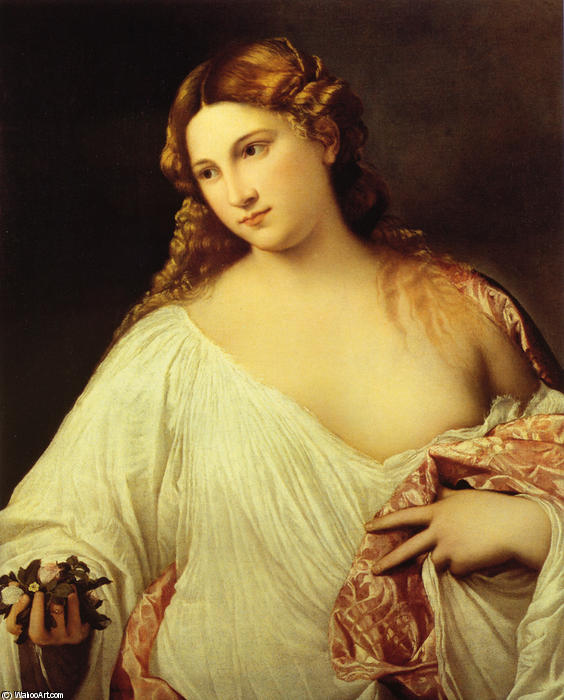
Titian’s "Flora," painted in 1515, isn't merely a portrait; it’s an immersion into the heart of Renaissance Venice and a profound meditation on beauty, fertility, and the very essence of springtime. Housed within the hallowed halls of the Galleria degli Uffizi, this oil-on-canvas masterpiece continues to captivate viewers with its luminous colors, masterful composition, and the palpable sense of life emanating from the painted surface. Titian, already a rising star in Venetian art circles, used this work to establish his signature style – a bold departure from the cooler palettes favored by his predecessors, embracing instead a vibrant, almost intoxicating use of color that would define his legacy.
The subject herself is an embodiment of youthful allure. The woman, identified as Flora, the Roman goddess of flowers and spring, is depicted in a pose of serene contemplation. Her long, flowing hair cascades around her shoulders, framing a face of exquisite delicacy – high cheekbones, full lips, and eyes that seem to hold both wisdom and innocence. She wears a simple yet elegant white gown, its folds suggesting movement and grace, while holding a bouquet of flowers—a direct reference to her mythological namesake. The subtle blush on her skin hints at the burgeoning life of spring, mirroring the abundance represented by the blossoms in her hand.
Titian's genius lay not just in his subject matter but also in his revolutionary approach to oil painting. “Flora” exemplifies this perfectly. He employed a technique known as *sfumato*, blurring the lines between form and shadow, creating an ethereal quality that softens the edges of the figure and lends her face a dreamlike appearance. Notice how he builds up layers of color—thin glazes over thicker underpaintings—to achieve incredible depth and luminosity. The pink cloth in the background isn’t just a decorative element; it's strategically placed to reflect light and further enhance the painting’s overall radiance, drawing the eye towards the central figure.
The color palette itself is remarkably rich and complex. Titian masterfully blends warm reds and oranges with cool blues and greens, creating a harmonious yet dynamic visual experience. He doesn't shy away from bold contrasts, using vibrant hues to emphasize key features of the portrait – the luminosity of her skin, the delicate petals of the flowers, and the subtle shimmer in her eyes. This masterful manipulation of color is what truly elevates “Flora” beyond a simple likeness; it transforms it into an evocative representation of beauty itself.
Painted during a period of immense artistic innovation in Venice, "Flora" reflects the city’s flourishing trade and its embrace of classical ideals. The Renaissance was rediscovering the art and mythology of ancient Rome, and Titian skillfully incorporates these elements into his work. Flora, as the goddess of spring, symbolizes rebirth, fertility, and renewal – themes that resonated deeply with Venetian society at the time. The painting can be viewed as a celebration of the cyclical nature of life, mirroring the blossoming of springtime in both the natural world and the artistic realm.
Furthermore, Titian’s choice to depict Flora within a relatively intimate setting—a simple interior space—contrasts with the grand historical portraits that were popular at the time. This shift towards portraiture as a means of capturing individual character and beauty was a defining characteristic of the Venetian Renaissance, and “Flora” stands as a prime example of this trend. It’s a testament to Titian's ability to capture not just outward appearance but also an inner sense of grace and serenity.
The enduring appeal of "Flora" lies in its timeless beauty and the sheer artistry of its execution. WahooArt offers meticulously crafted, hand-painted reproductions that faithfully capture the essence of this iconic painting, allowing you to bring Titian’s vision into your own space. Our reproductions utilize traditional techniques and archival-quality materials, ensuring a lasting piece of art that will be treasured for generations to come. Explore our selection at here to discover the perfect way to experience the magic of “Flora” firsthand.


提香(Tiziano Vecellio),这位名字在艺术史上熠熠生辉的人物,是意大利文艺复兴时期最伟大的画家之一。他不仅是一位技艺精湛的艺术家,更是一位色彩革新者,深刻地影响了西方绘画的发展轨迹。他的作品充满了活力、情感和对人性的深刻洞察,至今仍深深打动着无数观众的心灵。
提香生于1488年或1490年左右,出生在多洛米蒂山脉脚下的皮耶韦迪卡多尔小镇。他的早年生活并不详尽,但可以确定的是,他怀揣着对艺术的无限热情,前往威尼斯求学。在那里,他先师从马赛克画家塞巴斯蒂亚诺·祖卡托,后又在金替莱·贝利尼和他的弟弟乔瓦尼·贝利尼的指导下学习绘画技巧。然而,真正塑造提香艺术风格的关键人物是乔尔吉奥内。这两位艺术家共同创作了许多作品,包括“德国商人行会”的外墙壁画,这些合作不仅提升了提香的技艺,也奠定了其独特的艺术风格的基础。
提香的艺术生涯并非一蹴而就,而是经历了一个不断发展和创新的过程。他的早期作品深受乔尔吉奥内影响,呈现出一种柔和、诗意的氛围。然而,随着时间的推移,他逐渐摆脱了这种风格的束缚,开始探索更加大胆和富有表现力的色彩运用。他不再满足于简单的模仿自然,而是试图通过色彩来表达情感、传递思想。例如,《圣母玛利亚与圣伊丽莎白相遇》这幅作品,就充分展现了他对色彩的精湛掌握和对人物内心世界的深刻洞察。提香对色彩的理解达到了前所未有的高度,他能够准确地把握不同颜色的相互作用,创造出令人惊叹的光影效果。
提香不仅是一位杰出的肖像画家,也是一位伟大的历史画、神话画和宗教画大师。他为威尼斯共和国的统治者、欧洲各国的君主以及教皇绘制了大量的肖像作品,这些肖像栩栩如生,充满了人物个性和魅力。他的历史画和宗教画则以其宏大的场面、深刻的思想内涵和精湛的绘画技巧而著称。《乌尔比诺的维纳斯》是提香最著名的作品之一,它不仅是一幅充满感官美感的裸体画作,更是一件具有象征意义的艺术品。这幅画以其大胆的构图、丰富的色彩和对人物情感的细腻刻画而闻名于世。
提香在威尼斯取得了巨大的成功,成为了当时最受尊敬和追捧的艺术家之一。他不仅为威尼斯共和国服务,还受到欧洲各国君主的青睐。他的作品被广泛收藏,影响了无数后世画家。彼得·保罗·鲁本斯、伦勃朗等艺术大师都深受提香的影响,并从他的作品中汲取灵感。提香的绘画风格对巴洛克艺术的发展产生了深远的影响,为西方绘画开创了新的时代。
提香于1576年去世,享年约88岁。他留下了大量的作品,这些作品不仅是意大利文艺复兴时期艺术的瑰宝,也是人类文明的共同财富。如今,他的作品散落在世界各地的博物馆和美术馆中,吸引着来自全球各地的观众前来欣赏。

1490 - 1576 , 意大利

Explore the enigmatic world of Giorgione, a pivotal figure in the Venetian Renaissance. Discover his innovative techniques, iconic paintings like 'The Tempest', and lasting influence on art history. Learn more at WahooArt.

Explore the revolutionary techniques & enduring legacy of Titian, the master of Venetian Renaissance portraiture. Discover insights for collectors & appreciate his impact on art history.

Discover the captivating world of customized classical paintings! Explore how memes sparked a renaissance & learn to commission your own personalized portrait. Expert art consultation & museum-quality reproductions at WahooArt.

Explore the captivating world of Lorenzo Lotto, a Venetian Renaissance master renowned for his psychologically insightful portraits & enigmatic symbolism. Discover his life, style, and rediscovered legacy with WahooArt.

Transform your cherished photos into timeless oil paintings with WahooArt's expert artists. Museum-quality reproductions & custom portraits, crafted to last a lifetime. Discover the art of personal legacy.


第一时间获取最新的艺术新闻、独家优惠及装饰灵感。
向我们介绍您的项目需求,我们的艺术专家将为您提供 3 个个性化的艺术品推荐。
由我们的专家为您精选 3 款心仪之作 —— 完全免费!

 定制手绘复刻品
 分享
分享 分享
分享
 详情
详情

 下载
下载
 相似作品
相似作品 X射线检测
X射线检测 幻灯片播放
幻灯片播放


 展开详情
展开详情









 玻璃选项仅适用于110厘米以下的尺寸。


