
 Impressionism
 50.0 x 76.0 cm
 皇家苏格兰学院艺术与建筑展
博物馆级艺术微喷或帆布版画,制作高效,并提供多种饰面选择。 ( 订购纯手工绘制画作 切换至数字图像销售渠道)
您可以从与原作比例一致的预设尺寸中进行选择。

请输入您所需的宽度和高度,以适配您的画框或墙面。由于印刷品只能进行裁剪,无法超出原图尺寸,因此若比例不一致,画面的一部分将会被裁切。在正式印刷之前,我们会为您发送一份数字效果图供您确认。本页面显示的图片并非最终裁剪后的效果——只有效果图才能展示真实的裁剪情况。
Threshing
复刻品尺寸

Thomas Austen Brown (1859-1924) remains a quietly significant figure in 19th-century British art, often overshadowed by the grand narratives of the Hudson River School and the Pre-Raphaelites. Yet, within his distinctive oeuvre lies a profound exploration of human experience, particularly as witnessed through the lens of Victorian hospitals and charitable institutions. Born in London, Brown’s artistic journey was shaped by a deep empathy for the marginalized and vulnerable, a sensibility that profoundly informed his unique style and subject matter.
Early influences are somewhat elusive, though it's believed he initially studied under John Atkinson Grimshaw, a prominent figure in the Northern School of Painting. However, Brown quickly developed an independent voice, characterized by a loose, expressive brushwork and a remarkable ability to imbue his subjects with a palpable sense of humanity. His early works often depicted scenes from rural life – farmers, shepherds, and laborers – rendered with a gentle realism that hinted at the social commentary to come. Crucially, he began to frequent hospitals and asylums in London, documenting the lives of patients and staff, initially sketching for personal observation but soon recognizing the potential for artistic expression.
Brown’s most celebrated work revolves around a series of paintings depicting hospital life. These weren't idealized portrayals of medical care; instead, they offered unflinching glimpses into the realities of illness, poverty, and institutional existence. He meticulously observed the routines of nurses, the expressions of patients – often those afflicted with debilitating diseases or mental illnesses – and the quiet dignity amidst hardship. His subjects were rarely posed; he captured them in their natural states, conveying a sense of immediacy and authenticity that was remarkably rare for artists of his time.
Works like “Feeding the Pigeons” (1895) exemplify this approach. The painting depicts a nurse tending to patients outside a hospital window, with pigeons pecking at crumbs scattered on the pavement below. It’s not merely a scene of charity; it's an exploration of isolation, vulnerability, and the fleeting moments of connection between caregiver and patient. Similarly, “The Bait Gatherers” (1895) portrays a family struggling to earn a meager living, highlighting the social conditions that often contributed to illness and suffering. These paintings weren’t intended as moralistic statements but rather as empathetic investigations into the human condition.
Brown's technical approach was deliberately loose and impressionistic. He favored broad brushstrokes and vibrant colors, eschewing meticulous detail in favor of capturing the overall mood and atmosphere of his subjects. This technique served to heighten the emotional impact of his work, conveying a sense of immediacy and vulnerability that resonated deeply with viewers.
While Brown’s style is undeniably unique, he was undoubtedly influenced by several key artistic movements and figures. The works of Jean-François Millet, particularly his depictions of peasant life, are evident in Brown's attention to detail and his focus on the struggles of ordinary people. The atmospheric effects of J.M.W. Turner also played a role, as Brown sought to capture the fleeting light and shadow that defined the hospital environment. Notably, he maintained correspondence with Asher Brown Durand, a leading figure in the Hudson River School, exchanging ideas about landscape painting and artistic practice.
Furthermore, his work shares thematic resonances with the social realism of artists like Gustave Courbet, who similarly sought to depict the lives of the working class without romanticizing or idealizing their experiences. The Musée Thomas-Henry in Évreux, France, houses a significant collection of Brown’s paintings, offering visitors a rare opportunity to experience his distinctive artistic vision firsthand.
Thomas Austen Brown's contribution to British art is often overlooked, yet his work remains profoundly moving and historically significant. He was one of the first artists to systematically document hospital life, providing valuable insights into the social conditions of Victorian England and the experiences of its most vulnerable citizens. His paintings are not merely aesthetically pleasing; they are powerful testaments to human compassion and a reminder of the importance of empathy in art.
Today, Brown’s work is increasingly recognized for its psychological depth and its ability to evoke a sense of shared humanity. His legacy extends beyond the realm of fine art, as his paintings continue to be studied by social historians and medical researchers seeking to understand the history of healthcare and the lives of those who received care within Victorian institutions.

1859 - 1924

Discover the profound serenity of timeless pastoral landscapes. From Impressionist masterpieces to bespoke oil commissions, explore how curated fine art brings the enduring beauty and tranquility of nature into your luxury home interior.

Explore the ethereal beauty of Impressionist landscapes. Discover how masters like Monet captured fleeting light through color and texture, and learn to curate these timeless, luminous masterpieces for your home collection.

Elevate your personal landscapes into breathtaking Impressionist oil masterpieces. WahooArt transforms your cherished photos into museum-quality, hand-painted treasures through academic artistry and premium craftsmanship. Invest in a timeless legacy for your home today.
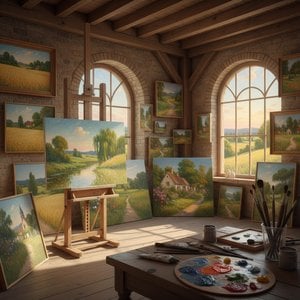
Discover the profound tranquility of rural art through an expert exploration of Impressionist landscapes. From pastoral scenes to textured oil masterpieces, learn how timeless nature-inspired artworks bring enduring elegance and serenity to sophisticated collectors.


 实景预览
实景预览
 分享
分享 分享
分享
 详情
详情 指南
指南

 下载作品
下载作品
 相似作品
相似作品 X射线
X射线 幻灯片播放
幻灯片播放 Q&A
Q&A 统计数据
统计数据 展开全文
展开全文






































 玻璃选项仅适用于110厘米以下的尺寸。


