博物馆级艺术微喷或帆布版画,制作高效,并提供多种饰面选择。 ( 购买手绘画作 切换至数字图像销售渠道)
从与原作比例一致的预设尺寸中进行选择。

您可以输入自定义尺寸,以适配特定的画框或空间。如果您选择的尺寸与原图比例不符,我们将对作品进行裁剪,或通过镜像填充/纯色填充边缘的方式来扩展图像。在开始制作之前,我们会向您发送一份数字效果图供您确认。
请注意,屏幕上的预览并不能反映实际的裁剪或扩展效果。只有效果图才能准确展示最终的构图。
虽然我们提供定制尺寸,但为了保持原图比例,我们建议您从预设列表中选择尺寸。

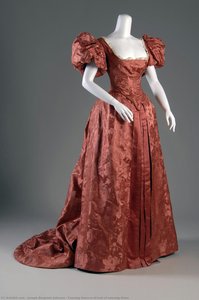
Day Dress
复制品尺寸

To contemplate the life of Thomas Augustine Martin is to witness a rare harmony between the analytical mind of a scholar and the sensitive soul of an artist. Born in the quiet beauty of Ballinamore, County Leitrim, on November 13, 1935, Martin’s journey was one defined by a profound connection to the Irish landscape and its cultural heartbeat. While history primarily remembers him as a titan of Anglo-Irish literary criticism—a man whose intellect shaped the halls of University College Dublin and the Senate of Ireland—there existed within him a deeply resonant visual sensibility. He was not merely an observer of the written word, but a creator of light and color, capable of translating the ephemeral textures of life onto paper.
His formative years at Cistercian College, Roslam, laid the groundwork for a life of disciplined excellence. A natural leader who captained the rugby team and served as House Captain, Martin possessed a vigor that would later manifest in his passionate advocacy for Irish arts. It was during this period that his linguistic talents first shone, earning him a top mark in English that signaled a lifelong devotion to the nuances of expression. This early academic rigor provided the scaffolding upon which he built an expansive career, moving from the local classrooms of Roscrea to the prestigious Chair of Anglo-Irish Literature at UCD, where he became a pivotal interpreter of the nation's literary traditions.
Beyond the lecture halls and the political debates of Seanad Éireann, Martin found a sanctuary in the visual arts. His foray into painting, most notably seen in his celebrated watercolour ‘Day Dress’, reveals an artist deeply attuned to the subtle shifts of atmosphere and light. In this work, one finds a departure from the structured arguments of his literary critiques; instead, there is a fluid, emotive exploration of color and form. The piece captures a moment of quiet contemplation, mirroring the very essence of the Irish landscape he so loved. Through the medium of watercolour, Martin was able to evoke the vibrant yet soft hues of his homeland, demonstrating an ability to capture the transient beauty of a single moment.
This artistic dimension of his life served as a vital counterpoint to his public roles. While his work at the Abbey Theatre board and his political service required a focus on institutional strength and national identity, his painting allowed for a more intimate, personal dialogue with the world. There is a poetic symmetry in his ability to navigate both the macrocosm of national culture and the microcosm of a single brushstroke. His art was not a separate hobby but an extension of his literary soul—a way to visualize the rhythms and textures that he spent his professional life analyzing through text.
The historical significance of Thomas Augustine Martin lies in his ability to bridge disparate worlds. He was a man who could command a Senate chamber, lead a university department, and direct a national theatre, yet he remained anchored by the delicate precision of an artist’s eye. His contributions to Irish life were multifaceted:
When he passed away in Dublin on October 16, 1995, Ireland lost more than an academic; it lost a polymath who embodied the very essence of the Irish intellectual tradition. His legacy remains etched in the archives of UCD and the annals of the Abbey Theatre, but it also lives on in the soft, luminous traces of his paintings, which continue to invite viewers into a world of quiet, enduring beauty.

1935 - 1995 , Republic of Ireland


 效果预览
效果预览
 分享
分享 分享
分享
 详情
详情

 下载
下载
 相似作品
相似作品 X射线
X射线 幻灯片播放
幻灯片播放 统计数据
统计数据

 展开详情
展开详情






































 玻璃选项仅适用于110厘米以下的尺寸。