
购买高分辨率增强版数字图像,其品质远超在线预览。
每一份文件都由我们的内部专家使用先进工具与专业的后期润色技术精心打造。我们确保每一张图像都具备卓越的清晰度、精准的色彩还原度以及细腻的细节表现。
最终文件将在 72 小时内通过电子邮件交付,并针对专业、编辑及印刷用途进行了优化。其品质与顶级设计工作室、出版社和画廊所信赖的标准完全一致。
选择 WahooArt.com,您获得的不仅仅是一张图像——您收到的是经过专业级增强、精雕细琢的数字艺术作品,并享有满意保证。以下是您的订单中自动包含的所有内容:

您的高分辨率数字图像文件将在下单后 72 小时内通过电子邮件发送给您 —— 即可立即使用。

您的艺术品经过专业优化,结合先进的 AI 技术与人工修饰,确保呈现极致的细节、清晰度与色彩准确度。

不小心删除了文件或找不到了?没关系——我们将随时为您免费重发。

即刻拥有您的艺术作品,无需支付任何关税、税费或运费——数字下载始终免税。

我们通过专业工具与色彩管理技术,确保您的数字图像尽可能真实地还原原作色彩。

如果您对所购数字图像不满意,我们将在100天内为您进行修改或提供100%的全额退款——无需任何理由。

不满意?在收到数字文件后的100天内,您可以申请全额退款——无需任何理由。

购买 3 张图片可享 10% 折扣 - 购买 5 张可享 15% 折扣 - 购买 10+ 张可享 20% 折扣。非常适合创意项目、画廊和机构使用。

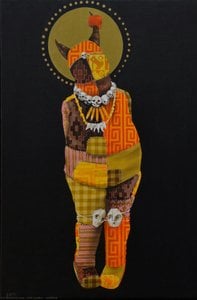
The South African artist Thokozile Gwala is a captivating figure, simultaneously rooted in the vibrant traditions of her homeland and boldly projecting an arresting presence onto the contemporary art scene. More than just an actress known for her role as the formidable witch “Thokozile” in the television drama Imbewu: The Seed, she’s a multifaceted artist whose work—primarily intricate textile tapestries—resonates with potent symbolism and a deeply personal narrative. Gwala's journey is one of reclaiming voice, challenging expectations, and weaving together threads of ancestry, performance, and visual storytelling.
Born in South Africa, Gwala’s early life was shaped by the complexities of apartheid and its enduring legacy. While her acting career brought her widespread recognition, it was through her artistic practice that she truly found a space to articulate her experiences and perspectives. Initially trained as a weaver at the Rorke's Drift Evangelical Lutheran Church Art and Craft Centre, Gwala’s work quickly distinguished itself from the predominantly male-dominated weaving tradition of the time. Unlike many of her colleagues who focused on replicating historical scenes or producing decorative patterns for export, Gwala began to explore themes of identity, spirituality, and social commentary within her tapestries.
Gwala’s tapestries are not merely decorative objects; they are complex visual narratives. Drawing heavily on the legacy of the Rorke's Drift women weavers – Ulla Gowenius and Allina Ndebele – she inherited a tradition that, despite its artistic merit, was often marginalized and undervalued by art historical discourse. These early weavers, working collaboratively within a shared space, developed unique visual languages rooted in both indigenous symbolism and Western influences. Gwala’s work builds upon this foundation, adding her own distinct voice to the conversation.
Her tapestries frequently depict scenes from Zulu history – not as straightforward chronicles of military victories, but rather as layered interpretations imbued with personal resonance. She doesn't simply recreate historical events; she reimagines them through a distinctly female lens, exploring themes of resilience, spirituality, and the enduring strength of community. The use of vibrant colors—deep reds, rich blues, and earthy browns—contrasts sharply with the often muted tones associated with traditional Zulu textiles, creating a visual dynamism that mirrors the complexity of her subject matter. The intricate patterns themselves are not merely decorative; they function as symbolic codes, conveying layers of meaning through their arrangement and execution.
Gwala’s artistic development has been shaped by a confluence of influences. The legacy of the Rorke's Drift women weavers is undoubtedly central to her practice, providing both a technical foundation and a philosophical framework. However, she also draws inspiration from contemporary South African art, particularly the work of artists who are challenging dominant narratives and reclaiming marginalized histories. Furthermore, her experience as an actress—particularly her portrayal of the witch “Thokozile”—has profoundly impacted her artistic vision, informing her use of symbolism and her willingness to explore darker themes.
Her work has been exhibited in South Africa and internationally, garnering critical acclaim for its originality and emotional depth. The tapestries are not simply objects of aesthetic appreciation; they are powerful statements about identity, history, and the enduring spirit of a people. The influence of her work extends beyond the art world, sparking conversations about gender, race, and cultural representation.
While Gwala’s acting career has brought her considerable recognition, it is through her tapestries that she has truly established herself as a significant voice in contemporary South African art. Her work continues to evolve, exploring new themes and pushing the boundaries of traditional weaving techniques. She remains committed to reclaiming the narratives of women—particularly Black women—and challenging dominant historical accounts.
Gwala’s story is one of resilience, creativity, and a profound commitment to artistic expression. Her tapestries are not just beautiful objects; they are windows into a complex and often overlooked history – a testament to the power of art to shape our understanding of the past and illuminate the possibilities for the future.

South Africa


 效果预览
效果预览
 切换至版画销售渠道
 分享
分享 分享
分享
 详情
详情 指南
指南

 下载
下载
 相似作品
相似作品 X射线
X射线 幻灯片播放
幻灯片播放 统计数据
统计数据

 展开详情
展开详情




![[indian Woman And Child] — 查尔斯·马里恩·罗素, Folk Art](/media/artworks/images-thumb/f7/b5/f7b5e9cfd7a06e70bccf9f5bda620235.jpg)


