
 Oil On CanvasWallArtRomanticism
 1835
1835 99.0 x 82.0 cm
 卢浮宫
卢浮宫博物馆级艺术微喷或帆布版画,制作高效,并提供多种饰面选择。 ( 订购此收藏品的纯手工复刻画作 切换至数字图像销售渠道)





























您可以从与原作比例一致的预设尺寸中进行选择。

请输入您所需的宽度和高度,以适配您的画框或墙面。由于印刷品只能进行裁剪,无法超出原图尺寸,因此若比例不一致,画面的一部分将会被裁切。在正式印刷之前,我们会为您发送一份数字效果图供您确认。本页面显示的图片并非最终裁剪后的效果——只有效果图才能展示真实的裁剪情况。
Self-Portrait
复刻品尺寸说明
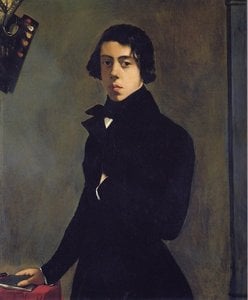
Théodore Chassériau's 1835 oil on canvas, "Self-Portrait in a Redingote," is more than just a likeness; it’s a carefully constructed tableau of restrained elegance and subtle introspection—a window into the mind of a young artist grappling with his artistic identity within the context of 19th-century Parisian society. Housed within the prestigious Musée du Louvre, this painting immediately draws the viewer in with its dark palette and the commanding presence of the subject, a young man radiating an almost melancholic intensity.
The work firmly anchors itself within the Romantic movement, yet it subtly resists simple categorization. While undeniably influenced by the dramatic flair of Eugène Delacroix – particularly evident in the dynamic lighting and the suggestion of movement – Chassériau retains a core Neoclassical discipline, meticulously rendered lines defining the sharp angles of his suit jacket and the precise contours of his face. This duality reflects the artist’s own journey: initially trained under the rigorous tutelage of Jean-Auguste-Dominique Ingres, he ultimately forged his own path, embracing a more expressive and emotionally charged style.
Chassériau's masterful technique is immediately apparent. The painting’s composition centers around the subject, occupying nearly the entire frame, creating an intimate and almost claustrophobic effect. He stands in a three-quarter pose, his gaze directed slightly to the left, inviting the viewer into his world. A subtle yet significant detail—a microphone stand discreetly positioned behind him on the left – hints at a performance context, perhaps suggesting Chassériau’s burgeoning career as a stage designer or illustrator, alongside his painting endeavors. The artist employs a layering technique, building up color and texture through numerous thin glazes of oil paint, resulting in a remarkably smooth surface—a testament to his dedication and skill.
The lighting is particularly noteworthy. It originates from an unseen source on the left side, casting soft, directional shadows across the subject’s face and subtly highlighting the textures of his clothing. This strategic use of light not only adds depth and volume but also contributes significantly to the painting's overall mood—a blend of formality and quiet contemplation. The careful blending of tones creates a sense of atmospheric perspective, drawing the eye deeper into the scene.
Beyond its technical brilliance, “Self-Portrait in a Redingote” is rich in symbolic meaning. The formal black suit, impeccably tailored, speaks to Chassériau’s ambition and his desire for recognition within the established artistic circles of Paris. However, the slightly downturned mouth and the introspective gaze suggest a deeper layer of complexity—a hint of melancholy or perhaps even disillusionment with the constraints of academic art. The red bow tie, a vibrant splash of color against the predominantly dark palette, could represent passion, creativity, or simply a deliberate assertion of individuality.
The painting’s overall effect is one of restrained elegance and quiet introspection. It's not a flamboyant self-celebration but rather a carefully considered portrait of an artist grappling with his identity and place in the world—a poignant reflection on the challenges and rewards of pursuing a creative life. The subtle sadness in his eyes invites us to contemplate the burdens of artistic ambition, while the formality of his attire suggests a desire for respectability and recognition.
Created during a period of significant social and political upheaval—the aftermath of the Napoleonic Wars and the rise of Romanticism—Chassériau’s work reflects the movement's emphasis on emotion, individualism, and the sublime. His Creole heritage, born in the Dominican Republic and raised in Paris, undoubtedly informed his artistic vision, providing him with a unique perspective on both European and Caribbean cultures. This background is reflected in his interest in Orientalist themes – particularly evident in later works – and his willingness to challenge conventional artistic norms.
Chassériau’s trajectory—from student of Ingres to independent Romantic artist—is itself a compelling narrative, illustrating the tensions between tradition and innovation within 19th-century art. “Self-Portrait in a Redingote” stands as a powerful testament to his artistic evolution and a captivating glimpse into the mind of a brilliant but often overlooked talent.
泰奥多·沙塞留 的《Self-Portrait》 的建议用途为 Statement,同时也可用于其他场景。
“Self-Portrait”倾向于Green to Violet Spectrum色调。
泰奥多·沙塞留 的《Self-Portrait》 将 Oil On Canvas 技法与 Romanticism 流派风格完美融合。技法与流派分别描述了作品的创作手法及其艺术风格。
1819 - 1856 , 多米尼加共和国

Discover the enduring legacy of oil on board painting. Explore how historical techniques, rich impasto textures, and structural durability create timeless masterpieces that bridge Renaissance grandeur with modern art collecting excellence.

Discover the enduring allure of oil on canvas. Explore how master techniques like impasto and glazing create the depth, texture, and emotional resonance found in the world's greatest masterpieces. An essential guide for fine art enthusiasts and discerning collectors.

Explore the profound secrets of classical oil painting. From the delicate mastery of glazing to the dramatic depth of chiaroscuro, discover the timeless techniques used by Old Masters to create enduring, museum-quality masterpieces that capture light and emotion.

Discover the profound allure of oil on canvas. Explore the mastery of impasto textures, the science of pigment longevity, and expert guides to selecting museum-quality reproductions that elevate your collection with timeless elegance and tactile depth.

Discover the enduring allure of hand-painted oil reproductions. WahooArt offers museum-quality, archival masterpieces designed for discerning collectors seeking timeless beauty and a lasting legacy. Invest in fine art that transcends generations with our expert craftsmanship.


 实景预览
实景预览
 发送
发送 分享
分享
 详情
详情 指南
指南

 下载图片
下载图片
 相似作品
相似作品 X射线
X射线 幻灯片播放
幻灯片播放 统计数据
统计数据 阅读全文
阅读全文









 玻璃选项仅适用于110厘米以下的尺寸。


