
博物馆级艺术微喷或帆布版画,制作高效,并提供多种饰面选择。 ( 订购纯手工绘制画作 切换至数字图像销售渠道)





























您可以从与原作比例一致的预设尺寸中进行选择。

请输入您所需的宽度和高度,以适配您的画框或墙面。由于印刷品只能进行裁剪,无法超出原图尺寸,因此若比例不一致,画面的一部分将会被裁切。在正式印刷之前,我们会为您发送一份数字效果图供您确认。本页面显示的图片并非最终裁剪后的效果——只有效果图才能展示真实的裁剪情况。
Composition I (still life)
复刻品尺寸
In the quiet evolution of modernism, few works capture the radical shift from representation to pure abstraction as poignantly as Theo van Doesburg’s Composition I (still life). Created in 1916, this masterpiece serves as a profound bridge between the tangible world and the spiritual realm of geometry. At first glance, the viewer is presented with a familiar tableau—the humble arrangement of bowls, cups, apples, and a vase resting upon a table. Yet, as one lingers, the recognizable forms begin to dissolve. The objects are not merely depicted; they are distilled. Through a masterful application of Neoplasticism, van Doesburg strips away the superficial textures of reality to reveal a skeletal structure of horizontal lines, vertical axes, and overlapping circles that pulse with an internal, rhythmic life.
The technique employed in this work is a testament to the artist's disciplined pursuit of clarity. Eschewing the expressive, thick impasto of his contemporaries, van Does andburg utilized precise, meticulous brushstrokes to apply pigment onto the canvas. This method ensures that every intersection of line and every curve of a circle feels intentional and balanced. The composition is anchored by a central, tree-like structure composed of concentric circles, which draws the eye inward, creating a sense of depth that defies the flatness of the abstract plane. This interplay between the weight of the geometric forms and the lightness of the negative space creates a visual equilibrium that is both intellectually stimulating and aesthetically soothing.
To understand Composition I, one must look toward the turbulent era of its birth. Painted amidst the shadows of World War I, the work emerged from a period of intense intellectual ferment. Van Doesburg, alongside luminaries like Piet Mondriaan, sought to establish the De Stijl movement—a collective mission to redefine art’s role in a fractured society. They believed that by moving away from the "sensory" and toward the "universal," art could foster a new sense of cosmic harmony. The painting is not merely an experiment in shape; it is a philosophical manifesto. The dominant circles within the work are deeply symbolic, representing spiritual unity and the infinite nature of the cosmos—concepts heavily influenced by the writings of Wassily Kandinsky.
For the discerning collector or interior designer, this piece offers more than just visual interest; it provides an emotional anchor of warmth and stability. Despite its austere, geometric vocabulary, the palette—rich with warm hues—imbues the canvas with a surprising sense of intimacy. It is a work that demands contemplation, inviting the viewer to transcend the chaos of the external world and enter a realm of pure intellect and emotion. Whether placed in a contemporary gallery setting or as a focal point in a sophisticated modern interior, Composition I radiates a timeless elegance, making it an incomparable choice for those who appreciate art that speaks to both the mind and the soul.
西奥·凡·杜斯堡 的《Composition I (still life)》 的色彩饱和度为 Subtle Color,色彩强度为 Balanced。
西奥·凡·杜斯堡 的《Composition I (still life)》 目前正在 克罗勒尔·穆勒博物馆, 奥特罗, 荷兰 展出。此处列出的博物馆指代原作,而非复制品。
西奥·凡·杜斯堡 的《Composition I (still life)》 的推荐陈列空间为 Living Room。当然,该建议也可根据您的室内装饰进行灵活调整。


1883 - 1931 , 荷兰

Explore the profound spiritual depth of geometric abstraction. From Malevich's Suprematism to modern masters, our expert guide reveals how pure form and color command presence in fine art collections.
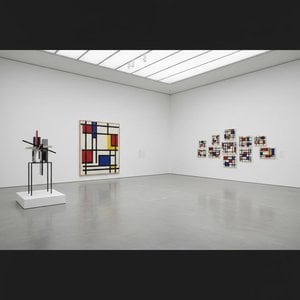
Explore the profound essence of Neoplasticism. Discover how Piet Mondrian and De Stijl masters used pure color and geometric form to redefine modern art. An essential guide for collectors seeking to understand the enduring power of abstract harmony and universal order.


 实景预览
实景预览
 分享
分享 分享
分享
 详情
详情 指南
指南

 下载作品
下载作品
 相似作品
相似作品 X射线
X射线 幻灯片播放
幻灯片播放 Q&A
Q&A 统计数据
统计数据


 展开全文
展开全文









 玻璃选项仅适用于110厘米以下的尺寸。


