
 Acrylic On CanvasWallArtPost-Impressionism
 1918
1918 54.0 x 59.0 cm
 Fitzwilliam 学院
博物馆级艺术微喷或帆布版画,制作高效,并提供多种饰面选择。 ( 购买手绘画作 切换至数字图像销售渠道)





























从与原作比例一致的预设尺寸中进行选择。

您可以输入自定义尺寸,以适配特定的画框或空间。如果您选择的尺寸与原图比例不符,我们将对作品进行裁剪,或通过镜像填充/纯色填充边缘的方式来扩展图像。在开始制作之前,我们会向您发送一份数字效果图供您确认。
请注意,屏幕上的预览并不能反映实际的裁剪或扩展效果。只有效果图才能准确展示最终的构图。
虽然我们提供定制尺寸,但为了保持原图比例,我们建议您从预设列表中选择尺寸。

Armistice Night
复制品尺寸
Sir William Nicholson's "Armistice Night," painted in 1918, isn’t merely a depiction of a wartime scene; it’s a visceral embodiment of the complex emotions swirling within a nation grappling with the end – and the profound cost – of World War I. This powerful black-and-white composition captures a moment of tentative celebration amidst lingering grief, a poignant tableau of soldiers, civilians, and captured artillery against the backdrop of a hastily erected makeshift memorial. Nicholson, a key figure in the Beggarstaff partnership known for their satirical illustrations, masterfully translates the raw energy of the era into a visually arresting image that transcends simple historical record.
The painting’s genesis lies within the immediate aftermath of the November 11th armistice – a day etched forever in British history. Nicholson, working with his brother-in-law James Pryde, was commissioned to create a series of images documenting the celebrations and commemorations that erupted across the country. “Armistice Night” isn’t a triumphant parade or a joyous gathering; instead, it presents a scene of restrained optimism, tinged with melancholy. The dominant presence is the captured German cannon, a symbol not just of military defeat but also of the immense human cost of the conflict – the shattered machinery and lost potential represented by this imposing piece of weaponry.
Nicholson’s style is immediately recognizable as a potent blend of realism and expressive distortion. He employs a flattened perspective, characteristic of the Beggarstaff's work, to heighten the sense of immediacy and drama. The figures are rendered with bold outlines and simplified forms, emphasizing their physicality and emotional state rather than striving for photographic accuracy. Notice how he uses varying shades of grey to sculpt volume and create depth – the rough texture of the cannon’s metal contrasts sharply with the smoother surfaces of the uniforms and faces.
The painting's technique is equally noteworthy. Nicholson utilizes a dry brushstroke, lending a sense of urgency and rawness to the composition. The lighting is dramatic, casting long shadows that accentuate the figures’ postures and gestures. He masterfully employs chiaroscuro – the interplay of light and dark – to draw the viewer’s eye to key elements within the scene, particularly the faces of the soldiers and civilians who are observing the captured cannon. This deliberate use of light and shadow contributes significantly to the painting's emotional impact.
Beyond its immediate depiction of a wartime event, “Armistice Night” is rich in symbolic meaning. The captured cannon represents not just military defeat but also the futility of war – a machine of destruction rendered inert. The diverse group of individuals gathered around it—soldiers, civilians, and even children—suggests a shared experience of loss and a tentative hope for the future. The celebratory atmosphere is tempered by an underlying sadness; the smiles are hesitant, the gestures restrained.
Furthermore, the painting subtly alludes to the broader social context of the time. The presence of women amongst the crowd speaks to their vital role in supporting the war effort and the changing societal roles emerging as a result of conflict. Nicholson’s choice of composition—a chaotic yet ordered scene—reflects the uncertainty and upheaval that characterized post-war Britain. The painting evokes a complex blend of relief, exhaustion, and unresolved grief – emotions that resonated deeply with a nation struggling to rebuild after four years of devastating warfare.
Reproductions of “Armistice Night” offer a powerful way to connect with this pivotal moment in history. The original’s stark monochrome palette translates beautifully into high-quality prints, allowing viewers to appreciate Nicholson's masterful use of light and shadow. The painting’s enduring appeal lies not only in its historical significance but also in its universal themes of loss, remembrance, and the human capacity for resilience. “Armistice Night” remains a poignant reminder of the sacrifices made during World War I and a testament to Sir William Nicholson’s artistic skill.


1872 - 1949 , 英国
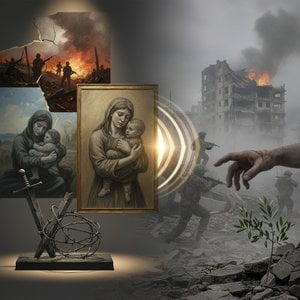
Explore a profound collection of historical war art. From visceral realism to poignant depictions of human resilience, discover museum-quality oil reproductions and expert insights for the discerning collector seeking to preserve history's most powerful echoes.


 效果预览
效果预览
 分享
分享 分享
分享
 详情
详情

 下载
下载
 相似作品
相似作品 X射线
X射线 幻灯片播放
幻灯片播放 统计数据
统计数据 展开详情
展开详情









 玻璃选项仅适用于110厘米以下的尺寸。


